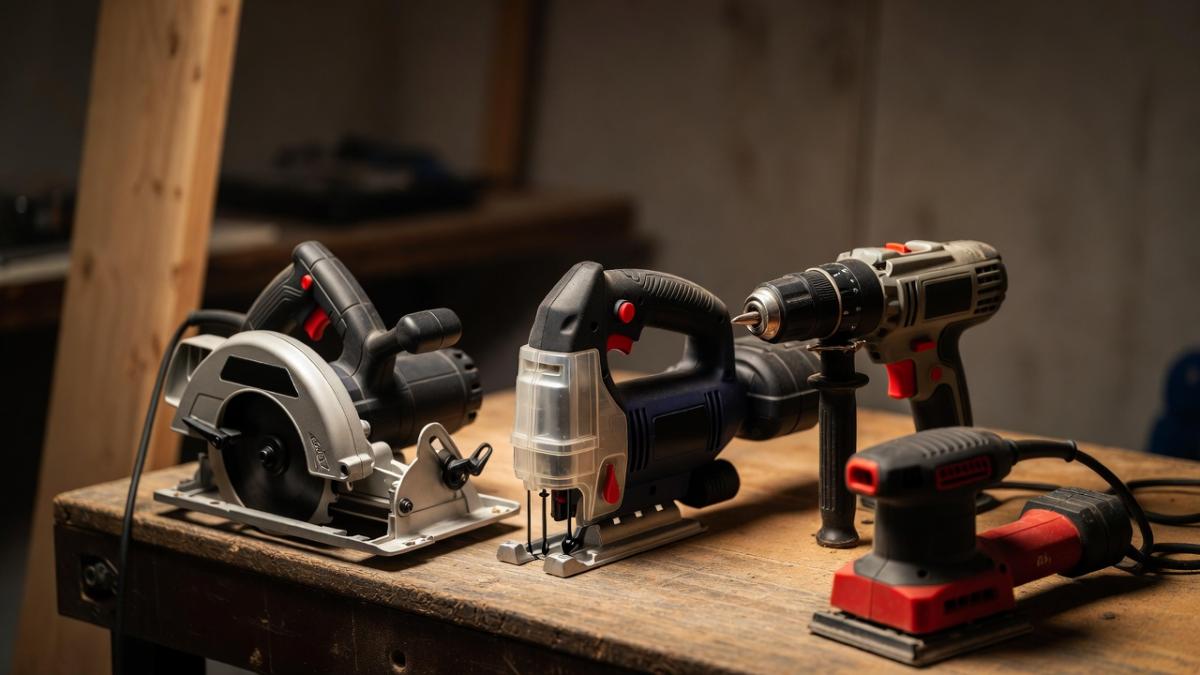
There's a specific kind of satisfaction that comes from running your hand across a freshly cut piece of walnut — grain smooth, edges clean, the smell of sawdust still hanging in the air. But behind that moment of craft is something less romantic and entirely practical: the right power tools for woodworking doing exactly what they were built to do.
Whether you're setting up your first home workshop or rethinking a shop you've had for twenty years, the tools you choose define the work you can do. Not just in terms of capability, but in terms of precision, safety, and how much you enjoy the process. A bad tool fights you. A great one disappears — it becomes an extension of your hand and your eye.
This guide is for anyone serious about the craft. We'll walk through the essential power tools for woodworking, what each one actually does, what to look for when buying, and how they compare against each other so you can make smarter decisions with your money and your shop space.
Why Power Tools for Woodworking Changed the Craft Forever
Hand tools have a long and noble history. The dovetail sawn by hand, the plane shaving whisper-thin curls off a board — there's genuine skill involved, and genuine pleasure. But the introduction of power tools into the woodworking shop didn't kill that craft. It expanded it.
A table saw lets you rip sheet goods in seconds. A random orbital sander saves your arm from hours of manual labor. A router can cut joinery in minutes that would take a chisel, a mallet, and most of your afternoon. Power tools democratized woodworking — bringing precision and productivity within reach of weekend hobbyists, not just trained professionals.
Today, the market for power tools for woodworking is massive and competitive, which is both a blessing and a source of confusion. There are corded tools and cordless tools, budget options and professional-grade machines, tools that do one thing brilliantly and combo kits that do five things adequately. Knowing what matters — and what's just marketing — is half the battle.
The Essential Power Tools for Woodworking — A Shop-by-Shop Breakdown
1. The Table Saw — The Heart of Any Serious Workshop
Ask a hundred woodworkers what's the single most important power tool in their shop and the overwhelming majority will say the same thing: the table saw.
It's not hard to see why. A good table saw rips lumber, crosscuts boards, cuts dadoes and rabbets, handles sheet goods, and serves as a reference surface for a dozen other operations. In many shops, it's the first tool switched on in the morning and the last one turned off at night.
What to look for: Fence quality is everything. A fence that flexes, drifts, or binds will ruin your work no matter how good the blade is. Look for a rack-and-pinion fence system or a high-quality T-square style fence. Motor power matters too — a 1.75 HP motor is fine for hobby work, but if you're cutting thick hardwoods regularly, you want 3 HP or more. Cabinet saws offer the best stability and dust collection, but contractor and hybrid saws are excellent compromises for home shops.
Notable brands: SawStop (with its legendary flesh-detection safety technology), Powermatic, Jet, DeWalt, and Bosch all have strong reputations in this space.
2. The Miter Saw — Crosscutting Done Right
If the table saw is the workhorse, the miter saw is the precision instrument. Also called a chop saw, the miter saw excels at making accurate crosscuts and angled cuts — the kind needed for trim work, frame-and-panel doors, furniture legs, and any project where square, repeatable cuts are critical.
Sliding compound miter saws — which allow the blade to slide forward on a rail as well as pivot — handle wider boards and are worth the extra cost for most workshops. A 10-inch blade handles most work; a 12-inch saw adds capacity but gets heavy fast.
What to look for: Detent stops (the positive click positions at common angles like 0°, 22.5°, and 45°) should be accurate and crisp. The table extensions matter more than people realize — they support long boards and prevent flex that throws off your cut. Laser guides are helpful but shouldn't substitute for a well-set fence.
3. The Random Orbital Sander — The Unsung Hero
Nobody gets excited about a sander. But ask any experienced woodworker about the most-used tool in their shop and the random orbital sander will be near the top of the list, even if it doesn't get the glory.
The random orbital motion — a combination of spinning and orbiting — removes material faster than a sheet sander while leaving far fewer visible scratches. The result is a surface that takes finish beautifully. It's essential for any project that will be stained, painted, or finished with oil.
What to look for: Variable speed control lets you slow down for delicate work and open up for aggressive material removal. The quality of the dust collection matters enormously — cheap sanders leave you in a cloud; good ones with quality pad-and-bag systems capture the majority of fine particles. DeWalt, Festool, Mirka, and Bosch all make excellent options across different price points.
4. The Router — Versatility in Tool Form
The router might be the most versatile power tool for woodworking in existence. A single tool with the right bits can cut dadoes and grooves, profile edges, create joinery (dovetails, mortise-and-tenon, box joints), carve decorative patterns, trim laminate flush, and more.
Routers come in two main configurations: fixed-base and plunge. Fixed-base routers are more stable and easier to use in a router table. Plunge routers allow you to lower the bit into the workpiece mid-cut, which is essential for certain joinery operations. Many woodworkers own both, or invest in a combo kit that includes interchangeable bases.
What to look for: Collet quality determines how well the router holds its bits — look for precision-machined collets, not the stamped metal found in budget tools. A soft-start motor reduces torque kick on startup. Variable speed is non-negotiable if you plan to use large panel-raising bits, which require slower speeds to run safely.
5. The Jigsaw — Curves and Creative Cuts
For cutting curves, irregular shapes, and anything that doesn't follow a straight line, the jigsaw is your tool. It's particularly useful for cutting openings in installed surfaces, doing rough shaping work before moving to finer tools, and handling sheet goods on a job site where a table saw isn't practical.
The jigsaw is often underestimated by beginners but becomes increasingly valuable as projects grow in complexity.
What to look for: Orbital action settings control blade aggressiveness and are crucial for matching the tool to the material. A good shoe (the flat base plate) should be sturdy and adjustable. Blade visibility and grip comfort matter more than specs on paper — try before you buy if you can.
6. The Drill/Driver — First Tool In, Last Tool Out
Perhaps no power tool is more universally owned than the cordless drill/driver. In woodworking specifically, it's used for pilot holes, countersinking, driving screws in assembly, and — with a proper chuck — light mortising and boring operations.
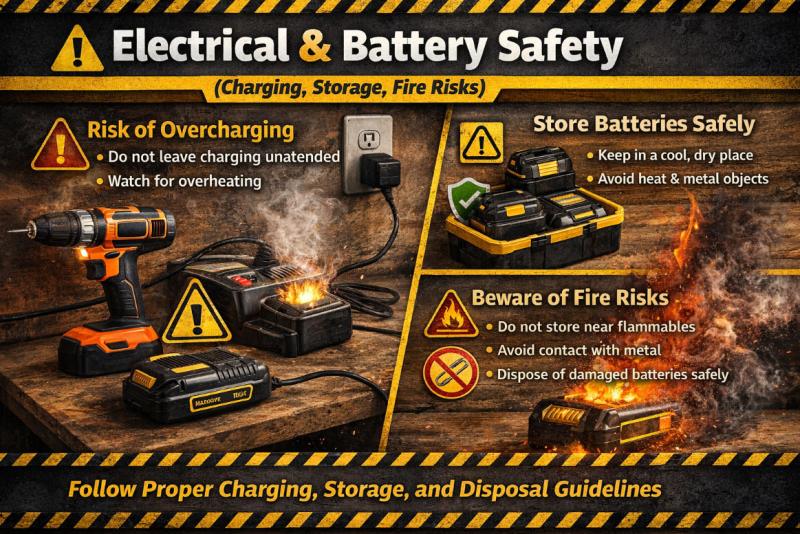
Modern brushless motors have dramatically extended battery life and durability. A quality 18V or 20V cordless drill from a major platform (DeWalt, Milwaukee, Makita, or Festool's Systainer ecosystem) will serve you for a decade with proper care.
What to look for: Clutch settings — the numbered ring near the chuck — protect delicate work from stripped screws and over-driven fasteners. Multiple speed settings matter. And if you're buying into a battery platform for the first time, choose wisely: the investment is in the batteries as much as the tools.
7. The Band Saw — The Table Saw's Quiet Companion
The band saw doesn't get the same attention as the table saw, but among serious woodworkers it earns deep respect. Its continuous blade cuts smooth curves in thick stock that no jigsaw can match, and it's the preferred tool for resawing — slicing a thick board into thinner slabs, a technique beloved by those who work with figured wood and book-matched panels.
Band saws are also the safer option for many ripping operations, producing less kickback risk than table saws.
What to look for: Blade guides are critical — ceramic or roller guides both work well, but they need to be precisely set. Resaw capacity (the maximum height the blade can cut through) dictates what stock you can work with. Cast-iron wheels run truer and smoother than stamped steel.
8. The Thickness Planer — Milling Rough Lumber Like a Pro
For anyone who buys rough-sawn lumber from a mill (almost always cheaper and more interesting than dimensioned stock from a big-box store), a thickness planer is transformative. It mills lumber to consistent thickness, removes twist and cup, and produces a surface ready for glue-up or finish.
Paired with a jointer (which flattens one face first, providing a reference surface), the thickness planer allows you to work with virtually any lumber you encounter.
What to look for: Cutterhead design matters enormously. Spiral or helical cutterheads (with rows of small carbide inserts) outperform traditional straight-knife heads in surface quality, noise level, and longevity. They cost more upfront but save money and frustration in the long run. DeWalt's DW735, the Jet 15-inch, and the Powermatic 15 are benchmarks at different price tiers.
Power Tools for Woodworking — Comparison Table
Here's a clear breakdown to help you understand how these tools stack up by function, price range, and skill level:
| Tool | Primary Function | Budget Range | Pro Range | Skill Level | Essential? |
|---|---|---|---|---|---|
| Table Saw | Ripping, crosscutting, sheet goods | $400–$700 | $2,000–$5,000+ | Intermediate | ✅ Yes |
| Miter Saw | Crosscuts, angled cuts, trim work | $150–$300 | $500–$1,200 | Beginner | ✅ Yes |
| Random Orbital Sander | Surface prep, finish sanding | $50–$100 | $200–$600 | Beginner | ✅ Yes |
| Router | Edge profiling, joinery, dadoes | $80–$150 | $300–$700 | Intermediate | ✅ Yes |
| Jigsaw | Curves, irregular cuts | $60–$120 | $200–$400 | Beginner | ⬜ Recommended |
| Drill/Driver | Drilling, driving fasteners | $60–$120 | $200–$400 | Beginner | ✅ Yes |
| Band Saw | Curves, resawing, thick stock | $300–$600 | $1,000–$3,000+ | Intermediate | ⬜ Recommended |
| Thickness Planer | Milling rough lumber | $350–$600 | $1,500–$4,000 | Intermediate | ⬜ Advanced shops |
Corded vs. Cordless — The Ongoing Debate
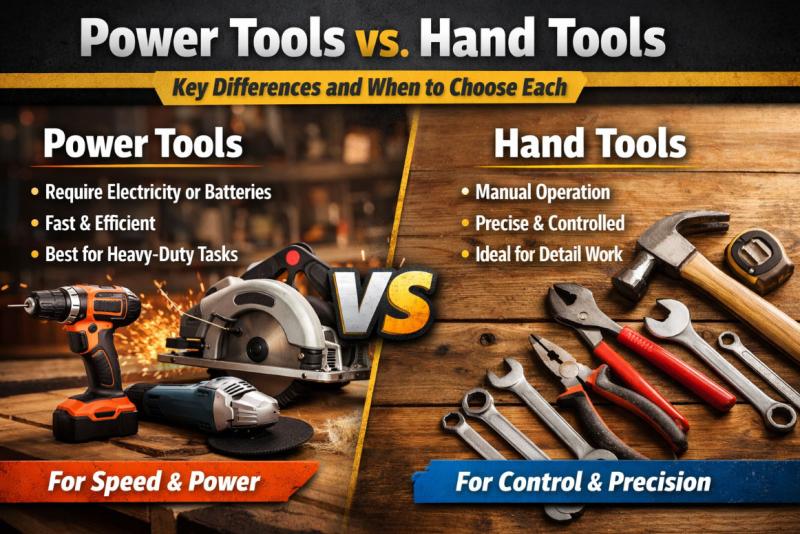
The woodworking world has been chewing on this question for a decade. Cordless technology has improved so dramatically that many tasks once requiring corded tools can now be handled by battery-powered alternatives without meaningful compromise.
That said, some tools remain better corded. Table saws, planers, and routers used heavily in a shop environment benefit from consistent, unthrottled power. Corded tools also never run out of charge mid-project.
Cordless wins on flexibility, job site portability, and increasingly, performance. A cordless track saw from Festool or Makita rivals corded equivalents for most real-world cutting tasks. Brushless motor technology has closed the gap significantly.
The practical answer: Stationary shop tools (table saw, band saw, planer, jointer) stay corded. Handheld tools used around the shop or on site (drill, jigsaw, sander, circular saw) can go cordless with confidence, especially if you commit to a single battery platform.
Safety First — What No Tool Review Should Skip
Power tools for woodworking command respect. The combination of sharp edges, high speed, and dense hardwood creates real risk that shouldn't be minimized.
A few principles that experienced woodworkers hold to:
Always use appropriate guards. The blade guard on a table saw exists for good reason. Remove it only when the cut genuinely requires it, and return it immediately after. The same applies to router guards on tables.
Push sticks and featherboards are not optional. Keeping fingers away from a table saw blade is non-negotiable. Push sticks, featherboards that hold stock against fences, and anti-kickback pawls are inexpensive insurance against serious injury.
Eye and ear protection every time. High-decibel tools damage hearing cumulatively — effects you won't notice until it's too late. A router or planer operating without ear protection is eroding your hearing one session at a time. Dust from certain hardwoods (particularly exotic species) is a known respiratory hazard and carcinogen. A dust mask is not optional.
Learn before you earn. Take a class, watch instruction from certified sources, and have an experienced woodworker walk you through a new tool's operation before using it solo. No YouTube shortcut replaces proper introduction to a table saw.
Building Your Power Tool Kit — A Staged Approach
You don't need every tool at once. Here's how to build intelligently:
Stage One — The Foundation (Under $800 total)
Start with a miter saw, a drill/driver, and a random orbital sander. These three tools handle a surprising range of beginner and intermediate projects — furniture assembly, trim work, refinishing, and basic cabinet making. Add a jigsaw for any curved work.
Stage Two — Expanding Capability ($800–$2,500 additional)
Add a table saw and a router. This is where woodworking genuinely opens up. You can now mill your own stock (to a point), cut joinery, work with sheet goods confidently, and tackle furniture builds that require real precision.
Stage Three — The Full Workshop ($2,500+ additional)
A band saw, thickness planer, and jointer round out a shop capable of handling rough lumber from the mill all the way to finished furniture. At this stage you're processing your own wood, and the quality and control available to you is significant.
Brand Ecosystems — Why Platform Matters
This bears repeating: when you buy your first cordless tool, you're not just buying a tool — you're choosing a battery ecosystem. Batteries from DeWalt's 20V MAX line, Milwaukee's M18 platform, or Makita's 18V LXT system are not interchangeable. As your tool collection grows, having a shared battery platform saves significant money.
DeWalt is arguably the most dominant platform in North America — vast tool selection, excellent availability, and a strong mid-range price point.
Milwaukee competes fiercely at the top end, with best-in-class brushless motors and an expansive pro-grade lineup.
Makita has the deepest catalog of 18V tools on the market and strong international presence.
Festool operates at the premium tier — tools that cost more and deliver measurably better dust collection, precision, and long-term value for professional shops.
For hobbyists, DeWalt or Makita offer the best balance of price, availability, and range. Professionals with serious production requirements should look seriously at Milwaukee and Festool.
Maintaining Your Power Tools for Woodworking — Longevity Starts Here
Great power tools for woodworking can last decades with proper care. Neglect them and even premium tools deteriorate fast.
Keep blades and bits sharp. A dull blade doesn't just cut poorly — it's dangerous. Dull blades require more force, which leads to erratic movement and higher kickback risk. Budget for professional sharpening or learn to sharpen your own.
Clean after every session. Sawdust accumulates inside motors, vents, and mechanisms. Compressed air blown through the motor housing after every use extends brush life and prevents heat buildup.
Lubricate moving parts. Table saw trunnions, miter saw pivot points, router collets — consult your manual for manufacturer-recommended lubrication intervals and products. Dry metal-on-metal contact causes premature wear.
Store properly. Moisture is the enemy of steel tools. A dehumidifier in the shop, paste wax on cast-iron surfaces, and blade protectors on stored saw blades all contribute to long service life.
The Future of Power Tools for Woodworking
The industry is moving fast. Brushless motors are now the standard rather than the exception. Battery technology continues to push corded tools into smaller niches. And connectivity — tools with Bluetooth and app integration that track blade life, motor temperature, and usage data — is no longer a gimmick but a genuine productivity feature in professional environments.
CNC routers, once the exclusive domain of industrial shops, have come down dramatically in price and now sit in the workshops of serious hobbyists. The Shapeoko, the X-Carve, the Onefinity — these machines bring computer-controlled precision to small-batch furniture and art without requiring a $50,000 investment.
Track saw systems, pioneered by Festool and now offered by Makita, DeWalt, and others, have partially displaced the table saw for sheet goods work — offering cleaner cuts with far less setup time and superior dust collection.
Woodworking, as a craft, is not going anywhere. The desire to make something real, something lasting, something that carries the evidence of human hands — that impulse is permanent. Power tools for woodworking are just the means by which that impulse meets the material world.
Final Thoughts — Buy Well, Buy Once
The golden rule of power tools for woodworking has always been the same: buy the best tool you can genuinely afford, buy it once, and learn it thoroughly before adding more to the shop. A skilled woodworker with a modest tool set produces better work than a mediocre one surrounded by top-of-the-line equipment they haven't mastered.
Start with the foundation. Add tools when you feel constrained — when a specific project requires something you don't have, not because a sale is tempting. Keep everything sharp, clean, and properly tuned. Learn from experienced craftsmen whenever possible.
The sawdust on your floor and the piece in your hands are what woodworking is actually about. The power tools for woodworking in your shop are how you get there.