Browse our full range of woodworking routers, combination kits, router tables, and router bits to find exactly what your projects need.
Woodworking Routers
Product List
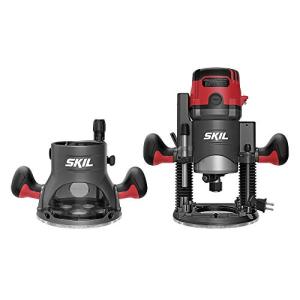
SKIL 14 Amp Plunge and Fixed Base Router Comb...
Product Review Score
4.37 out of 5 stars
154 reviews$154.00 $139.00
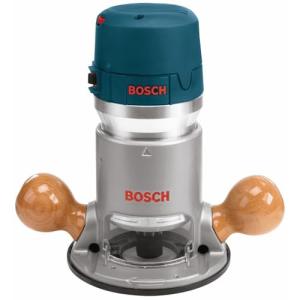
Bosch 1617EVS 2.25 HP Electronic Fixed-Base R...
Product Review Score
4.2 out of 5 stars
160 reviews$219.00 $159.00
What Is a Woodworking Router?
A woodworking router is a power tool that spins a cutting bit at very high speeds — typically between 8,000 and 30,000 RPM — to remove material from wood with precision and control. The bit does the work: it cuts, shapes, or profiles the wood as you guide the tool along a surface, edge, or template.
At its core, a router consists of a motor, a collet (which holds the bit), and a base that guides the tool. That simple combination unlocks an enormous range of woodworking operations. Joinery like dovetails, box joints, and mortise-and-tenon cuts. Edge profiling for furniture, cabinets, and countertops. Template routing for repeatable, identical shapes. Sign carving, inlay work, panel-raising, and much more.
If you only own one power tool in your shop beyond a saw, most woodworkers will tell you it should be a router.
Types of Woodworking Routers
Not all routers are built the same way, and the type you choose has a direct impact on how you work. Here are the main categories you'll find in this product range.
Fixed-Base Routers
Fixed-base routers have a motor unit that locks into position at a set depth. Once you've set how deep you want to cut, that depth stays constant throughout your work. This makes fixed-base models excellent for edge work, when you're running along the outside of a board with a bearing-guided bit and need consistent, repeatable results.
They're typically lighter, easier to handle with one hand, and preferred by many woodworkers for router table use. If most of your work involves edge profiling, chamfering, or decorative trimming, a good fixed-base router will be your best companion.
Plunge Routers
Plunge routers allow you to lower the spinning bit directly into the surface of a workpiece from above, then retract it cleanly when you're done. This is essential for interior cuts — stopped grooves, mortises, blind slots, and any cut that doesn't start or finish at an edge.
Plunge routers have spring-loaded columns that allow the motor to slide up and down within the base, with a depth stop rod to control how far the bit descends. Most experienced woodworkers consider a plunge router a must-have for serious joinery work.
Combination Router Kits
Many manufacturers sell combination kits that include both a fixed base and a plunge base that share the same motor unit. You simply move the motor from one base to the other depending on the task. These kits offer excellent value and flexibility, letting you handle the full range of routing operations without buying two separate tools.
If you're buying your first serious router and want maximum versatility, a combination kit is usually the smartest choice.
Compact and Trim Routers
Compact routers — sometimes called trim routers or laminate trimmers — are smaller, lighter tools typically powered by motors in the 1 to 1.5 horsepower range. They're designed for lighter tasks: trimming laminate, rounding over edges, cutting small slots, and detail work that would feel awkward with a full-size machine.
Their compact size makes them easy to control with one hand, which is a real advantage when working on smaller pieces or finishing edges on assembled furniture. Many woodworkers keep both a compact router and a full-size model in their shop.
CNC Routers
CNC (Computer Numerical Control) routers are automated machines that move a router bit along programmed paths with extreme precision. They're used in professional woodworking shops, sign-making, furniture manufacturing, and maker spaces for cutting complex shapes, 3D carving, and highly repetitive production work.
While traditional handheld routers require skill and technique to operate well, CNC routers do the movement for you based on digital design files. Entry-level desktop CNC routers have become increasingly accessible for serious hobbyists and small workshops.
Key Features to Look for in a Woodworking Router
Motor Power
Router motors are measured in horsepower (HP) or amps. For most home workshop and furniture-making tasks, a motor in the 1.75 to 2.25 HP range handles everything comfortably. Heavier production work, large panel-raising bits, or hardwoods like oak and maple benefit from motors in the 3 HP range.
More power matters most when you're using large-diameter bits or taking aggressive cuts in a single pass. For lighter work with smaller bits, a compact motor is easier to maneuver and perfectly adequate.
Variable Speed Control
High-end routers include variable speed dials that let you adjust the RPM based on the bit size and material. This is more important than many beginners realize. Large-diameter bits — like panel-raising or raised panel bits — should be run at lower speeds to prevent burning the wood and overworking the motor. Smaller, faster bits perform better at higher speeds.
A router with a good variable speed range (roughly 8,000 to 24,000 RPM) gives you far more control over cut quality and tool longevity.
Soft-Start Technology
Soft-start motors ramp up to full speed gradually rather than jumping to full power the instant you pull the trigger. This makes a big difference in controllability — there's no sudden jerk or twist when the tool starts up, which is particularly important when the router is loaded with a large bit.
Depth Adjustment
Precise, repeatable depth adjustment is one of those features that separates good routers from frustrating ones. Look for a clear, easy-to-read depth scale and a fine-adjustment mechanism that lets you change cutting depth in small increments. Some routers use a rack-and-pinion system for micro-adjustment; others use a threaded ring. Both work well when machined to tight tolerances.
For plunge routers, check the depth stop turret — a rotating stop with multiple positions that lets you cut in stages, taking the full depth in several passes rather than one aggressive plunge.
Collet Size
The collet is the chuck that grips the router bit's shank. Most full-size routers accept both 1/2-inch and 1/4-inch shank bits. Always use 1/2-inch shanks when available — they're stiffer, produce less vibration, and handle stress better, especially at large diameters. Compact routers often accept only 1/4-inch shanks, which is fine given the lighter work they're designed for.
Base Design and Visibility
The base design affects how well you can see your cut line as you work. Sub-base windows, clear acrylic bases, and centered LED lighting all improve visibility. This matters more than it sounds — losing sight of your layout line mid-cut is one of the most common causes of routing mistakes.
Dust Collection
Routing produces a significant amount of fine wood dust. Better routers include integrated dust collection ports that connect to shop vacuums or dust extractors. Some bases have shrouds that direct chips away from the cut and toward the collection port. Good dust collection isn't just about keeping your shop clean — it's about visibility, health, and workpiece quality.
Router Bits: Choosing the Right Cutting Profile
The router itself is only half the equation. The bits you use determine what's actually possible. Router bits come in an enormous variety of profiles, and building a quality bit collection expands your capabilities dramatically.
Straight bits cut flat-bottomed grooves and dadoes. Roundover bits create smooth, rounded edges. Chamfer bits cut angled bevels. Rabbeting bits cut stepped profiles for joinery. Flush-trim bits use a bearing to follow a template precisely. Dovetail bits cut the angled profile used in classic hand-cut joinery, produced mechanically with a jig.
Carbide-tipped bits stay sharp far longer than high-speed steel and are worth the extra investment for any woodworker who uses their router regularly. For truly demanding work or production environments, solid carbide bits offer the best longevity and precision.
Router Tables: Unlocking a New Level of Control
A router mounted upside-down in a router table is, in many ways, a different tool entirely. With a table-mounted router, the bit comes up through a hole in the table surface, and you feed the workpiece against a fence rather than moving the router over the wood. This gives you far more control over narrow pieces, small parts, and long edge runs.
Router tables are especially valuable for raised panel work, producing consistent moulding profiles, and cutting larger joinery like cope-and-stick joints for cabinet doors. Many woodworkers consider a router table the most useful stationary tool in a cabinet-making shop after a table saw.
When choosing a router for table use, fixed-base models with above-the-table height adjustment — accessible through a hole in the table surface — are significantly easier to work with.
Safety and Best Practices
Routers operate at very high speeds and deserve respect. A few practices that experienced woodworkers always follow:
Always move the router in the correct feed direction — typically against the rotation of the bit for handheld work and with the rotation for table-mounted use. Moving in the wrong direction creates a climbing cut that can grab the workpiece or pull the tool unexpectedly.
Never force a router to take too much material in a single pass. Multiple shallow passes produce cleaner cuts, cause less stress on the motor and bit, and reduce the chance of tearout in the wood grain.
Secure your workpiece properly. Both hands should be on the router whenever possible, which means your workpiece needs to be clamped or otherwise held in place before you start cutting.
Wear hearing protection. Routers are loud — prolonged exposure causes real hearing damage over time.
How to Choose the Right Router for Your Needs
The right router comes down to three honest questions: What are you building? How often will you use it? And what's your budget?
For occasional home improvement projects and light furniture work, a quality compact router or an entry-level combination kit will serve you well. For regular cabinet-making, furniture building, or any work involving joinery, invest in a mid-range combination kit with variable speed — you'll use it constantly and the extra capability pays off quickly.
For professional use, production work, or anyone who wants the best possible tool regardless of cost, full-size professional routers from premium brands offer superior build quality, better balance, and features that genuinely improve results day after day.
Whatever you choose, buy the best quality you can afford within your budget. A good router, properly maintained, will last decades. It's not a tool you replace every few years — it's a shop companion.
Few tools in woodworking are as genuinely transformative as a quality router. It brings together precision, versatility, and creative possibility in a way that no other single tool can match. Whether you're cutting your first dado or setting up a full router table for production cabinet work, the right router — paired with sharp bits and a bit of practice — opens up an entirely different level of craftsmanship.