Screwdrivers are a must-have in every toolbox. Whether you're tightening screws on furniture or fixing electronics, having the right screwdriver can make all the difference. Check out our selection to find the perfect fit for your projects, from everyday chores to DIY adventures.
Screwdrivers
Find the perfect screwdriver for every project, big or small
Product List
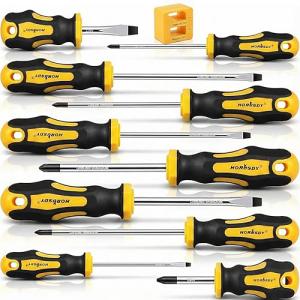
HORUSDY 11-Pieces Magnetic Screw driver, Magn...
Product Review Score
4.41 out of 5 stars
183 reviews$9.99 $8.99
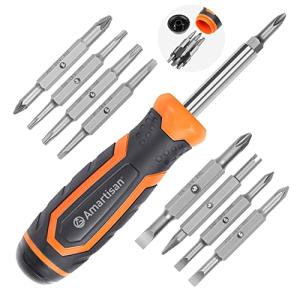
Amartisan 18-in-1 Multi-bit Screwdriver Set T...
Product Review Score
4.15 out of 5 stars
139 reviews$8.73
![AXTH 25-in-1 Small Precision Screwdriver Set, Professional Magnetic Mini Repair Tool Kit for Phone, Computer, Watch, Laptop, Macbook, Ring Doorbell, Eyeglass, Electronic, [Bearing Steel] Screw Driver](https://cdn.freshstore.cloud/offer/images/22720/2768/c/axth-25-in-1-small-precision-screwdriver-set-professional-magnetic-mini-repair-tool-kit-for-phone-computer-watch-laptop-macbook-ring-doorbell-eyeglass-electronic-bearing-steel-screw-driver-small.jpg)
AXTH 25-in-1 Small Precision Screwdriver Set,...
Product Review Score
4.29 out of 5 stars
180 reviews$15.99 $9.99
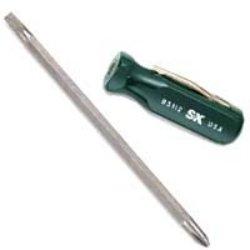
S K Hand Tools SKT85112 2 in 1 Pocket Style S...
Product Review Score
4.65 out of 5 stars
121 reviews$12.98 $11.25
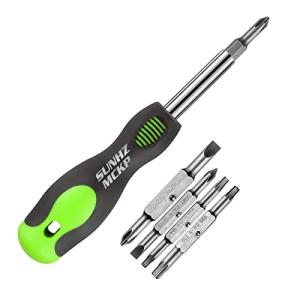
SUNHZMCKP 8 in 1 Screwdriver, Portable multi-...
Product Review Score
4.77 out of 5 stars
232 reviews$9.86
What Makes a Screwdriver Actually Good?
Most people grab whatever is closest. That's how stripped screw heads happen. A quality screwdriver isn't just a piece of shaped steel — it's an engineered tool designed to transfer torque precisely, resist cam-out, fit comfortably in your palm during long runs, and survive a decade of daily use without the tip rounding off.
There are four things that separate a great screwdriver from a frustrating one:
Tip precision. The tip has to match the fastener recess exactly — not approximately. A Phillips tip that's even slightly undersized will cam out under load and chew up your screw before you've tightened it half way. Precision-machined tips with tight tolerances hold the drive properly and let you apply real force.
Steel hardness and treatment. Screwdriver tips need to be hard enough to resist wear but not so brittle they snap under torque. Most quality drivers use chrome vanadium steel, hardened and tempered, with a treated tip. Cheaper tools use soft steel that deforms almost immediately.
Handle ergonomics and grip. You're applying rotational force through your palm and fingers. Handles with a tri-lobe or bi-material grip design reduce fatigue significantly, especially on long fastening sessions. Slim handles give you control in tight spots; wider, cushioned handles give you torque on stubborn fixings.
Shaft construction. Hex-ground shafts near the handle let you apply additional torque with a wrench — a feature you'll be grateful for on seized screws. Through-tang construction (where the blade runs the full length of the handle) allows striking with a hammer without cracking the handle.
Types of Screwdrivers Explained
The screwdriver family is bigger than most people realise. Here's a clear breakdown of every major type.
Flathead (Slotted) Screwdrivers
The oldest drive type still in active use. Flathead screwdrivers have a single horizontal blade that fits into the linear slot of a slotted screw. They're not ideal for powered use because they cam out easily, but they remain essential for electrical work (where non-conductive VDE-rated variants are standard), legacy woodwork, and countless applications where slotted fasteners are specified.
Key tip: always match the blade width to the slot. Too wide and you damage the surrounding surface; too narrow and you lose control and torque.
Phillips Screwdrivers
Developed specifically to allow cam-out under excessive torque — a feature designed to protect assembly-line machinery in the 1930s that's become an inconvenience for anyone doing hand work. Phillips drivers are available in sizes PH0 through PH4, with PH2 being the universal workhorse covering most household and construction fasteners.
Phillips is still the most common drive type worldwide. If you're building one set, PH1 and PH2 cover the vast majority of situations.
Pozidriv Screwdrivers
Pozidriv looks like a Phillips with an extra set of ribs at 45 degrees. It's not interchangeable — using a Phillips in a Pozidriv recess (or vice versa) causes rapid wear and cam-out. Pozidriv was designed to eliminate the intentional cam-out of Phillips, meaning more torque transfer and less slip.
Common in European furniture, cabinetry, and woodwork. If you're doing a kitchen fit or working with European-made fixtures, you need Pozidriv. Sizes run PZ1 through PZ3.
Torx (Star) Screwdrivers
Six-point star recess. Torx fasteners are increasingly dominant in automotive, electronics, appliances, and high-torque assembly applications because they allow significantly more torque before cam-out. The six contact points distribute load evenly and the geometry resists slipping far better than cross drives.
Torx sizes are designated with a T prefix — T10, T15, T20, T25, T30 cover most workshop and electronics tasks. If you're working on cars, bikes, or any modern appliance, Torx is non-negotiable.
Hex (Allen) Screwdrivers
Hex drive screwdrivers are the blade-and-handle version of the classic Allen key. They're used for socket-head cap screws, furniture bolts, and bicycle components. Available in metric and imperial sizes, hex screwdrivers offer good torque and are common in self-assembly furniture and engineering applications.
Robertson (Square) Screwdrivers
Huge in Canada, underappreciated elsewhere. Square drive offers excellent torque transfer, resists cam-out effectively, and self-centres on the fastener. Common in Canadian construction and increasingly appearing in premium decking screws and specialty fixings globally. If you encounter square-drive screws — and you will — you'll need a Robertson driver.
Tri-Wing, Pentalobe, and Security Drives
Used intentionally to restrict user access. Pentalobe screws appear in Apple products (MacBook, iPhone). Tri-wing appears in Nintendo hardware and aerospace components. If you're doing electronics repair or DIY device maintenance, a precision security bit set is worth having. These aren't everyday tools, but when you need them, nothing else will do.
Manual vs. Power Screwdrivers
Manual Screwdrivers
Manual screwdrivers give you tactile feedback, precision, and control that powered tools can't always match. For delicate electronics, cabinetry hinges, or situations where a single over-torqued screw would split the wood or strip the thread, manual is the right tool. They're also silent, require no charging, and go anywhere.
A well-stocked manual set covers: PH1, PH2, PZ2, SL 5.5mm, SL 3mm, T20, T25, and a stubby variant for tight access. That's your daily driver toolkit.
Electric Screwdrivers
Battery-powered electric screwdrivers are positioned between manual drivers and full cordless drills. They're lighter, more manoeuvrable, and have softer clutch settings than drills — ideal for furniture assembly, cabinet installation, and repetitive fastening tasks where you don't need impact force.
Most run on 3.6V to 7.2V batteries with torque settings between 3–15 Nm. Look for models with a clutch (to prevent over-driving), reversible rotation, and a bit holder that accepts standard 1/4" hex bits.
Cordless Drill-Drivers
Not technically a screwdriver, but functionally takes over much of the work. A 10.8V or 18V drill-driver with a good clutch can handle virtually all screw-driving tasks at pace. Where it differs from a dedicated electric screwdriver: heavier, higher torque, better suited to longer sessions and tougher materials.
Impact Drivers
High-torque, high-speed, and loud. Impact drivers use rotational hammer blows to drive fasteners and are designed for heavy construction — decking, framing, structural woodwork. Not suitable for precision work or delicate materials. If you're driving 100mm screws into hardwood or removing seized bolts, an impact driver is the tool.
Insulated and VDE Screwdrivers for Electrical Work
If you're working on electrical installations, consumer units, sockets, or switches, a standard screwdriver isn't appropriate — it's a safety risk. VDE-rated screwdrivers are individually tested and certified to 1000V AC / 10,000V DC. The insulation covers the entire blade shaft, leaving only the tip exposed.
VDE certification (verified by the VDE Institute and marked on the tool) means every single driver in the batch has been dielectrically tested — not just a sample. Never assume a rubber-handled screwdriver is VDE-rated; check for the certification mark.
Key features to look for: full shaft insulation, clearly marked VDE badge, ergonomic grip for one-handed operation, and compatibility with standard electrical screws (typically slotted and Phillips PH2).
Precision and Electronics Screwdrivers
Working on phones, laptops, cameras, watches, or circuit boards requires an entirely different category of tool. Precision screwdrivers are miniaturised, lightweight, and engineered for sub-millimetre tolerances.
Look for sets that include:
- Phillips PH000, PH00, PH0
- Slotted 1.0mm–2.5mm
- Torx T2–T10
- Pentalobe PL1, PL4 (for Apple devices)
- Tri-wing Y0.6
Swivel top caps are standard on quality precision drivers — they allow the fingertip to hold the screw steady while the palm rotates the handle. Shaft length matters for access to recessed screws inside device casings. Magnetic tips help retain tiny fasteners that would otherwise vanish into carpet.
Screwdriver Sets vs. Individual Drivers
Individual drivers make sense when you have a specific, repeated task. Electricians often carry a personal VDE PH2 and a slotted driver. Mechanics know which Torx sizes they use constantly. Buying single quality tools for known applications beats buying sets where half the bits are never touched.
Sets make sense when:
- You're stocking a home toolkit from scratch
- You need coverage across multiple drive types
- You're buying for a shared workshop or professional toolbox
A good general-purpose set covers 6–10 pieces: Phillips, Pozidriv, slotted, and at least two Torx. Sets with a rotating rack or roll case store more cleanly and make drivers easier to locate during a job.
Handle Materials and Design — Why It Matters More Than You Think
Tri-component handles (hard plastic core, soft TPR grip zones, and cushioned end cap) are the current benchmark for comfort and torque delivery. Wiha, Wera, and Knipex all use variants of this construction.
Cellulose acetate (CA) handles — the classic amber-toned material on vintage drivers — remain popular among electricians for their robustness and the fact they don't deform when struck. Many professional VDE drivers still use CA.
All-plastic handles on budget tools are functional but fatigue your hand faster and don't transmit as much torque for the same effort. Fine for occasional use; not ideal for daily work.
Bi-material handles with a hard inner shell and soft outer grip are the most common on mid-range and professional tools today. The soft zones increase grip friction and reduce hand fatigue on long jobs.
How to Match Screwdriver Size to Screw
The single most important rule: the driver tip should fill the recess completely. For Phillips and Pozidriv, the size number on the driver should match the screw size — PH2 for most M4–M6 screws, PH1 for small M3 and below. For Torx, the T number is stamped on the screw head or specified in the product manual.
When in doubt, size up slightly rather than down. An oversized tip that doesn't quite seat will slip; an undersized tip will strip the recess almost immediately.
Start with quality over quantity. Five excellent screwdrivers will serve you better than twenty mediocre ones. For most people, a core kit means: PH1, PH2, PZ2, a 5.5mm slotted, and a T25 Torx. Add a stubby for access work, a VDE-rated set if you do any electrical work, and a precision set if electronics are in scope.
Invest in known brands — Wera, Wiha, Facom, Stanley FatMax, and Knipex all produce drivers that will outlast a decade of hard use. With screwdrivers, the tool you reach for with confidence is always the right one.