What Are Saw Blades and Why Does the Right One Matter?
A saw blade is the cutting component of any power saw — circular saws, table saws, miter saws, reciprocating saws, band saws, and more. While all saw blades share the same basic job (cutting through material), they are far from interchangeable. Each blade is engineered for a specific task, and using the wrong one leads to poor results at best, and damaged equipment or injury at worst.
The blade you choose affects:
- Cut quality — whether edges are smooth and clean or rough and splintered
- Cutting speed — how quickly material is removed
- Blade and saw longevity — the right blade reduces strain on the motor and lasts longer
- Safety — a blade mismatched to the material or saw can kick back, overheat, or fracture
Understanding blade types, tooth geometry, tooth count, and material compatibility transforms saw blade shopping from guesswork into a precise decision.
The Main Types of Saw Blades
Rip Blades
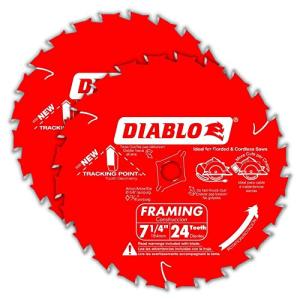
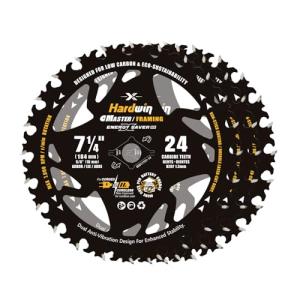
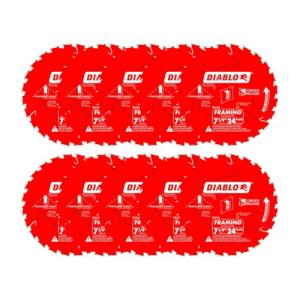
Rip blades are built for one thing: cutting with the grain of the wood, also called ripping. They typically carry between 16 and 40 teeth, and those teeth are wide with large gullets — the spaces between each tooth. Those gullets are what make rip blades so effective. When you're cutting along the grain, you're removing long, fibrous chips of wood quickly, and the large gullets carry those chips away efficiently so the blade doesn't clog or overheat.
Rip blades are fast and aggressive. They aren't designed for a polished finish — the surface they leave is often rough and may show saw marks. But for structural cuts, breaking down rough lumber, or reducing a wide board to a narrower width before more detailed work begins, a rip blade is exactly what you need. Trying to rip lumber with a high-tooth-count crosscut blade will slow you down dramatically and burn your material.
Best for: Framing lumber, solid hardwoods, rough-dimension work, workshop prep cuts.
Crosscut Blades
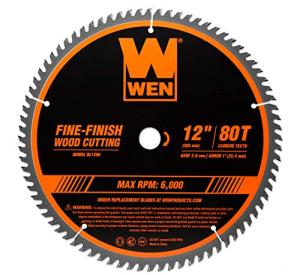
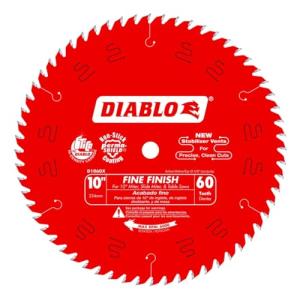
Where rip blades prioritize speed, crosscut blades prioritize precision. These blades cut across the wood grain — perpendicular to the length of a board — and they do it cleanly. Crosscut blades typically carry 60 to 80 teeth, and those teeth are angled (often in an alternating top bevel, or ATB, configuration) to slice cleanly through wood fibers rather than simply chopping through them.
The higher tooth count means each individual tooth removes less material per pass. The result is a smoother cut surface with minimal tear-out and splintering. With a quality crosscut blade, a freshly cut end grain surface will look almost polished — it may need very little or no sanding before gluing or finishing.
The trade-off is speed. More teeth means a slower feed rate, and crosscut blades are not made for ripping. Forcing a crosscut blade through a rip operation will dull it quickly and may cause burning.
Best for: Cabinetry, furniture-making, trim work, finish carpentry, cutting boards to precise length.
Combination and General-Purpose Blades
A combination blade is the versatile middle ground — a single blade designed to handle both ripping and crosscutting with acceptable results in both. These blades typically carry 40 to 50 teeth arranged in alternating groups of ATB teeth followed by a flat-top raker tooth. This layout allows the blade to clear material efficiently during rip cuts while still producing a relatively clean surface on crosscuts.
Combination blades are popular with hobbyist woodworkers and on job sites where swapping blades frequently isn't practical. They won't out-perform a dedicated rip or crosscut blade in their respective tasks, but for a wide range of general cutting work, a quality combination blade is a highly practical choice.
General-purpose blades — usually 40-tooth ATB designs — are a modern variation on the combination blade concept. They offer clean cuts across a wide range of tasks and are often recommended as the first blade to buy for any table saw or miter saw.
Best for: General woodworking, DIY projects, workshop use where versatility matters more than peak performance in any single cut type.
Plywood and Sheet Goods Blades
Cutting plywood and veneered panels introduces a problem that rip and crosscut blades aren't optimized for: tear-out on the face veneer. Plywood's thin outer layers can chip and splinter badly if the blade isn't designed to handle them.
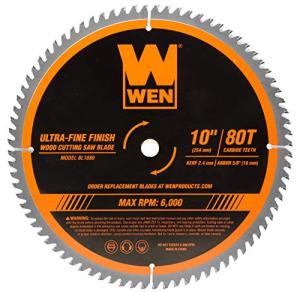
Plywood and panel blades solve this with a very high tooth count (often 80 teeth or more) and a finer tooth geometry that shears rather than chops through the delicate surface veneer. These blades move through sheet goods with minimal splintering on both the top and bottom face — critical when you're working with expensive hardwood plywood or veneered panels that will be on display in finished cabinetry.
Best for: Hardwood plywood, veneered panels, MDF, laminated sheet goods, melamine-coated boards.
Metal Cutting Blades
When the material shifts from wood to metal, everything changes. Metal cutting blades are typically carbide-tipped or use an abrasive disc construction, and many feature a Triple Chip Grind (TCG) tooth configuration — alternating chamfered and flat-top teeth that rough out the cut and clean it up in a single pass.
Metal blades are engineered to handle the higher friction and heat generated by cutting steel, aluminum, copper, and other non-ferrous metals. They resist overheating and produce burr-free, clean edges. Many are specifically designed for use in cold saws or metal chop saws, as well as miter saws equipped for metal work.
Always verify that a metal cutting blade is compatible with your saw before use — arbor size, RPM rating, and saw type all matter when cutting metal.
Best for: Steel, aluminum, copper, non-ferrous metals, metal framing, pipe cutting, fabrication work.
Diamond and Abrasive Blades
For masonry, tile, concrete, and stone, standard toothed blades simply don't work. Diamond blades use industrial diamonds bonded into segments or a continuous rim to grind through these extremely hard materials. Continuous-rim diamond blades produce the smoothest cuts and are ideal for tile and stone. Turbo-rim blades offer a balance of speed and finish quality for general masonry work.
Some diamond blades are designed for wet cutting (with water cooling) and others for dry cutting. Using a dry-cut blade without adequate cooling can cause rapid wear and thermal damage.
Best for: Ceramic and porcelain tile, natural stone, brick, concrete, block.
How to Read Saw Blade Specifications
Every saw blade ships with important technical information printed on its face or packaging. Here's what those numbers actually mean:
Diameter — The overall size of the blade. Common sizes include 7¼" for handheld circular saws, 10" for table saws, and 12" for larger miter saws. The diameter must match what your saw is designed to take.
Arbor Size — The size of the hole in the center of the blade that mounts onto the saw's spindle. Most 10" table saw blades use a ⅝" arbor. Mismatch here means the blade simply won't fit.
Tooth Count — The number of teeth on the blade. Low tooth count (16–30) means faster, rougher cuts. High tooth count (60–80+) means slower, cleaner cuts. This is one of the most important specs for matching the blade to the job.
Kerf — The width of the cut the blade makes. Full-kerf blades (around 1/8") are more rigid and suit high-powered saws. Thin-kerf blades (around 3/32") remove less material and put less strain on smaller or lower-horsepower saws. They can be prone to slight deflection, so alignment matters.
Maximum RPM — The highest speed the blade is rated to spin safely. Never exceed this on your saw.
Blade Materials and Build Quality: What to Look For
Not all saw blades are created equal, and the difference between a budget blade and a professional-grade one shows up quickly in use.
Carbide-tipped teeth are the standard for quality saw blades. Carbide — tungsten carbide, specifically — is far harder than steel and holds a sharp edge much longer. Professional-grade carbide teeth are typically 2.5 to 3mm thick, which allows for multiple resharpening cycles over the blade's life. Budget blades often use thinner carbide with single-layer brazing, which wears faster and is more prone to tooth loss.
Blade body quality matters too. A smooth, lacquered, or Teflon-coated blade surface prevents resin and sawdust buildup, reduces friction, and resists rust. An expansion slot machined into the blade body allows the steel to expand with heat without warping — critical for maintaining accurate, straight cuts. Higher-quality blades have laser-cut expansion slots; cheaper ones may use stamped holes.
Sound-dampening slots filled with vibration-absorbing material reduce noise and vibration during cutting. You can test this with any blade before you buy: hold it by the arbor hole and tap it lightly. A quality blade with good dampening will produce a short, flat sound. A blade without it will ring like a bell — and it'll sound the same on your saw.
Matching the Blade to the Saw
One thing that's easy to overlook: not every blade works in every saw. Before purchasing, confirm:
- The blade diameter matches your saw's capacity
- The arbor hole size matches your saw's arbor
- The blade's maximum RPM meets or exceeds your saw's operating speed
- The blade is rated for the material and cut type you have planned
- For miter saws and radial arm saws, look for blades with a zero or negative hook angle, which prevents the blade from self-feeding aggressively into the workpiece
Using a blade outside its rated parameters is a safety hazard, not just an inconvenience.
Safety Tips for Using Saw Blades
- Always disconnect power before changing a blade
- Wear cut-resistant gloves when handling blades — the teeth are sharp even when the blade is still
- Confirm the workpiece is secure and free of embedded fasteners before cutting
- Let the blade come to a full stop before lifting it from the workpiece or removing it from the saw
- Wear eye protection, hearing protection, and a dust mask on every cut
- Inspect blades before each use — a cracked, warped, or dull blade is a hazard
- Keep blades clean: pitch, resin, and sawdust buildup cause heat and drag, which shortens blade life and degrades cut quality
Building Your Blade Collection
If you're starting from scratch, a practical blade collection for most woodworking and general construction covers four bases:
- A 24-tooth rip blade for breaking down lumber quickly
- A 60 to 80-tooth crosscut blade for finish cuts, trim, and cabinetry
- A 40-tooth general-purpose or combination blade for everyday versatility
- A high-tooth-count plywood blade if you work with sheet goods regularly
From there, add metal cutting and masonry blades as your project range expands. Investing in quality blades from reputable manufacturers — and maintaining them properly — will always deliver better results and better value than frequently replacing cheap blades.
A saw is only as good as the blade spinning in it. Understanding the difference between a 24-tooth rip blade and an 80-tooth crosscut blade, knowing what kerf means, and recognizing the signs of carbide quality are the kinds of details that separate frustrating cuts from clean, professional results. Browse our full range of saw blades to find the right option for your saw, your material, and your next project.