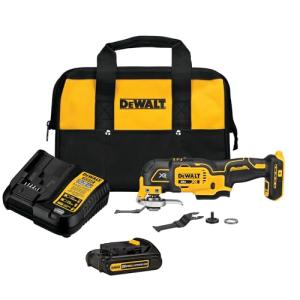
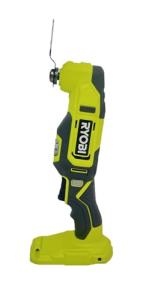
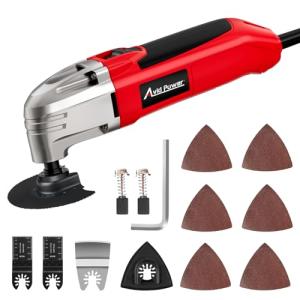
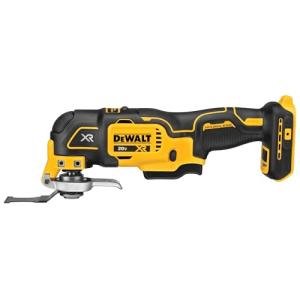
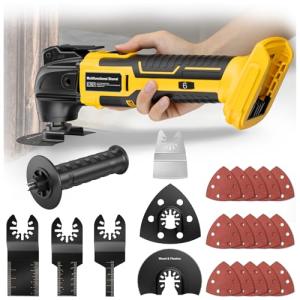
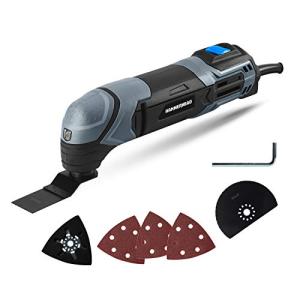
What Is an Oscillating Tool and How Does It Work?
An oscillating tool — sometimes called a multi-tool or oscillating multi-tool — operates on a beautifully simple principle. The spindle at the front of the tool moves back and forth in a rapid arc, typically oscillating between 1° and 3.2° side to side. This motion happens thousands of times per minute (measured in OPM — oscillations per minute), and when combined with the right accessory, it produces controlled, precise cutting or material removal.
Unlike a circular saw, which spins aggressively and can kick back, or a reciprocating saw, which drives back and forth with significant force, an oscillating tool works with a fine, vibrating motion. That's what makes it so safe and so precise. You can plunge-cut into a wall without worrying about hitting a pipe you didn't see. You can sand right up to a baseboard without scratching the paint. You can remove old grout without damaging the surrounding tile.
The real magic is in the accessory system. Swap out the blade or pad at the front, and you have an entirely different tool. That's why they're called multi-tools — and the name genuinely earns its keep.
Why Every DIYer and Professional Needs One
Ask any experienced carpenter, plumber, electrician, or remodeler which tool they'd least want to give up, and a surprising number will point to their oscillating multi-tool. Here's why.
They access places other tools simply can't. Flush-cut saw blades let you cut a wooden dowel or bolt completely flat to a surface — something no other power saw can do. Flexible sanding sheets let you reach into tight corners and curved surfaces. Scraper blades can get under flooring adhesive in spaces where a floor scraper would never fit.
They're safe enough for careful interior work. Because the cutting motion is tight and controlled, oscillating tools produce minimal kickback. You can cut near plumbing, wiring, and finished surfaces with much greater confidence than you'd have with a more aggressive tool.
They eliminate the need for multiple specialty tools. A well-stocked oscillating tool with the right accessories can replace a grout saw, a detail sander, a flush-cut saw, a scraper, and a plunge-cutting jab saw. For homeowners and contractors working in varied environments, that's significant savings in cost, storage, and carrying weight.
They're fast for finishing tasks. Removing old caulk, scraping paint, sanding tight corners, trimming door jambs — these are jobs that eat up time when done by hand. An oscillating tool cuts that time dramatically without the risk of over-cutting or damage that comes with heavier power tools.
Corded vs. Cordless Oscillating Tools
One of the first decisions you'll make is whether to go corded or cordless. Both have a genuine place depending on how and where you work.
Corded Oscillating Tools
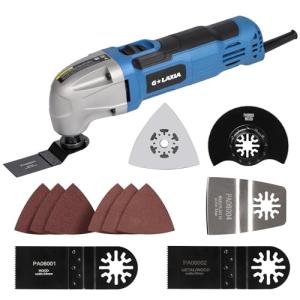
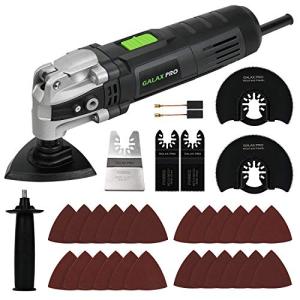
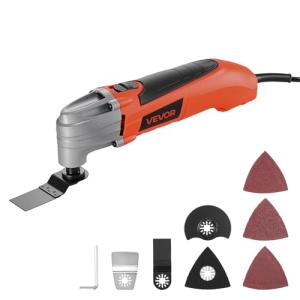
Corded models deliver consistent, uninterrupted power for as long as you need it. If you're working on a long job — stripping flooring across an entire room, grinding grout on a large tile installation, or doing extended sanding work — a corded tool means you never stop to swap batteries. They also tend to be lighter, because there's no battery pack adding weight.
The downside is obvious: you need a power outlet nearby, and the cord can restrict movement in tight spaces or on ladders. For home workshops and jobs near a power source, corded oscillating tools remain a popular and cost-effective choice.
Cordless Oscillating Tools
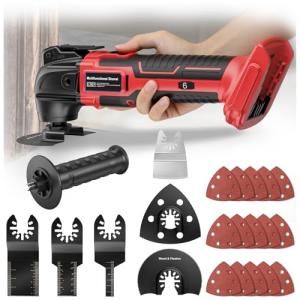
Battery-powered oscillating tools have come a long way. Modern 18V and 20V models from leading brands deliver performance that was once only possible from corded tools, and the freedom of movement is a genuine advantage on job sites, in awkward corners, or on renovation projects in older buildings where outlets are scarce.
Look for models that are compatible with battery platforms you already own. If you're invested in a particular brand's ecosystem — whether that's DeWalt, Milwaukee, Makita, Bosch, or another — you can often use the same batteries across your entire tool collection, which saves money and simplifies charging.
Key Features to Look For
Not all oscillating tools are created equal. Here's what separates a frustrating, underpowered model from a tool that earns its place on your belt.
Oscillation Angle
The wider the oscillation angle, the more aggressive the cutting action. Most tools sit between 1.4° and 3.2°. A wider angle removes material faster, which is great for demolition work and rough cutting. A narrower angle offers more control and leaves a cleaner finish — better for fine detail work and precision cuts. Some premium models let you adjust the oscillation angle, giving you the best of both worlds.
Variable Speed Control
A variable speed dial or trigger is one of the most important features on any oscillating tool. Low speeds give you control when you're starting a cut, working near delicate surfaces, or using the tool on softer materials like plastic or thin wood. Higher speeds let you power through tougher materials. Most quality models offer a range from around 8,000 OPM up to 20,000 OPM or more.
Tool-Free Blade Change System
If you're switching accessories frequently — which is part of the point of owning a multi-tool — a fast, tool-free blade change system is essential. The best designs let you swap accessories in seconds with one hand, using a lever or clamp mechanism. Avoid older designs that require an Allen wrench or hex key to change blades. Over the course of a project, those extra minutes add up.
Universal Accessory Compatibility
Accessory compatibility used to be a major headache with oscillating tools — different brands used incompatible mounting systems, which locked you into buying expensive branded accessories. The OIS (Oscillating Interface System) and Starlock systems have helped standardize things, but it's still worth checking whether a tool accepts universal accessories before you buy.
Ergonomics and Vibration Control
Oscillating tools generate vibration, and over extended use, that vibration travels up through your hand and arm. Better tools invest in vibration-dampening technology, balanced motor design, and ergonomic grips that reduce fatigue. If you're planning to use the tool for longer sessions, these features matter significantly. Look for rubberized grips, balanced weight distribution, and tools that sit comfortably in your hand without requiring a tight grip to maintain control.
Essential Oscillating Tool Accessories
The accessory you choose turns your multi-tool into a specialist. Here's a breakdown of the most useful categories.
Bi-Metal Cutting Blades
These are the general-purpose workhorses of the oscillating tool world. Bi-metal blades handle wood, plastic, drywall, and even thin metal. The "bi-metal" construction — a hardened steel cutting edge bonded to a flexible steel body — gives them durability and resistance to breakage. Use them for plunge cuts in drywall, cutting through nails embedded in wood, trimming door casings, and general rough cutting.
Wood-Specific Blades
For cleaner cuts in timber, MDF, and engineered wood, dedicated wood cutting blades with larger teeth and more aggressive geometry will produce better results than a bi-metal blade and last longer in the process. These are the right choice for furniture work, flooring, and any application where cut quality matters.
Grout Removal Blades
Grout removal is one of the jobs oscillating tools genuinely excel at. Carbide-grit grout blades grind through old grout efficiently and with good control, making tile repairs and re-grouting projects far less painful than they would be by hand. Segmented diamond blades are available for harder grouts and more demanding applications.
Sanding Pads and Sheets
Detail sanding is another area where oscillating tools shine. Hook-and-loop sanding pads in a range of shapes — triangular for corners, rectangular for flat surfaces, finger-shaped for narrow grooves — let you sand areas that a random orbital sander can't reach. Use them for furniture restoration, paint prep, and finish sanding on trim work.
Scraper Blades
Rigid and flexible scraper blades are invaluable for removing flooring adhesive, old caulk, paint, and mastic. The oscillating motion makes this kind of surface prep dramatically faster than manual scraping, and the controlled movement means you're far less likely to gouge the substrate underneath.
Rasps and Grinding Accessories
For shaping wood, removing material from awkward locations, or working on fiberglass and composite materials, oscillating rasps and carbide grinding accessories give you controlled material removal in tight spaces.
Common Applications: What You Can Actually Do With One
Understanding specific use cases helps you see just how broad the utility of oscillating tools really is.
Undercutting door casings and jambs for new flooring installation — this is probably the most classic oscillating tool job. A flush-cut blade slides flat along the floor and cuts the casing cleanly, letting new flooring slide underneath.
Cutting plumbing access holes in drywall, tile surrounds, and cabinetry — the plunge-cut capability and controlled motion make this safe and precise.
Removing old caulk from around bathtubs, showers, sinks, and windows — a scraper blade or flexible caulk-removal blade makes this job much faster and cleaner.
Trimming protruding nails, screws, and bolts flush to a surface — a segment-free cutting blade handles this quickly.
Repairing hardwood flooring by cutting out damaged boards — a plunge cut with a wood blade lets you remove a single plank without disturbing its neighbours.
Cutting fibreglass insulation, foam boards, and rubber — for HVAC work, pipe insulation, and weatherproofing tasks where conventional saws are too aggressive.
Choosing the Right Oscillating Tool for Your Budget
Entry-Level Models
Budget oscillating tools in the lower price bracket are fine for occasional home use — minor repairs, the odd renovation job, seasonal maintenance. They typically offer fewer speed settings, a simpler blade-change system, and less vibration control, but for light duty they do the job.
Mid-Range Models
This is where most DIY enthusiasts and part-time tradespeople will find the best value. Mid-range tools from established brands offer variable speed, tool-free blade changes, decent ergonomics, and universal accessory compatibility without the premium price of professional-grade equipment.
Professional-Grade Tools
For contractors and tradespeople who use an oscillating tool daily, investing in a professional model pays off through durability, power, and comfort. Features like wider oscillation angle adjustment, superior vibration dampening, brushless motors for longer life and greater efficiency, and compatibility with professional-grade accessory systems are worth the premium for anyone whose livelihood depends on the tool performing reliably.
The oscillating multi-tool is one of those rare purchases that consistently earns its keep. Whether you're a weekend DIYer tackling home improvement projects or a professional who needs a reliable, adaptable tool on every job, the right oscillating tool with a good selection of accessories will save you time, expand what you can tackle, and deliver results that simply aren't achievable with other tools.
Shop by intended use, battery compatibility if you're going cordless, and accessory system — and don't underestimate how much a quality blade makes a difference. The tool is only as good as what's attached to it.