What Is a Home Tool Kit?
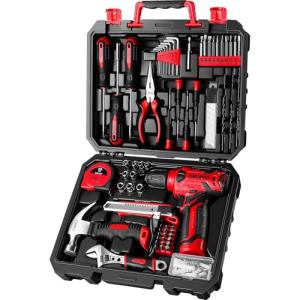
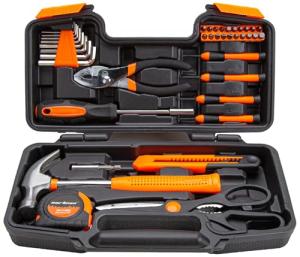
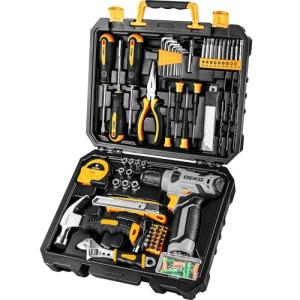
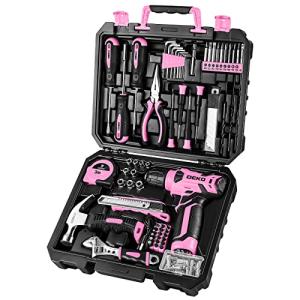
A home tool kit is a curated collection of hand tools and, in some cases, power tools bundled together in a carry case, bag, or storage box. The goal is simple: give you the essential tools to handle the most common household repair, maintenance, and assembly tasks without needing to call a professional or borrow from a neighbour.
A basic home tool kit typically includes a hammer, a set of screwdrivers, pliers, a tape measure, a spirit level, and a utility knife. More comprehensive kits add items like an adjustable wrench, a hand saw, a staple gun, a stud finder, and an electric drill. Premium kits go further still, incorporating socket sets, hex keys, a voltage tester, and a full selection of drill bits and driver bits.
The range is wide because the needs are wide. A first-time flat renter assembling IKEA furniture has different requirements than a homeowner managing ongoing maintenance on a detached house.
Why Every Home Needs a Tool Kit
It sounds obvious, but it's worth saying clearly: a home without tools is a home at the mercy of small problems.
Minor repairs pile up fast. A loose cabinet hinge. A curtain rail that keeps pulling away from the wall. A bathroom sealant that's gone black and needs replacing. A door handle that rattles. None of these are disasters, but left unattended, they compound — loose hinges lead to misaligned doors, pulling curtain rails create bigger holes in the wall, and rattling handles eventually fail completely.
Having a home tool kit means you deal with things when they're small. That saves money, protects your home's condition, and — honestly — reduces daily stress. Walking past a broken thing every day is a low-level annoyance that most people underestimate until it's finally fixed.
Beyond repairs, tool kits are essential for assembly. Flatpack furniture is now the default for most households, and while many pieces come with their own Allen key, you'll almost always end up needing a proper Phillips screwdriver, a rubber mallet, or a cordless drill to make the job easier and the result sturdier.
A good home tool kit also saves you significant money over time. Tradespeople charge call-out fees that often start at £50–£80 for jobs that take less than ten minutes with the right tools. A well-equipped kit pays for itself after the first or second job you would have otherwise outsourced.
What's Included in a Home Tool Kit?
The contents of a home tool kit vary by category and price point, but most kits fall into one of three tiers.
Essential / Starter Kits
These are designed for first-time buyers, renters, or anyone who just wants the basics covered. A quality starter kit should include:
Hammer — A 16oz claw hammer is the standard. It drives nails, taps joints together, and the claw pulls nails back out. Fibreglass handles absorb shock better than wood; steel handles last longer under heavy use.
Screwdrivers — You need both flat-head and Phillips head, ideally in two or three sizes each. Some starter kits include a multi-bit screwdriver with interchangeable tips, which saves space without sacrificing versatility.
Tape Measure — A 5-metre tape measure covers virtually every domestic measurement task. Look for a blade with both metric and imperial markings and a belt clip if you want to carry it hands-free.
Spirit Level — Essential for hanging shelves, picture frames, and anything else that needs to sit straight. A 40–60cm level handles most household jobs.
Pliers — Combination pliers handle gripping, bending, and cutting wire. Needle-nose pliers reach into tight spaces and are invaluable for electronics, jewellery repairs, and plumbing.
Utility Knife — Also called a Stanley knife or box cutter. Used for scoring, trimming, opening packaging, and cutting carpet, vinyl, or insulation.
Allen Keys / Hex Keys — A fold-out set covers the range of sizes used in flatpack furniture. Without these, assembly grinds to a halt.
Mid-Range / Homeowner Kits
These kits are built for people who own their home or take maintenance seriously. They add:
Cordless Drill / Driver — The single most useful powered tool for a home. Drills pilot holes, drives screws, and with the right bits, can be used on wood, masonry, and metal. Look for at least 18V with a lithium-ion battery for good power and long battery life.
Drill Bit Set — A comprehensive set covering wood, masonry, and metal bits means you're ready for virtually any surface.
Adjustable Wrench — Handles nuts, bolts, and plumbing fittings across a range of sizes. An 8-inch and a 12-inch wrench cover almost every household application.
Stud Finder — Takes the guesswork out of drilling into walls. Locates the timber studs behind plasterboard so you know exactly where you can safely anchor heavy shelves or TV brackets.
Voltage Tester — A non-contact voltage tester tells you whether a wire is live before you touch it. Inexpensive, small, and potentially life-saving.
Hand Saw — For cutting timber, cutting down flatpack pieces that don't quite fit, or trimming doors and skirting boards. A general-purpose panel saw handles most jobs.
Torpedo Level — A shorter spirit level for use in tighter spaces — inside cabinets, on pipes, or in areas where a full-length level won't fit.
Premium / Comprehensive Kits
These kits are aimed at confident DIYers who take on more complex projects — building decking, fitting skirting boards, hanging doors, or carrying out minor plumbing and electrical work. They typically include:
Socket Set — For working with nuts and bolts more efficiently than a wrench. A good set covers both metric and imperial sizes with extension bars and a ratchet handle.
Circular Saw or Jigsaw — Power saws for more precise or ambitious cutting tasks. A jigsaw handles curves; a circular saw handles straight cuts through sheet material.
Multi-Tool / Oscillating Tool — One of the most versatile power tools in any kit. It sands, cuts, scrapes, and grinds in tight spaces where other tools can't reach.
Pipe Cutter — For anyone who does their own plumbing. Cuts copper pipe cleanly without a saw.
Riveter — For joining sheet metal, fixing number plates, and a range of other fastening jobs that screws can't handle.
How to Choose the Right Home Tool Kit
The right kit depends on four things: where you live, what you plan to do, your experience level, and your budget.
Renters should focus on a compact, portable starter kit that handles assembly, minor repairs, and picture hanging. You likely won't be drilling into walls extensively, so a full drill kit might not be necessary. Look for a kit with good-quality hand tools and an Allen key set.
New homeowners need to step up to a mid-range kit fairly quickly. Homeownership brings maintenance obligations that renters don't face — boiler cupboards, garden gates, fencing, guttering, tile grout. A cordless drill, a stud finder, and a basic socket set will earn their keep within the first year.
Experienced DIYers already know what they're missing. If you're comfortable with the basics and find yourself reaching for tools you don't have, a premium comprehensive kit fills those gaps — or targeted individual tool purchases might serve you better than a kit at this stage.
Budget matters, but skimping on quality costs money in the long run. A cheap hammer with a loose head, a tape measure with a blade that won't lock, or a cordless drill that loses charge after ten minutes — these aren't bargains. They're frustrations. Mid-range brands consistently deliver quality that lasts for years. Premium brands offer professional-grade durability that holds up to constant use.
Storage and Organisation — Don't Overlook the Case
A tool kit is only as useful as its storage. Loose tools in a drawer get damaged, go missing, and make every job start with a scavenger hunt.
Most kits come with a carry case — either a rigid plastic case with moulded foam inserts or a soft fabric tool bag with multiple pockets. Rigid cases protect tools better and keep everything visible and organised. Soft bags are lighter and easier to carry to different rooms or take to a second property.
If you're building out a tool collection over time, consider a tool chest or wall-mounted storage system. Pegboards are inexpensive, customisable, and keep your most-used tools visible and within reach.
Labelling and having a fixed home for every tool might sound obsessive, but it's the difference between a tool kit that genuinely helps you and one that adds to household chaos.
Safety First — Using Home Tools Properly
Tools are safe when used correctly and dangerous when used carelessly. A few fundamentals:
Always use the right tool for the job. Using a screwdriver as a chisel, or pliers as a hammer, damages both the tool and the material — and often leads to slips and injuries.
Wear appropriate protection. Safety glasses when drilling or cutting. Gloves when handling rough materials or blades. Ear protection for extended use of power tools.
Keep tools in good condition. A blunt saw is harder to control than a sharp one. A rusted wrench requires more force and is more likely to slip. Maintain your tools and they'll perform — and behave — reliably.
Store cutting tools safely. Utility knife blades should be retracted when not in use. Saw blades should have blade guards. Chisels and gouges should have blade covers.
And always, before drilling into any wall, floor, or ceiling — check for pipes and cables. A stud finder with live wire detection, or a dedicated cable and pipe detector, is an essential investment before any drilling project.
Home Tool Kits Make Great Gifts
A home tool kit is one of those practical gifts that genuinely improves someone's daily life. For a child moving into their first flat, a new homeowner, or someone who's always borrowed tools from others, a quality starter or mid-range kit is a thoughtful and lasting present.
Many kits are packaged attractively in branded cases that look good under a tree or beside a card. They require no assembly, no sizing, and no returns. They're useful from the first day and for years afterward.
Browse Our Home Tool Kit Range
Whether you're equipping your first home or upgrading to a more capable kit, our range covers every tier — from compact starter sets to professional-grade comprehensive collections. Every kit in our selection has been chosen for build quality, value, and real-world usefulness.
Filter by kit type, brand, price, or contents to find exactly what you need. And if you're not sure where to start, our buying guides and customer reviews make it easy to choose with confidence.
The right tools change how you relate to your home. Stop waiting for things to get fixed, and start fixing them yourself.