What Are Dust Collectors and Air Cleaners?
These two product types are often mentioned together, but they work differently and serve distinct purposes.
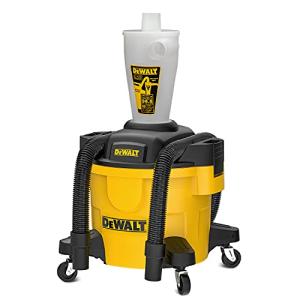
Dust collectors are connected directly to power tools — table saws, planers, jointers, sanders, routers, and more. They pull dust and debris away from the source the moment it's created, before it ever gets a chance to go airborne. Think of them as the first line of defense. They capture the bulk of the material: shavings, chips, and coarser particles that would otherwise pile up on your floor or coat your workbench.
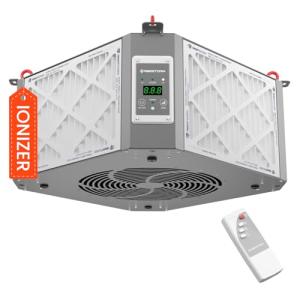
Air cleaners (also called ambient air filtration units) work differently. They hang from the ceiling or mount on a wall and continuously cycle the air in your shop through a series of filters, pulling out the fine particles that escape your dust collector or simply float around from sweeping, sanding, or just opening a bag of material. These are the particles you can't always see, and that's exactly what makes them dangerous — they stay suspended in the air for hours.
Used together, dust collectors and air cleaners create a layered approach to air quality that handles both the large debris and the invisible fine dust that most people don't think about until it becomes a health problem.
Why Clean Air in the Workshop Isn't Optional
Here's something that doesn't get talked about enough: fine dust — especially wood dust, MDF particles, and certain finishing materials — is classified as a known carcinogen when exposure is repeated over time. Even occasional hobbyists accumulate meaningful exposure across years of weekend projects. And it's not just a long-term concern. Fine dust irritates the eyes, nose, and throat immediately. It triggers or worsens asthma. It coats machinery and shortens the life of tools. It settles on finishes and ruins paintwork.
A proper dust collection and air filtration setup addresses all of that. Your shop stays cleaner, your tools last longer, your finishes come out better, and most importantly, your lungs stay healthier. That's not a small thing.
Types of Dust Collectors: Finding the Right Fit
Single-Stage Dust Collectors
The most common type for hobbyists and smaller shops, single-stage collectors pull debris through the impeller (the fan) and directly into a collection bag or bin. They're straightforward, affordable, and work well for larger chips and shavings. The main limitation is that fine dust still passes through the bag, which is why pairing them with a good ambient air cleaner is smart practice.
Two-Stage Dust Collectors
Two-stage systems separate the heavy material before it ever reaches the filter. A cyclone separator (the top stage) spins debris outward and drops it into a drum below — chips, shavings, and the bulk of what your tools throw off. Only the remaining fine particles continue to the filter stage. This dramatically extends filter life and significantly improves fine dust capture. For woodworkers running multiple tools or doing high-volume work, two-stage collectors are widely considered the better long-term investment.
Cyclone Separators (Add-On Units)
If you already have a shop vacuum or single-stage collector you're happy with, a standalone cyclone separator lets you upgrade without replacing your existing unit. You insert it inline between your tool and the vacuum, and it does the heavy separation work before the debris ever reaches your machine. It's a cost-effective way to extend the life of filters and bags while improving overall capture.
Shop Vacuums with Fine Dust Filtration
For smaller spaces, portable workspaces, or detail sanding work, a shop vacuum rated for fine dust — particularly models fitted with HEPA filters — is an incredibly versatile option. They're quieter than traditional dust collectors, easy to move around, and handle everything from drywall dust to fine finishing sanding. Look for models that meet HEPA standards (capturing 99.97% of particles at 0.3 microns) if fine dust exposure is a concern.
Portable Dust Extractors
Common in the trades — tile work, drywall, concrete grinding — portable dust extractors are purpose-built for capturing construction dust that is particularly hazardous. Many comply with OSHA silica dust regulations, making them not just useful but often legally required for certain job types.
Types of Air Cleaners: Ambient Filtration That Works While You Work
Ceiling-Mount Ambient Air Cleaners
The workhorse of shop air filtration. These units hang from the ceiling and move the entire volume of your shop's air through filters repeatedly over the course of a workday. Most quality units include a two- or three-stage filter system: a pre-filter for larger particles, a main filter for mid-range particles, and a final filter stage (often rated at 1 micron or better) for the finest dust. Look for units that can turn over your shop's full air volume at least 6 to 10 times per hour.
Wall-Mount Air Filtration Units
Same concept as ceiling-mount units, adapted for shops where ceiling mounting isn't practical. They work well in lower-ceiling spaces and can often be positioned to create a directional airflow pattern that helps move dust toward collection points.
HEPA Air Purifiers for Shop Use
Industrial-grade HEPA air purifiers bring the highest level of particle filtration available. They capture particles down to 0.3 microns at 99.97% efficiency — that includes bacteria, mold spores, and the finest silica and wood dust particles. These are particularly valuable in enclosed spaces, finishing rooms, or anywhere respiratory health is a top priority.
Downdraft Tables
A specialized type of local exhaust, downdraft tables are built workbenches with suction pulling air downward through the work surface — keeping fine sanding and finishing dust from rising into your breathing zone. They're standard equipment in auto body, woodworking finish, and custom fabrication shops.
Key Features to Look for When Buying
CFM Rating (Cubic Feet per Minute)
This is the single most important spec for a dust collector. CFM tells you how much air the unit moves. Your tools have minimum CFM requirements — a wide belt sander demands far more airflow than a small drill press. Always match your collector's CFM to the highest-demand tool you'll connect it to, and budget extra if you plan to run longer duct runs, because friction losses reduce effective CFM at the tool end.
Micron Rating
The lower the micron rating, the finer the particles the filter captures. Standard bag filters on budget collectors might only stop particles above 30 microns. That sounds small, but particles down to 10 microns are easily inhaled into the lungs, and particles under 2.5 microns (called PM2.5) penetrate deepest and cause the most harm. Look for filters rated at 1 micron or better for meaningful fine dust protection. HEPA-rated filters (0.3 microns) represent the gold standard.
Noise Level
Dust collection equipment runs while you work, which means it runs for hours at a time. Models vary widely in how loud they are. If noise is a concern — in a shared space, a garage adjacent to a home, or simply because you value your hearing — check the dB rating. Many manufacturers now offer quieter motor designs that run 5 to 10 dB lower than standard units, which in practice sounds significantly quieter.
Bag vs. Canister Filters
Bag filters are lower cost but less efficient, harder to clean, and require more frequent replacement. Canister filters (pleated cartridge style) offer dramatically more filter surface area, better fine particle capture, and are cleanable — you can knock or pulse them out and extend their life significantly. For any regular workshop use, canister filters are worth the investment.
Remote Controls and Automatic Features
Quality air cleaners often include remote controls so you can adjust settings without climbing a ladder. Some dust collectors now offer automatic startup triggered by your tools — the collector switches on the moment your saw starts and runs a short delay after it stops. These conveniences aren't luxuries; over time they encourage consistent use, which is what actually protects your air quality.
Building a Dust Collection System: Thinking Beyond the Machine
Buying a dust collector is just the beginning. Getting the most out of it means thinking about your whole shop as a system.
Ductwork and hose layout — rigid duct runs are more efficient than flexible hose. Short, direct runs outperform long, winding ones. Properly sized duct diameter matters: undersized duct chokes airflow; oversized duct loses velocity and lets chips settle in the pipe.
Blast gates — if you have multiple tools connected to one collector, blast gates let you close off unused branches so all the suction concentrates where you're actually working. Without them, you're dividing your CFM across every open port simultaneously.
Tool hoods and shrouds — the best collector in the world can't capture dust if your tools don't have good dust ports. Many older tools have poor or no dust collection ports. Aftermarket hoods, shrouds, and adapters exist for most common tools and make a dramatic difference in capture efficiency.
Who Needs This Equipment?
The short answer is: anyone who creates dust regularly.
Woodworkers — hobbyist or professional — deal with some of the highest dust volumes of any shop discipline. Hardwood dust, MDF (which is particularly hazardous), plywood, and finishing materials all demand serious filtration.
Metalworkers and fabricators work with grinding dust, welding fumes, and cutting debris that carry their own health risks.
Auto body and restoration shops deal with sanding dust, filler particles, and paint overspray.
General contractors and remodelers face silica dust from concrete, drywall, and masonry — one of the most regulated and dangerous categories of construction dust.
Home garage workshops are perhaps the most underserved category. People assume that because the space is informal, the risks are smaller. They're not.
Good dust collection and air filtration equipment isn't a luxury upgrade for serious shops only. It's foundational safety equipment that pays back in cleaner tools, better finishes, healthier lungs, and the simple comfort of working in a space where you can breathe freely.
The range of products in this category covers every budget and every shop size — from compact single-stage collectors for the weekend hobbyist to high-CFM two-stage systems for production environments, and ambient air cleaners from simple wall mounts to multi-stage HEPA ceiling units. Whatever your setup, there's a configuration that fits.
Take your air quality seriously. Your future self will thank you.