How Air Compressors Work
An air compressor draws in ambient air and compresses it into a storage tank. As air is pushed into that tank, pressure builds. When you connect a tool or hose and open the valve, that pressurised air releases and does the work — whether that's driving a nail, atomising paint, or inflating a tyre.
The heart of any compressor is the pump. Most residential and light trade models use a piston pump, where a motor drives a cylinder that compresses air on each stroke. More advanced units use rotary screw or scroll mechanisms, which are quieter, more efficient, and designed for continuous operation in industrial settings.
Portability is a big consideration too. Tank-mounted compressors give you a reservoir of stored air — great for burst-heavy tasks like framing. Tankless or continuous-flow compressors are lighter and compact, better suited for sustained lower-pressure tasks like inflation or running a light spray gun.
Types of Air Compressors
Pancake Compressors
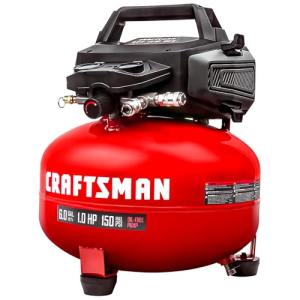
The pancake compressor is probably the most recognisable form factor in domestic and light trade settings. It gets its name from the flat, round tank that doubles as its base, keeping the centre of gravity low and the whole unit stable and easy to carry. Pancake compressors typically run between 150–165 PSI, which is plenty for tyre inflation, brad nailers, and staple guns. They're compact, relatively affordable, and easy to store.
Hot Dog Compressors
Similar in capability to the pancake design, hot dog compressors use a horizontal cylindrical tank. They're slightly easier to carry thanks to a natural carrying handle position and often feature a larger tank than equivalent pancake models — giving you a bit more air storage for tasks that use air in longer bursts.
Twin Stack Compressors
Twin stack models double up with two horizontal tanks stacked on top of each other. This increases the air reserve without dramatically increasing the footprint. They're popular among contractors who need more sustained power for framing, roofing, or flooring tools, but still need something that can move around a job site.
Oil-Free vs Oil-Lubricated Compressors
This is one of the most important distinctions when shopping. Oil-free compressors use permanently lubricated cylinders with no need for oil maintenance. They're lighter, lower maintenance, and won't risk contaminating air lines with oil vapour — important if you're spray painting or working with food-grade applications. The trade-off is that they tend to be noisier and don't last as long as oil-lubricated models under heavy use.
Oil-lubricated compressors run cooler and quieter, last longer under sustained workloads, and are the go-to choice for professional workshops and heavy daily use. They do require periodic oil checks and changes, and the upfront cost is generally higher.
Portable Inflators
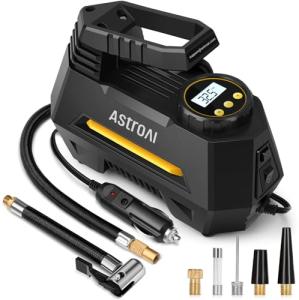
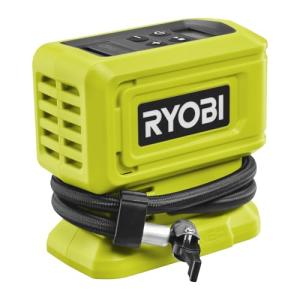
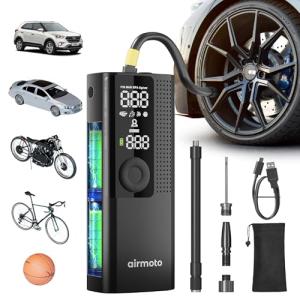
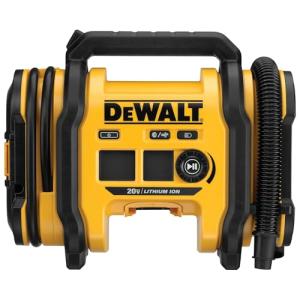
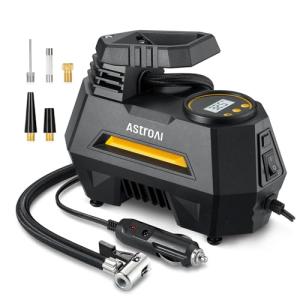
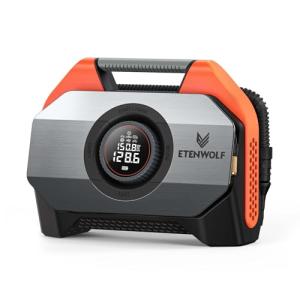
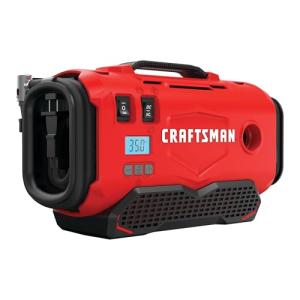
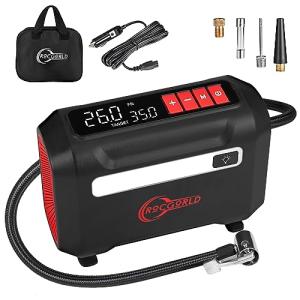
Not every inflation job needs a full-size compressor. Portable inflators — from 12V tyre inflators that plug into your car's power outlet to cordless rechargeable models — are purpose-built for quick, convenient inflation of tyres, footballs, bicycle tubes, and inflatables. They're lightweight, often small enough to live in a glove box or backpack, and increasingly smart: many auto-shutoff models let you set a target pressure and will stop automatically when it's reached, preventing over-inflation.
Key Specifications to Understand
PSI (Pounds per Square Inch)
PSI measures the pressure the compressor can generate. Most pneumatic tools require between 70–120 PSI to operate. If you're running an impact wrench, you'll want a compressor capable of at least 90 PSI. Standard tyre inflation sits around 32–36 PSI for passenger vehicles, though trucks and off-road vehicles can require significantly more.
CFM (Cubic Feet per Minute)
CFM is arguably more important than PSI for most users. It describes the volume of air the compressor can deliver per minute at a given pressure. A nail gun might only need 2–3 CFM, but a sandblaster or continuous-use spray gun might demand 10–20 CFM or more. If your compressor can't keep up with your tool's air demand, you'll experience frustrating drop-outs as the tank refills. Always match your tool's required CFM to your compressor's rated output — and if in doubt, go higher.
Tank Size
Larger tanks hold more air, which means longer run times between compressor cycles. For burst-heavy tools like nail guns, even a modest 6-litre tank is usually sufficient. For more sustained air use — running an orbital sander, operating a paint spray gun continuously — a 50-litre or larger tank becomes much more practical.
Horsepower
Motor horsepower determines how quickly the compressor can replenish the tank and sustain output under load. For light home use, 1–2 HP is adequate. Serious workshop use benefits from 3–5 HP. Be cautious of compressors that advertise very high peak HP figures — what matters is the sustained or "running" HP, which is typically considerably lower.
Noise Level
Air compressors have a reputation for being loud, and the cheaper, oil-free piston models certainly live up to that. If you're working indoors or in noise-sensitive environments, look for models rated under 70 decibels. Some premium oil-free and scroll-type compressors manage around 60 dB — roughly the volume of a normal conversation — which makes a dramatic difference over a working day.
Choosing the Right Air Compressor for Your Needs
For Home Garages and Occasional DIY
A 6–25 litre oil-free pancake or twin-stack compressor running at 150 PSI with 2–4 CFM is more than sufficient. These handle tyre inflation, brad nailing, stapling, and the occasional light sanding with no issues. They're easy to store, straightforward to operate, and don't require any ongoing maintenance beyond keeping the tank drained of condensate.
For Professional Tradespeople and Contractors
You'll want an oil-lubricated model with a larger tank (50 litres or more), higher CFM output (8–15 CFM sustained), and a reliable duty cycle. Industrial belt-drive compressors in this range can run heavier tools consistently across a full working day. Portability matters here too — wheels and a robust carry frame are worth prioritising if you move between job sites.
For Workshops Running Multiple Tools
Rotary screw or large piston compressors with 60-litre-plus tanks and 15–30 CFM output are the standard for professional workshops. These are fixed units that sit in a corner and feed an air line system around the shop. They're expensive but built for continuous use and long service life.
For Inflation Only
A portable 12V inflator or a compact cordless inflator is the smartest choice. Full-size compressors are overkill for tyre inflation and awkward to use for bike tyres or sports equipment. The best portable inflators now include digital pressure gauges, preset pressure settings, and automatic shut-off — making the job genuinely foolproof.
Safety and Maintenance
Drain the Tank Regularly
Air compressed from the atmosphere carries moisture. Over time, this condensate collects in the tank and accelerates corrosion from the inside out. Most tanks have a drain valve at the bottom. Open it briefly after every session — particularly in humid climates — to release any water build-up.
Check and Change the Oil
If you own an oil-lubricated compressor, check the oil level before each use and change it according to the manufacturer's schedule (typically every 200–500 hours of use). Running low on oil is one of the fastest ways to damage an air compressor.
Inspect Hoses and Fittings
Air under pressure is nothing to be casual about. Inspect your hoses, couplers, and fittings regularly for cracks, fraying, or signs of wear. A pressurised hose failure can be violent and dangerous. Replace any worn components immediately.
Never Exceed Rated Pressure
Every compressor and every pneumatic tool has a maximum rated pressure. Exceeding this doesn't make tools work better — it causes damage to tools, accelerates hose wear, and creates unnecessary safety risk. Fit an inline regulator to any air line where you're switching between tools with different pressure requirements.
Ventilation
Compressors generate heat. Make sure they're operating in a well-ventilated space, away from flammable materials. Oil-lubricated models in particular need airflow around the pump head to run safely over extended periods.
What to Look for in a Portable Inflator
Modern portable inflators have come a long way from simple 12V tyre pumps. The best models now offer:
- Digital pressure display with clear readouts in PSI, bar, kPa, or kg/cm²
- Auto shut-off at preset pressure to prevent over-inflation
- Cordless operation via 18V–20V battery platforms compatible with your existing tool system
- Multi-nozzle kits for bikes, sports balls, and inflatables in addition to Schrader valve tyres
- LED work lights for roadside use in poor visibility conditions
For car owners, a compact 12V model that lives in the boot is one of the most practically useful tools you can carry. A slow puncture or a tyre running marginally low is far more common than a full flat — and being able to address it yourself at the roadside is enormously convenient.
Frequently Asked Questions
Can I run any pneumatic tool from any compressor? Not quite. Every tool specifies a minimum CFM requirement. If your compressor can't deliver enough volume at the right pressure, the tool will underperform. Always check the tool's spec against the compressor's sustained CFM rating at the relevant PSI.
How long do air compressors last? A well-maintained oil-lubricated compressor can last 10,000 hours or more. Oil-free models are shorter-lived under heavy use but completely adequate for occasional home use. The biggest factors are maintenance regularity and not running the motor at its limits continuously.
Is a bigger tank always better? Not always. A bigger tank gives you more air in reserve, which helps with burst-demand tools. But it also takes longer to fill and adds weight. Match tank size to your typical workflow — not just to the largest job you might ever do.
What's the difference between SCFM and CFM? SCFM (Standard Cubic Feet per Minute) is CFM measured at standardised atmospheric conditions. It's the more meaningful comparison figure when shopping, as it accounts for differences in ambient temperature and altitude. Most quality compressors list both.
From high-output workshop compressors to palm-sized cordless inflators, this category covers an enormous range of capability and application. Understanding what you genuinely need — rather than defaulting to the biggest or cheapest option — is the key to getting a tool that serves you reliably for years. Browse the full range above to find the right match for your work.