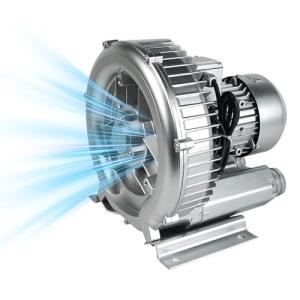
What Is a Regenerative Blower?
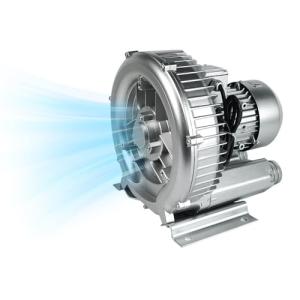
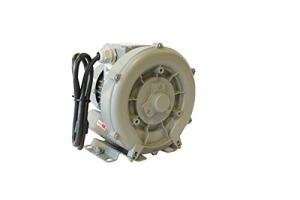
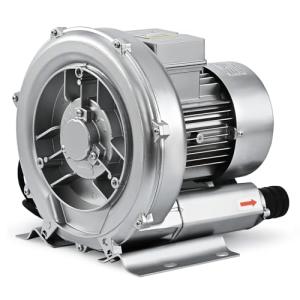
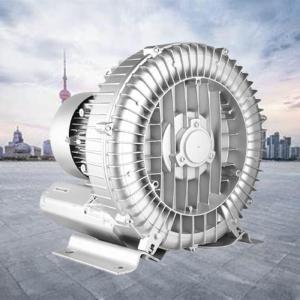
A regenerative blower — also called a side channel blower, ring compressor, or vortex blower — is a type of dynamic air-moving machine that generates continuous, pulse-free airflow using a rapidly spinning impeller inside a ring-shaped housing channel.
Here's the basic idea: air enters through an inlet port and gets picked up by the impeller blades. As those blades spin, they fling the air outward into the side channel, where it gains velocity and pressure. Then the air re-enters the impeller at the base of the blade — and the whole cycle repeats, over and over, many times per revolution. This "regenerative" loop is exactly what gives these machines their name, and it's what allows them to build up meaningful pressure without the complexity of positive displacement designs.
The result is a compact, lightweight machine that produces a steady stream of high-volume, low-to-medium pressure air — with no pulsation, no oil, and very little vibration.
How Regenerative Blowers Differ from Other Blower Types
If you've compared industrial blowers before, you know the landscape can get confusing fast. Here's how regenerative blowers compare to the two most common alternatives:
Centrifugal blowers are great at moving very large volumes of air at low pressure. They're often used for ventilation and HVAC. But they tend to be larger, louder, and less efficient at the mid-range pressures where regenerative blowers thrive.
Positive displacement blowers (like rotary lobe or rotary vane) can handle higher pressures, but they do so through physical compression, which means more moving parts, more wear, and often the need for oil lubrication — a dealbreaker in food, pharma, or electronics applications.
Regenerative blowers occupy a practical sweet spot: moderate pressure (typically 0.5 to 1.5 bar), high flow rates (50 to 5,000 m³/h), oil-free operation, and power ratings from under 1 kW to around 22 kW. For a huge range of real-world applications, that combination is exactly what's needed.
Single-Stage vs. Two-Stage vs. Three-Stage Regenerative Blowers
Not all regenerative blowers are built the same way. The number of stages — the number of impeller and channel cycles the air passes through — directly affects performance.
Single-stage blowers are the most common. Air passes through one impeller channel, making them simpler, more compact, and cost-effective. They're the go-to choice for applications where moderate pressure and high flow are the priority.
Two-stage blowers connect two single-stage units in series, roughly doubling the pressure capability. They're used when you need more pressure without jumping to a completely different blower technology. Typical applications include deeper aeration systems, more demanding pneumatic conveying lines, and certain industrial drying setups.
Three-stage blowers push even further, providing high pressure output in a relatively compact footprint. These are suited for specialized industrial processes, soil vapor extraction, and any application where achieving higher pressure with clean, oil-free air is non-negotiable.
Key Technical Specifications to Understand
Before purchasing a regenerative blower, it's worth getting comfortable with the core specs that define performance:
Flow rate is measured in m³/h or CFM (cubic feet per minute) and tells you how much air the blower can move. Make sure your chosen model can meet peak demand — not just average demand.
Pressure / vacuum rating tells you how hard the blower can push or pull. Most regenerative blowers operate in the range of 100 to 400 mbar pressure or vacuum, with two- and three-stage models reaching higher.
Motor power ranges from fractional kW for small blowers to 22 kW or more for large industrial units. Higher power doesn't always mean better efficiency — match the motor to the actual demand.
Noise level is increasingly important. Modern regenerative blowers are significantly quieter than older designs, and many now operate below 70 dB — important for facilities where operator comfort or regulatory compliance is a concern.
IP rating (Ingress Protection) tells you how well the unit handles dust and moisture. For outdoor or harsh environments, look for IP54 or higher.
Material and coating options matter in corrosive environments. Many manufacturers offer aluminum housings with corrosion-resistant coatings, stainless steel shafts, and chemical-duty motors for aggressive applications.
Where Regenerative Blowers Are Used
The reason regenerative blowers appear in so many product catalogs and industrial specs is simple: they work across a remarkable range of applications. Here are the major sectors and how they put these machines to use.
Wastewater Treatment
This is the single largest application category, accounting for roughly 35% of global regenerative blower demand. In biological wastewater treatment — particularly activated sludge systems — blowers continuously inject air into treatment tanks, supplying the oxygen that microorganisms need to break down organic waste. The continuous, pulse-free airflow of regenerative blowers makes them ideal for this duty. They run 24 hours a day, handle humid conditions, and require minimal maintenance.
Pneumatic Conveying
Moving dry bulk materials through pipelines — powders, granules, pellets — is one of the most demanding jobs for any blower. Regenerative blowers are widely used in both pressure conveying (pushing material through the line) and vacuum conveying (pulling it through). Their steady airflow and moderate pressure profile make them well-suited for fragile materials that can't handle the high-pressure surges of piston compressors.
Food and Beverage Processing
Cleanliness is everything in food production, and regenerative blowers deliver oil-free air as standard — no contamination risk. They're used for drying freshly washed produce and packaging, moving eggs and soft fruits on gentle air currents, automatic bottling machine operation, air knife systems that blow water or debris off products, and vacuum sealing and packaging operations. With increasing regulatory scrutiny on hygiene in food facilities, the ability to guarantee clean air supply makes these blowers a smart long-term investment.
Aquaculture
Fish and shellfish farms need reliable oxygenation to keep their stock alive and healthy. Regenerative blowers provide continuous aeration in recirculating aquaculture systems (RAS), shallow fish ponds, bait-holding facilities, and prawn tanks. They're low-energy relative to the oxygen they deliver, and their reliability is critical — any failure in an aeration system can mean significant livestock losses within hours.
Chemical Processing
In chemical plants, regenerative blowers supply air for oxidation reactions, assist in solvent recovery, power vacuum filtration systems, and handle fume extraction. The oil-free, non-contaminating air delivery is essential here, as is the ability to spec corrosion-resistant materials for aggressive chemical environments.
Pharmaceuticals and Medical
Tablet coating, pneumatic material transfer, air jet cleaning, and sterile packaging processes all rely on regenerative blowers in pharmaceutical manufacturing. The oil-free operation keeps product integrity intact, and low-noise models are valued in clinical and lab environments.
Industrial and Manufacturing
Material handling, dust and chip collection, cooling of components, industrial ventilation — the list goes on. In automated production environments, regenerative blowers are used wherever a reliable, clean source of moving air is needed without the complexity of a full compressed air system.
The Benefits of Choosing a Regenerative Blower
If you're still on the fence between blower technologies, here's a frank summary of where regenerative blowers genuinely excel:
Oil-free operation. There's no lubrication inside the air path, which means no contamination risk. This is non-negotiable in food, pharma, and electronics.
Low maintenance. With no oil changes, no seals to replace, and no mechanical contact between rotating and stationary parts, many regenerative blowers offer over 25,000 hours of maintenance-free operation. That's a real cost advantage over the full lifecycle.
Quiet running. Modern designs are significantly quieter than older rotary lobe or reciprocating technologies. That matters for worker health, workplace regulations, and customer-facing environments.
Compact and lightweight. For the performance they deliver, regenerative blowers are surprisingly small. This matters in retrofits, upgrades, or installations where floor space is tight.
Continuous, pulse-free airflow. Unlike piston or rotary lobe blowers, regenerative blowers don't produce pressure pulses. That makes them gentler on downstream equipment and pipework.
Energy efficiency. Modern regenerative blowers with optimized impeller geometry and variable speed drive (VSD) compatibility can reduce energy consumption considerably compared to older technologies, which is increasingly important as energy costs rise.
What to Look for When Buying a Regenerative Blower
Here are the practical questions to answer before you commit to a model:
What are your actual flow and pressure requirements? Size the blower to your peak load, not average, but don't over-spec dramatically — oversized blowers run inefficiently.
What's the environment like? Humidity, temperature, dust, and the presence of corrosive gases all affect which materials and IP ratings you need.
Do you need variable speed? If your process demand fluctuates, a VSD-compatible motor allows you to dial back the speed (and power consumption) during lighter loads. This is a significant efficiency gain in many installations.
What are your noise constraints? If the blower sits near an occupied area or in an open plant where operators work close by, check the dB rating carefully.
Single-phase or three-phase power? Most larger regenerative blowers run on three-phase power, but smaller units are available in single-phase for simpler electrical installations.
Do you need customization? Some manufacturers offer corrosion-resistant coatings, explosion-proof motors, stainless steel wetted parts, and custom housing configurations for demanding or hazardous-area installations.
The Future of Regenerative Blowers
The market for regenerative blowers is growing steadily, and the direction of travel is clear. Smart monitoring and IoT integration are becoming standard features in higher-end models — allowing operators to track performance in real time, detect early signs of wear, and schedule maintenance before failure occurs.
Variable-speed drives are increasingly common, shifting blowers from fixed-output machines to responsive systems that match airflow to actual demand minute by minute. Advanced impeller materials and aerodynamic designs are pushing efficiency further, reducing both energy consumption and acoustic output.
As industries face growing pressure to reduce energy use, eliminate contamination risks, and operate more reliably, regenerative blowers are well-positioned to displace older, less efficient technologies across a broad range of sectors.
The best regenerative blower isn't necessarily the most powerful or the most expensive — it's the one that matches your flow rate, pressure, environment, and duty cycle with the least waste. Work from your process requirements outward: start with what the air needs to do, then spec the blower accordingly.
If you're replacing an older system, it's worth doing a proper energy audit — in many cases, a correctly specified modern regenerative blower with variable speed control will cut running costs enough to pay back the investment in a year or two.