Pliers are an essential tool for any toolbox, making tasks like gripping, twisting, and cutting a whole lot easier. Whether you're a professional tradesperson or just tackling home projects, the right pliers can really make a difference. Check out our selection to find the perfect pair that fits your needs and gets the job done!
Pliers
Explore our collection of versatile pliers that make every project a breeze
Product List
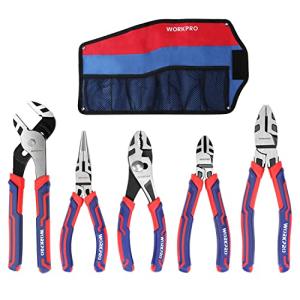
WORKPRO Pliers Set, Premium Cr-V Construction...
Product Review Score
4.86 out of 5 stars
181 reviews$29.99 $23.99
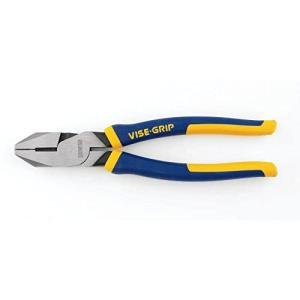
IRWIN VISE-GRIP North American Lineman's Plie...
Product Review Score
4.78 out of 5 stars
228 reviews$19.99 $14.99
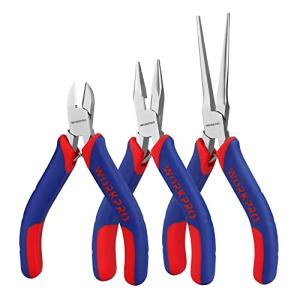
WORKPRO Mini Pliers Set, 3-Piece Small Pliers...
Product Review Score
4.45 out of 5 stars
50 reviews$14.99
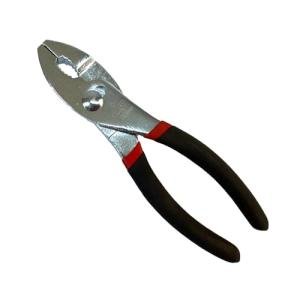
Edward Tools Slip Joint Pliers 6” - Heavy Dut...
Product Review Score
4.92 out of 5 stars
131 reviews$5.99
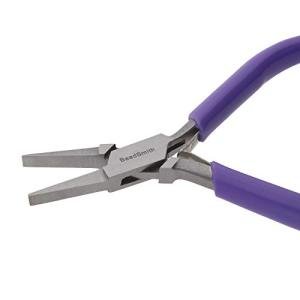
The Beadsmith Flat Nose Pliers – 4.5 inches (...
Product Review Score
4.98 out of 5 stars
204 reviews$10.00
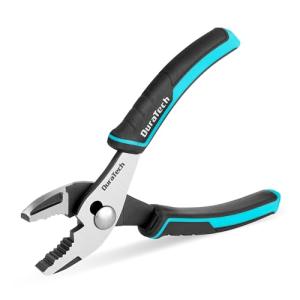
DURATECH 6 Inch Slip Joint Pliers, Small Plie...
Product Review Score
4.66 out of 5 stars
108 reviews$8.99 $7.99
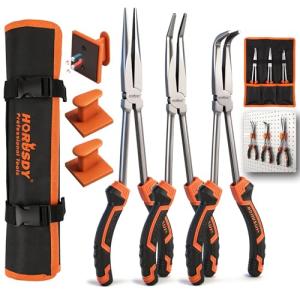
HORUSDY 3-Piece 11 Inch Long Reach Needle Nos...
Product Review Score
4.11 out of 5 stars
145 reviews$24.99
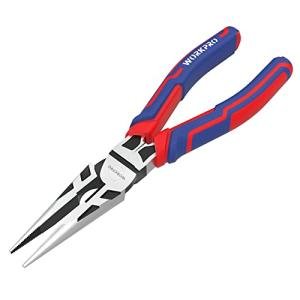
WORKPRO Premium 8” Needle Nose Pliers, Paper...
Product Review Score
4.48 out of 5 stars
147 reviews$11.99 $9.99
What Are Pliers and How Do They Work?
At their core, pliers are lever-based hand tools. Two arms cross at a pivot point (called the fulcrum), and the mechanical advantage created by that pivot multiplies the force you apply through the handles. The jaws at the working end do the gripping, bending, cutting, or clamping — depending on the type.
Every pair of pliers shares a few basic components: the handles (usually coated in rubber, vinyl, or silicone for grip and insulation), the pivot joint (which may be fixed, adjustable, or locking), and the jaws (which vary wildly in shape, length, and surface texture depending on the job at hand). Understanding these components helps you decode the differences between the dozens of types on the market.
The Most Common Types of Pliers and What They're Actually For
Combination Pliers
If you're only going to own one type of pliers, combination pliers are the one to get. They earn their name by doing several things well: gripping bolts, nuts, and pipes; cutting and stripping wire; bending and crimping metal. The jaws typically have a flat gripping section near the tip and a rounded section further back for pipes and rounded objects, with a pair of wire cutters set just behind the pivot.
Combination pliers come in lengths ranging from around 160mm to 200mm and are available in versions rated for electrical work (look for VDE-rated, insulated handles if you're working around live circuits). They're the backbone of any general toolkit.
Needle Nose Pliers (Long Nose Pliers)
Needle nose pliers are all about precision and access. Their long, tapered jaws taper to a narrow point, letting you reach into spaces where other tools simply won't fit — inside junction boxes, behind panels, through circuit boards, inside engine bays. Electricians and electronics technicians rely on them constantly, but they're just as useful for jewellery making, bending small wire, positioning tiny nuts and washers, or retrieving dropped screws from awkward spots.
Many needle nose pliers include a wire cutting notch near the pivot. Some variants have bent or angled noses (at 45° or 90°) for reaching around obstacles without awkward wrist angles. If you work with your hands in tight spaces regularly, a good pair of long nose pliers will save you an enormous amount of frustration.
Slip Joint Pliers
Slip joint pliers are the classic "general purpose" pliers — the ones that come in cheap starter sets and end up in kitchen drawers everywhere. They have an adjustable pivot that can be set in two positions, giving you a wider jaw opening for larger objects. They're good for gripping, turning, and light bending work across a range of object sizes.
They're not specialists at anything in particular, but that's sort of the point. For occasional household tasks — loosening a stuck nut, holding something in place while you use your other hand, or bending a bit of wire — they get the job done without fuss.
Tongue and Groove Pliers (Channel Lock Pliers)
Tongue and groove pliers take the slip joint concept much further. The lower jaw slides along a channel of multiple grooves, giving you a wide range of jaw-opening positions — all while keeping the jaws parallel to each other for a more secure grip. This makes them significantly more versatile than slip joints for working with pipes, large fasteners, and irregular objects.
Plumbers and mechanics love them because they can adjust rapidly to grip pipes of almost any diameter. The long handles provide plenty of leverage. They're also commonly called channel lock pliers (after a well-known brand) or water pump pliers in some markets.
Locking Pliers (Vise-Grips)
Locking pliers are what you reach for when you need both hands free. They use a toggle mechanism to clamp down on an object with considerable force and stay locked until you release a lever on the handle. The jaw width is adjusted via a screw at the end of one handle, and once set, they act like a portable handheld vice.
They're tremendously useful for welding work, holding parts during assembly, turning seized or rounded bolts (where a wrench would simply slip), and any task where sustained clamping pressure would otherwise require a second pair of hands. Locking pliers come in several jaw configurations — straight jaw, curved jaw, needle nose, and C-clamp style — so the range of applications is wide.
Diagonal Cutting Pliers (Side Cutters)
Diagonal cutters are designed for one primary purpose: cutting. The jaws are set at an angle relative to the handles, with hardened cutting edges along both blades. They're the go-to tool for snipping wire, cutting cable ties, trimming component leads on circuit boards, and cutting small nails or screws.
There's a subtle but important distinction between diagonal cutters and side cutters. Side cutters leave an angled cut (useful in electrical work for flush trimming), while true diagonal cutters make a cleaner, straighter cut (preferred in jewellery making and electronics, where a sharp protruding end would be a problem). Check the cutting capacity before buying — these pliers vary from models that cut delicate 1.6mm wire all the way up to heavy-duty versions rated for 30mm cable.
Lineman's Pliers
Lineman's pliers are built for serious electrical work. They're heavier and more robust than combination pliers, with strong flat jaws for gripping and twisting wires, a built-in wire cutter, and often a crimping section near the pivot. Originally designed for utility linemen working with thick, stiff wire and cable, they're now standard equipment for any electrician dealing with Romex or other substantial wiring.
They're not particularly subtle tools — they're built for strength and durability rather than finesse — but in the right context, nothing else comes close.
Crimping Pliers
Crimping pliers are designed to create secure, permanent connections between wires and metal connectors (terminals, ferrules, or splice connectors) by compressing them together. One jaw is typically serrated or shaped to grip the connector, while the other applies precise pressure to deform and lock it in place. Many crimping pliers also include a wire cutter blade for trimming excess cable before crimping.
They're widely used in automotive wiring, network cabling, and marine electrical installations. If you're doing any kind of proper wiring work rather than just a temporary fix, good crimping pliers will give you connections that last decades.
Snap Ring Pliers (Circlip Pliers)
These are highly specialised but invaluable when you need them. Snap rings (also called circlips) are small C-shaped rings used to retain components on shafts or inside bores in engines, gearboxes, and appliances. They're impossible to install or remove safely with any other tool.
Snap ring pliers come in two types — internal (for rings that sit inside a bore) and external (for rings on the outside of a shaft) — and the tips may be straight or angled. Some sets come with interchangeable tips. They're an essential part of any automotive mechanic's toolkit.
Hose Clamp Pliers
Hose clamp pliers are built specifically for working with the spring clamps that secure radiator hoses, coolant lines, and similar fittings in vehicles and HVAC systems. Their jaws have recesses that grip the tabs of a spring clamp, allowing you to compress or expand it without slipping. They save a lot of skinned knuckles in tight engine bays.
What to Look for When Buying Pliers
Material and Hardness
Quality pliers are drop-forged from chrome vanadium steel or chrome molybdenum steel — both significantly harder and more resistant to deformation than cheaper cast steel alternatives. Forged steel handles stress better and won't snap or deform under pressure. Look for pliers with hardened cutting edges if you need cutting performance; softer edges dull quickly.
Handle Comfort and Insulation
If you're using pliers for extended periods, handle comfort matters more than most people expect. Rubberised or dual-component grips reduce hand fatigue and improve control. If you're doing any electrical work, make sure handles are VDE-rated (tested and certified for up to 1,000V AC) — not just "insulated" in a marketing sense, but actually safety-rated.
Joint Type and Adjustment
Box joints (where one jaw fits inside the other) are stronger and more precise than lap joints (where they simply overlap). For heavy-duty work, box joint pliers are worth the premium. Adjustable pliers should move smoothly between positions with a firm, positive click — not loosely rattle or require force to shift.
Size
Bigger isn't always better. A 200mm combination plier gives you more leverage, but a 160mm version is easier to manoeuvre in tight spaces. Think about where you'll actually be using them. For work inside panels, behind dashboards, or in compact wiring enclosures, shorter tools give you far more control.
Brand and Warranty
Established tool brands like Knipex, Stanley, Bahco, Irwin, and Klein Tools have built their reputations on consistent quality and longevity. Knipex in particular — a German manufacturer with over a century of history — is widely regarded as the benchmark for professional pliers, with many models backed by lifetime guarantees. Investing in a quality pair costs more upfront but pays dividends in durability and reliability.
Pliers Safety: A Few Rules Worth Following
Pliers are simple tools, but misuse causes real injuries. A few ground rules:
- Never use pliers on live electrical connections unless they are specifically VDE-rated and the work genuinely requires it. Even insulated pliers aren't a substitute for proper lockout/tagout procedures.
- Don't use pliers as a hammer. They're not designed for impact and the pivot can be damaged permanently.
- Match the tool to the material. Cutting hardened steel wire with pliers rated for soft wire will damage the cutting edges and may cause the wire to snap unpredictably.
- Keep them clean and lightly oiled. The pivot joint benefits from occasional lubrication, and clean jaws grip more effectively.
Building Your Pliers Collection
You don't need every type at once. A sensible starting point for most people is a pair of combination pliers, needle nose pliers, and diagonal cutters — three tools that will handle the vast majority of household and light DIY tasks. Add tongue and groove pliers if you do any plumbing work, locking pliers if you work on cars or need to hold things hands-free, and specialist types as specific needs arise.
The right pliers don't just make jobs easier — they make them safer, cleaner, and more satisfying. A cheap pair that slips, flexes, or loses its edge after a few uses isn't a bargain at any price. Buy quality once, and you'll likely be passing the same tools on to the next generation.