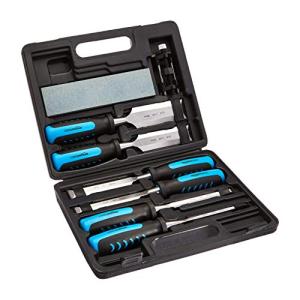
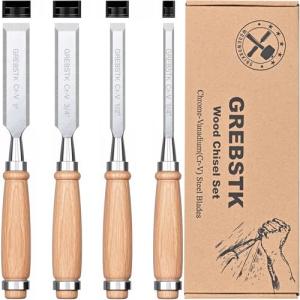
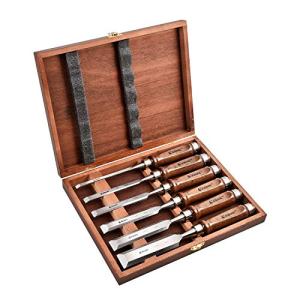
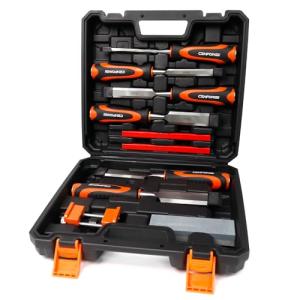
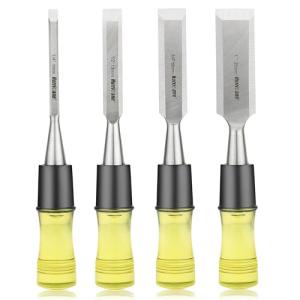
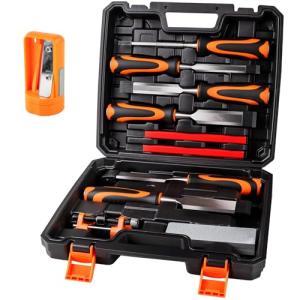
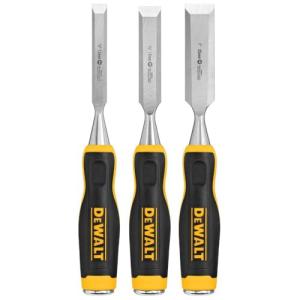
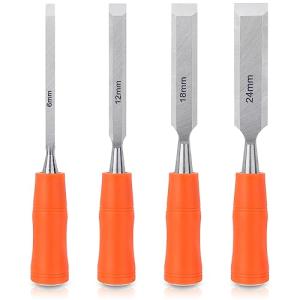
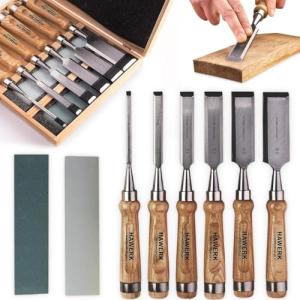
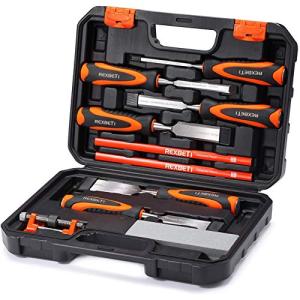
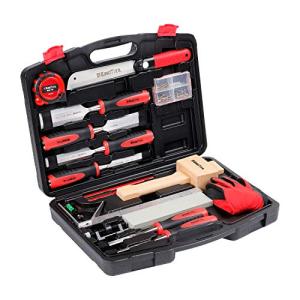
What Is a Wood Chisel Set?
A wood chisel set is a collection of hand-cutting tools designed to shape, pare, carve, and clean up wood by removing material one controlled slice at a time. Each chisel in a set consists of a hardened steel blade with a sharpened bevelled edge attached to a handle, traditionally made from wood or modern polymers. You drive the chisel either by hand pressure or with a mallet, depending on the task at hand.
Sets typically range from three to twelve pieces, with blade widths covering the most common sizes a woodworker reaches for — usually anywhere from 3mm (⅛ inch) all the way up to 38mm (1½ inches). Having a range of sizes means you're prepared for everything from precise dovetail joints to broad-stroke mortise work.
Why a Set Makes More Sense Than Buying Individual Chisels
You could, in theory, buy chisels one by one as specific needs arise. Many experienced woodworkers do exactly that, mixing and matching blades from different makers. But for most people — beginners and intermediate craftspeople especially — a matched set offers real advantages.
First, consistency. When all your chisels come from the same manufacturer, the steel hardness, temper, and bevel geometry tend to be uniform across the set. That means when you sharpen them, you develop a feel for the metal and can sharpen each chisel to a consistent, predictable edge without adjusting your technique from blade to blade.
Second, value. Manufacturers bundle chisels together at a discount compared to buying equivalent individual pieces. You'll almost always get more edge length per pound spent by going with a set.
Third, completeness. Projects rarely call for just one size. When you're cutting a mortise, cleaning up a dovetail, or trimming a housing joint, you'll naturally reach for different widths in the same session. A set ensures you have the right blade within arm's reach without interrupting your workflow to go hunting.
Types of Wood Chisels You'll Find in Sets
Not all chisels are built the same way, and different styles suit different kinds of work. Understanding the main types helps you pick a set that actually matches how you work.
Bench Chisels
These are the workhorses. Bench chisels are the most common type found in general-purpose sets, designed for everyday joinery tasks — cutting mortises, paring joints, chopping hinge recesses, and general shaping. They have medium-length blades and sturdy handles, and they're comfortable being struck with a mallet as well as pushed by hand. If you're buying your first set, a good set of bench chisels covers 90% of what you'll encounter.
Paring Chisels
Paring chisels have longer, thinner blades and are designed strictly for delicate hand work — never mallet work. They're used to sneak up on a line, clean up the inside of a joint, or refine a surface to a precise fit. Their length gives you excellent leverage and control for slicing thin shavings with high accuracy. Some sets include a paring chisel or two alongside standard bench chisels, which is a nice bonus.
Mortise Chisels
At the opposite end of the spectrum from paring chisels, mortise chisels are thick, heavy-bladed tools built to take hard mallet blows and lever out waste from deep mortises. Their robust cross-section resists twisting and flexing under stress. If you do a lot of traditional mortise and tenon joinery, having at least one or two dedicated mortise chisels is worthwhile. However, many general-purpose sets don't include them, so this may be a category where you supplement your set with individual purchases.
Firmer Chisels
Firmer chisels fall between bench chisels and mortise chisels in terms of blade thickness. They're sturdy enough for mallet use but not as specialised as a dedicated mortise chisel. Some older British-style sets use "firmer" as a general term for their standard bench chisels. Don't worry too much about the nomenclature — what matters is blade thickness, steel quality, and intended use.
Japanese Chisels (Nomi)
Japanese-style chisels, called nomi, are constructed differently from their Western counterparts. They typically feature a laminated blade — a hard high-carbon steel cutting edge forge-welded onto a softer steel body — and a hooped metal ferrule at the top of the handle to absorb mallet strikes. The laminated construction allows the cutting edge to be made from very hard steel (often HRC 62–65) that takes an extraordinarily keen edge, while keeping the blade body tough enough not to shatter. If you're interested in Japanese woodworking or simply want chisels that can be honed to a razor's edge, a Japanese-style set is worth serious consideration.
What to Look For in Steel Quality
The steel used in a chisel blade is the single most important factor in its performance. Too soft and the edge rolls quickly; too hard and it becomes brittle, prone to chipping rather than holding a fine edge.
Most quality Western bench chisels are made from tool steel in the HRC 58–62 hardness range. At this hardness, the blade is hard enough to hold an edge through extended use but still responds well to sharpening on waterstones or oil stones without excessive effort.
Chrome-vanadium steel is a popular and practical choice for mid-range sets. It's tough, takes a decent edge, and resists rust better than plain carbon steel. High-carbon steel — properly hardened and tempered — can outperform chrome-vanadium in edge retention but requires a little more care to prevent surface rust.
At the premium end, you'll find sets made from A2 tool steel or O1 tool steel. O1 takes a slightly finer edge and is beloved by hand-tool purists; A2 holds its edge longer under hard use. Both are excellent. For Japanese chisels, white steel (shirogami) and blue steel (aogami) are the traditional materials, both capable of extraordinary sharpness in the hands of someone willing to learn to sharpen them properly.
Handles — Wood, Plastic, or Polymer?
Handle material affects how a chisel feels in your hand, how well it absorbs shock during mallet work, and how long it lasts.
Wooden handles — typically ash, hornbeam, or boxwood — have a traditional feel and are comfortable for long periods of use. They transmit a satisfying tactile feedback as you work. The downside is that cheaper wooden handles can split under heavy mallet use if they lack a metal ferrule or hoop at the top. If you choose a set with wooden handles, make sure each handle is properly fitted and secured to the blade.
Polymer and composite handles are increasingly common on modern sets, even high-end ones. Materials like PVC, polypropylene, and glass-filled nylon absorb mallet blows well, resist splitting, and are virtually maintenance-free. Many professional woodworkers have moved to polymer-handled chisels without any loss of satisfaction in use.
Rubber-overmoulded handles are common on entry-level sets. They're comfortable and grippy but can feel bulky, and the rubber tends to degrade over time in workshop environments. They're fine for beginners but rarely the preferred choice among serious woodworkers.
Bevel Angle — Why It Matters for Your Work
The primary bevel on a new chisel is typically ground to around 25 degrees, with many woodworkers adding a secondary micro-bevel of 30 degrees at the very edge to improve durability without significantly affecting cutting feel. In practice, the steeper the included angle, the more durable the edge — but the more resistance you'll feel pushing through wood.
For paring and fine work, a lower angle (around 25 degrees) gives a slicing, almost effortless feel. For chopping mortises and heavy work, a slightly steeper edge (28–30 degrees) stays sharp longer under impact.
Most sets come with a primary bevel already ground. You'll need to hone the edge before first use — and every few sessions of serious work thereafter. A quality set of waterstones or a good sharpening system is every bit as important as the chisels themselves.
Choosing the Right Set Size
Starter sets (3–4 pieces) typically include widths of 6mm, 12mm, 19mm, and 25mm (roughly ¼, ½, ¾, and 1 inch). This covers most basic joinery needs and is ideal if you're new to hand tools or working in a limited-space workshop.
Mid-range sets (6 pieces) add a couple of intermediate sizes and often a wider blade, giving you more options without filling an entire drawer. This is the sweet spot for most hobbyist and semi-serious woodworkers.
Full sets (8–12 pieces) provide coverage across the full range of common widths and are suited to dedicated woodworkers who encounter varied joinery on a regular basis. The wider blades — 32mm and 38mm — are genuinely useful for cleaning up housing dadoes, paring large surfaces, and working at scale.
Care and Maintenance to Make Your Chisels Last a Lifetime
A good chisel set, properly cared for, will outlast you. The key habits are simple.
Keep your blades sharp. A dull chisel is dangerous — it requires more force, making it unpredictable — and it produces inferior results. Develop a sharpening routine and stick to it. A few minutes on the stones every session is far better than a long, frustrating regrinding session every few months.
Keep them dry. Rust is the enemy of fine steel. After use, wipe blades with a lightly oiled cloth and store them in the roll or case that came with the set. Camelia oil works beautifully for Japanese chisels; almost any light machine oil does the job for Western chisels.
Store them edge-down or protected. Letting chisel edges rattle around loose in a drawer is a fast way to damage them. A chisel roll, a rack, or a purpose-built tool tray keeps edges protected and makes it easy to grab the right size quickly.
Who Should Buy a Wood Chisel Set?
Wood chisel sets suit a wide range of people. Beginners learning the basics of hand-tool woodworking will find a mid-priced set an excellent starting point that teaches technique without punishing mistakes. Intermediate hobbyists upgrading from a cheap beginner set will notice an immediate improvement in how their chisels hold and perform. Furniture makers, cabinetmakers, and joinery specialists who already use power tools extensively will find quality chisels indispensable for the precision fitting that machines simply can't achieve.
Even carpenters and DIY enthusiasts who work primarily with power tools find themselves reaching for a chisel to trim a hinge recess, clean up a joint, or do the kind of careful fitting work that no router or saw can handle alone.
A good wood chisel set is not a consumable. Buy well, maintain properly, and the same set of chisels can serve you for forty years or more. The most important decisions are steel quality and handle comfort — everything else is refinement. Resist the temptation to buy the cheapest set available; a slightly higher investment at the outset means blades that sharpen properly, hold their edge, and make woodworking the pleasure it's supposed to be.
Browse our full range of wood chisel sets below, from entry-level options perfect for beginners to professional-grade Japanese and premium Western sets for discerning craftspeople.