Browse our full selection of planers below, and find the right machine for your workshop, your budget, and the kind of work you love to do.
Planers
Product List
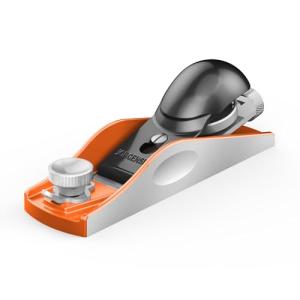
JORGENSEN NO.60-1/2 6-1/4" Wood Planer, Hand...
Product Review Score
4.42 out of 5 stars
183 reviews$37.98
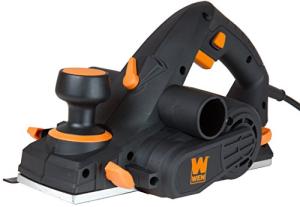
WEN 6530 6-Amp Electric Hand Planer, 3-1/4-In...
Product Review Score
4.22 out of 5 stars
88 reviews$39.50
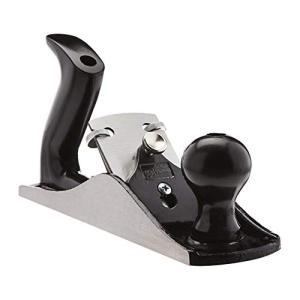
Amazon Basics Woodworking Hand Planer - No.4...
Product Review Score
4.22 out of 5 stars
27 reviews$27.80
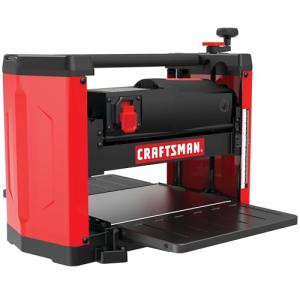
CRAFTSMAN Planer, 15 Amp, For Benchtops, Two...
Product Review Score
4.72 out of 5 stars
86 reviews$469.00 $299.00
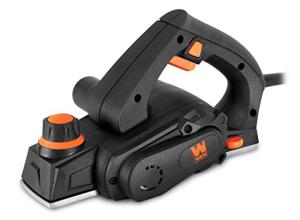
WEN 6528 3.8-Amp Electric Hand Planer, 2-3/8-...
Product Review Score
4.37 out of 5 stars
51 reviews$31.35
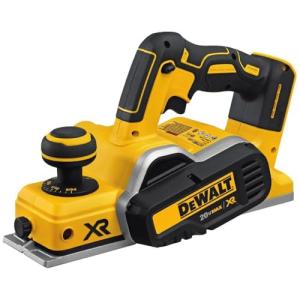
DEWALT 20V MAX Planer, 30,000 Cuts Per Minute...
Product Review Score
4.26 out of 5 stars
225 reviews$258.00
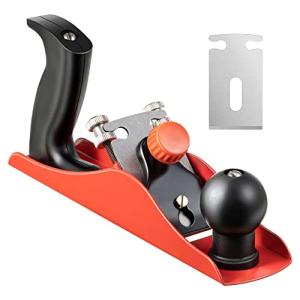
Dreyoo No.4 Adjustable Hand Planer with 2 Inc...
Product Review Score
4.53 out of 5 stars
160 reviews$19.99
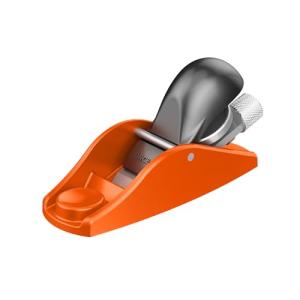
JORGENSEN No.101 Mini Wood Planer - Mini Hand...
Product Review Score
4.67 out of 5 stars
69 reviews$19.99 $16.98
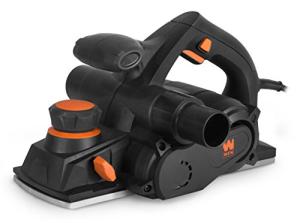
WEN 6534 8-Amp Electric Hand Planer, 4-3/8-In...
Product Review Score
4.66 out of 5 stars
34 reviews$56.44
What Is a Planer Tool and What Does It Do?
A planer is a woodworking tool designed to shave thin, controlled layers of material from the surface of a board. The goal is almost always one of two things: flattening a surface or achieving a consistent, precise thickness across the entire length of a board.
That might sound simple, but it's genuinely transformative. Rough lumber from a sawmill is rarely flat or uniform. It warps, cups, bows, and twists as it dries. Running it through a planer produces smooth, parallel faces you can actually work with — faces that will glue up cleanly, sit flat on a table saw, and slot into joints without gaps.
Beyond processing raw lumber, planers are also useful for removing old finishes or glue from reclaimed wood, trimming boards down to custom dimensions, and fitting pieces into spaces where standard dimensioned lumber is slightly too thick.
Types of Planer Tools
Not all planers are built for the same job. Understanding the different categories helps you match the right tool to your actual workflow.
Hand Planers (Manual)
Hand planers are the original woodworking tool — a flat metal body with an angled blade that shaves wood as you push it along the grain. They've been around for centuries, and for good reason: they're quiet, they require no electricity, they produce zero dust cloud, and in skilled hands, they deliver a level of control that no power tool can quite replicate.
For fine furniture making, fitting drawers, trimming tenons, or dialing in the fit of a surface before finishing, a hand plane is often the best tool for the job. Common varieties include the block plane for end grain and small work, the jack plane for initial flattening, the smoothing plane for final surface preparation, and the jointer plane for flattening long edges.
Hand planers demand more skill and time than their powered counterparts, but that learning curve pays dividends in the quality and feel of your finished work.
Electric Handheld Planers
An electric handheld planer looks roughly like a circular saw — a portable, two-handed power tool with a spinning cutter head on the base. These are built for speed and portability on jobs where you need to remove material quickly without setting up a stationary machine.
They're ideal for trimming door bottoms to clear a new floor covering, chamfering edges, flattening high spots on built-in furniture, or doing any planing work directly on a job site. Most models run between 3.8 and 6 amps, and the better ones include adjustable depth stops and chip ejection ports to keep the work area clear.
Where handheld electric planers fall short is in consistency over long boards. Without a fixed infeed/outfeed table, maintaining uniform thickness across a full piece of lumber is difficult. They're fast and useful, but they're a complement to benchtop or stationary planers rather than a replacement.
Benchtop Thickness Planers
Benchtop planers are the workhorses of home workshops and small professional shops. These machines sit on a bench or stand, accept boards fed through them, and deliver perfectly uniform thickness on the other side. They're what most people mean when they say "planer."
A typical benchtop model handles boards up to 12 or 13 inches wide, though 15-inch models are available for larger capacity. A 15-amp motor is the standard for this class, providing enough power to process most hardwoods without bogging down. The cutter head makes multiple passes — usually delivering between 60 and 100 cuts per inch — leaving a surface that needs minimal sanding.
For home woodworking and small-batch production, a benchtop thickness planer is one of the best investments you can make. It lets you buy cheaper rough lumber and dimension it yourself, which pays for the tool quickly.
Stationary (Floor) Planers
Stationary planers are the heavy-duty option for production shops and serious woodworkers who process large volumes of lumber. They're bolted to the floor, offer wider cutting capacity, more powerful motors, and better dust collection integration than benchtop models.
These machines handle wider boards, run longer without fatigue, and maintain tighter tolerances over time. If you're running a furniture shop, producing cabinetry at scale, or regularly working with hardwood slabs, a stationary planer earns its space.
Jointer-Planer Combos
A jointer and a thickness planer are actually complementary tools — a jointer flattens one face of a board and gives you a reference surface, and a thickness planer then makes the opposite face parallel to that reference. Using both in sequence gives you perfectly flat, parallel, dimensioned lumber.
Jointer-planer combination machines put both functions in one unit, which is a significant space saver for workshops where floor space is limited. The tradeoff is that you can't use both functions simultaneously and setup changes take a moment. For small shops that want full dimensioning capability without two separate machines, combo units are a very practical choice.
Key Features to Look for When Buying a Planer
With so many models on the market, it helps to know which specifications actually affect your work — and which ones are mostly marketing.
Cutter Head Type
This is probably the most important feature on any power planer. There are two main types:
Straight-knife cutter heads use two or three full-width blades that make contact with the wood all at once. They're common on budget-friendly models and easy to replace when they get dull. The tradeoff is more noise, slightly more tear-out on difficult grain, and more vibration.
Spiral or helical cutter heads use rows of small carbide inserts arranged in a helix pattern. Each insert only contacts a small area of the wood at a time, which produces a much smoother cut, significantly less noise, and better performance on figured or interlocked grain. The carbide inserts last much longer than steel knives, and when they do dull, you simply rotate the insert to a fresh edge rather than replacing the whole blade. Helical heads cost more upfront but are widely regarded as worth it by woodworkers who use their planer regularly.
Motor Power and Cutting Width
Motor size determines how aggressively you can cut and how hard a wood species you can process. For benchtop planers, a 15-amp motor is the practical standard. Stationary machines often run on 3HP or more, and those designed for industrial use go higher still.
Cutting width — the maximum board width the planer can accept — is equally important. A 12 or 13-inch benchtop is fine for most furniture work, but if you regularly work with wide panels or slabs, a 15-inch or wider machine becomes necessary.
Depth of Cut Adjustment
Most planers allow you to set the depth of cut — how much material is removed in a single pass. Typical ranges run from 1/16 inch for light finishing passes to 1/8 inch or more for aggressive material removal. Fine micro-adjustment capability is valuable for dialing in precise final thicknesses, especially when fitting components to tight tolerances.
Infeed and Outfeed Tables
Long boards want support on both sides of the machine. Planers with extended infeed and outfeed tables — or roller stands that can be set up alongside the machine — produce better results on long stock and reduce the tendency to snipe at the ends of boards.
Dust Collection
Planers produce a remarkable volume of chips and fine dust. A machine with an effective dust port that connects to a shop vacuum or dust collector keeps your workspace cleaner and protects your lungs. Some benchtop models include chip collection bags as a built-in feature.
Planer Tools by Skill Level and Workshop Type
Beginner and Hobbyist Woodworkers
If you're just getting started, a 13-inch benchtop thickness planer with a 15-amp motor and a three-knife cutter head gives you the most capability for the price. Pair it with a basic block plane and a jack plane for hand work, and you have the core toolkit for preparing lumber from scratch.
Intermediate Woodworkers
At this level, the upgrade that makes the biggest difference is moving to a helical cutter head — either by purchasing a mid-range planer that includes one or upgrading the head on an existing machine. Adding a decent jointer to work alongside your thickness planer opens up a much wider range of materials, since you can now flatten cupped or twisted boards before they go into the planer.
Professional and Production Shops
For high-volume work, a stationary planer with a helical head, a powerful motor, and a robust dust collection system is the practical choice. Jointer-planer combos from quality manufacturers offer the footprint efficiency that many professional shops need. At this level, features like digital readouts for repeatable thickness settings, anti-kickback fingers, and feed rate control become genuinely useful rather than optional extras.
Planer Safety: What You Need to Know
Planers are powerful machines that demand respect. A few consistent practices keep you safe.
Always wear eye protection — flying chips are common and can move fast. A dust mask or respirator is important for extended sessions, since fine wood dust is a long-term respiratory hazard. Hearing protection makes sense on loud machines, particularly straight-knife benchtop planers.
Never plane end grain with a power planer — this is a kickback risk. Always feed wood with the grain, not against it. Keep your hands clear of the infeed and outfeed zones while the machine is running, and use push sticks or rollers to guide boards through rather than reaching over the machine. Check that boards are free of nails, staples, or embedded metal before planing — hitting hidden metal will damage blades and can throw debris dangerously.
How to Get the Most Out of Your Planer
Even the best planer delivers poor results if it's used incorrectly. A few habits make a big difference:
Take lighter passes on heavily figured or interlocked grain to avoid tear-out. Run the board through from both directions if necessary — tear-out on one direction often cleans up when you reverse the feed. Keep your blades sharp; dull knives produce fuzzy surfaces, more tear-out, and put extra load on the motor. On wide boards, alternate sides between passes to remove material evenly and avoid introducing twist. And always joint one face flat before thickness planing — sending a severely cupped board through a planer doesn't flatten it, it just makes a thinner cupped board.
Planer tools are among the most genuinely useful pieces of equipment in any woodworking shop. They transform rough, unpredictable lumber into workable, precise stock — and they unlock access to cheaper rough-sawn material that would otherwise require expensive pre-dimensioned boards.
Whether you're starting with a basic benchtop model for weekend projects or building out a professional shop with a stationary machine and full jointer setup, understanding what each type of planer does and what features matter puts you in a much better position to choose the right tool and get the most out of it.