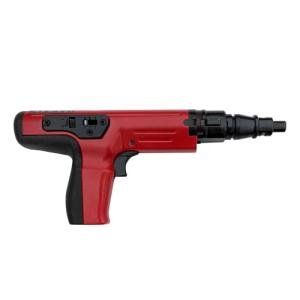
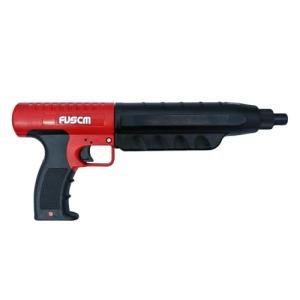
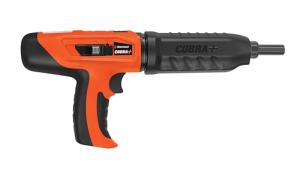
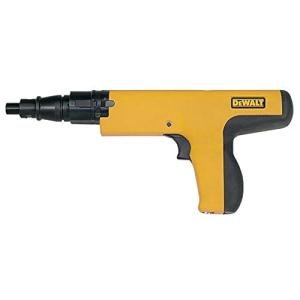
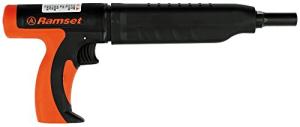
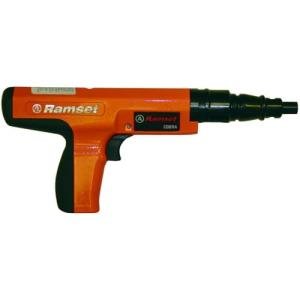
What Are Powder-Actuated Tools?
Powder-actuated tools (often called PATs, powder-actuated fastening systems, or by brand names like Hilti or Ramset) use controlled explosive charges — called powder loads or cartridges — to drive steel pins, studs, or anchors into hard base materials. Think of them as precision fastening devices that harness the energy of a small gunpowder charge, directing it through a piston to drive a fastener at high velocity.
Unlike traditional pneumatic nail guns, powder-actuated tools don't need an air compressor or an electrical hookup. That independence makes them ideal for job sites where portability and speed matter — concrete slabs, steel beams, tilt-up construction, and more.
There are two main categories:
Direct-acting tools transfer the explosive energy directly to the fastener. They're simpler and typically used for lighter-duty applications.
Indirect-acting (piston-driven) tools use a captive piston to transfer energy, which gives users more control over penetration depth and is generally considered safer and better for harder base materials.
How Powder-Actuated Tools Work
The mechanism is straightforward. You load a fastener (pin or stud) into the barrel, insert a powder charge (color-coded by power level), press the tool firmly against the work surface, and fire. The charge ignites, the expanding gas drives the piston or fastener into the material, and the job is done in a fraction of a second.
The color-coded powder load system is one of the most practical features in the category. Loads range from light gray for soft materials all the way to red or violet for hard concrete or thick steel. Matching the load strength to the base material and fastener requirements isn't just a performance issue — it's a safety requirement. Using too powerful a load on the wrong surface can result in fastener blowthrough.
Key Features to Look for in Powder-Actuated Tools
Power and Velocity Settings
Quality tools offer multiple power settings or are compatible with the full range of powder loads. Some models have a built-in power selector that lets you adjust drive depth without changing loads — a real time-saver on mixed-material jobs.
Tool Design: Low-Velocity vs. High-Velocity
Low-velocity tools (the more common type in professional construction) use the captive piston design to control energy transfer. High-velocity direct-acting tools move the fastener itself at the speed of the charge. For most job site use, low-velocity piston-driven models are preferred because they're more predictable and compliant with OSHA regulations in the United States.
Fastener Compatibility
Make sure the tool you're evaluating supports the range of fasteners you'll use — smooth shank pins, threaded studs (both metric and imperial), and washered pins for soft board materials. Some manufacturers design their tools and fasteners as a closed system, meaning you'll need to stick with their brand of pins and loads for reliable performance.
Ease of Loading and Ejection
On a busy job site, speed matters. Look for tools with a simple, single-pull loading mechanism and reliable spent cartridge ejection. Strip-fed tools (where powder loads come in a strip, like a staple gun) load faster and are less fiddly than single-shot models when you're driving dozens of fasteners back to back.
Weight and Balance
These are not lightweight tools, but better ergonomics make a real difference over a long workday. Compact piston designs and rubber-grip handles reduce fatigue and improve control, especially when working overhead or in confined spaces.
Durability and Build Quality
Powder-actuated tools take punishment. Look for all-metal barrel assemblies, hardened steel components, and tools that are designed for field cleaning and maintenance. The best models allow you to disassemble, clean, and inspect the tool on-site without special equipment.
Common Applications
Powder-actuated tools are used across a wide range of construction and industrial applications:
- Bottom plate fastening — securing wooden sole plates to concrete slabs in framing
- Steel deck attachment — fastening corrugated steel deck to structural beams
- Conduit and pipe hanger installation — driving threaded studs into concrete ceilings or walls for mechanical, electrical, and plumbing work
- Insulation board fastening — using washered pins to attach rigid foam or furring strips to masonry
- Track fastening — securing metal framing tracks to concrete floors and walls
- Fire-stop systems — attaching fire-rated assemblies to structural substrates
The common thread is that you're always fastening into or through a hard base material — concrete, masonry, or structural steel — where alternatives like screws or wedge anchors would be far slower.
Powder Loads and Accessories
Powder Load Selection
Getting the load selection right is critical. Each manufacturer provides a load selection guide based on base material type, fastener length, and application. As a general rule:
- Gray and tan loads are for light-duty applications into soft concrete or steel
- Green and yellow loads are mid-range — versatile for most standard fastening tasks
- Red and violet loads are reserved for hard concrete, thick structural steel, or deep penetration requirements
Strip loads offer the most convenience for production fastening. Single loads are practical for occasional use or tight-space applications.
Fasteners: Pins, Studs, and Washered Pins
Drive pins (smooth shank) are the most common fastener type, used for attaching wood, light steel, and conduit hangers to hard substrates.
Threaded studs create attachment points for nuts and bolts — essential for MEP (mechanical, electrical, and plumbing) work where you need to hang conduit, pipes, or cable trays from ceilings.
Washered pins include a plastic washer that distributes load across a wider area, making them ideal for softer materials like insulation board, drywall channel, and vapor barrier attachment.
Fastener length should be chosen based on the combined thickness of the material being attached and the required embedment depth in the base material. A typical starting point for wood-to-concrete applications is 3/4" to 1" embedment into the concrete after passing through the material.
Eye Protection and PPE
Every use of a powder-actuated tool requires eye protection — safety glasses or goggles that comply with ANSI Z87.1 at a minimum. Hearing protection is also recommended for repeated use, especially in enclosed spaces. Most manufacturers provide PPE guidance with their tools, and OSHA 29 CFR 1926.302 outlines specific operator requirements in the United States.
Safety: What Every User Must Know
Powder-actuated tools are classified as dangerous tools under OSHA standards, and for good reason — the energy they generate is substantial. Here's what safe operation looks like:
Training is mandatory. In many jurisdictions, operators must be trained and certified before using PATs. Training courses are typically offered by tool manufacturers and cover safe handling, load selection, misfires, and proper storage.
Never fire into unsupported or cracked material. Spalling, fracturing, or blowthrough can send fragments in unpredictable directions. Always inspect the base material before driving.
Follow the contact force requirement. Most powder-actuated tools will only fire when pressed firmly against the work surface. This is a built-in safety feature — never attempt to defeat it.
Handle misfires correctly. If a tool fails to fire, hold it against the work surface for at least 30 seconds, then follow the manufacturer's misfire procedure. Never point the tool at yourself or others during or after a misfire.
Store powder loads securely. Loads should be stored in a cool, dry location away from flammable materials, in their original packaging. Never carry loose loads in pockets.
Top Brands in the Powder-Actuated Tool Category
The market is dominated by a handful of professional-grade manufacturers who have built their reputation on tool reliability and fastener system consistency:
Hilti is widely regarded as the premium choice for demanding commercial and industrial applications. Their DX series tools are workhorses on steel and concrete, with an excellent range of pins and studs.
Ramset (part of Illinois Tool Works) offers a broad product range that covers everything from entry-level tools to high-production models, with strong availability through construction supply channels.
Simpson Strong-Tie has become a significant player in the category, especially for structural and seismic applications where engineered fastening solutions are required.
DeWalt has expanded into powder-actuated tools with a range of models designed for contractors already invested in the DeWalt ecosystem.
Maintenance and Care
Regular cleaning is the single most important maintenance habit with powder-actuated tools. Powder residue and carbon buildup inside the barrel and piston mechanism cause misfires and inconsistent drive depth. After every use session — or at least every 100 to 200 shots — disassemble the tool per the manufacturer's instructions, brush out the barrel, clean the piston, and inspect seals and O-rings.
Lubricate only where the manufacturer specifies. Over-lubrication inside the barrel can cause erratic fastener performance.
Store the tool unloaded, cleaned, and in its case. Never store powder loads inside the tool.
Choosing the Right Powder-Actuated Tool
The right tool depends on three things: your primary base material, your production volume, and your budget.
For occasional use — say, a framing contractor who drives fasteners into concrete a few times a week — a reliable single-shot low-velocity tool with a good load range will serve you well. For high-production work like steel deck fastening on a commercial floor, a strip-fed tool with an adjustable power setting will pay for itself in labor savings within a few jobs.
Don't overlook the total cost of ownership. Fasteners and powder loads are consumables, and their cost adds up. Compare pricing across manufacturers for the loads and pins you'll use most — the tool itself may be just one part of the equation.
Powder-actuated tools represent one of the most efficient fastening solutions available to construction professionals. With the right tool, the right load, and proper technique, you'll drive fasteners faster, more consistently, and with better holding strength than any alternative method for hard-substrate applications.