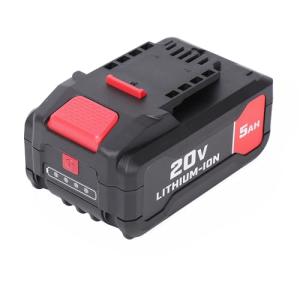
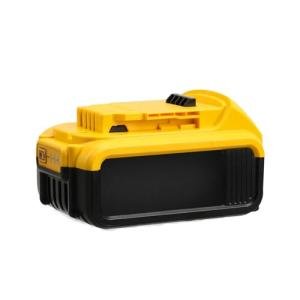
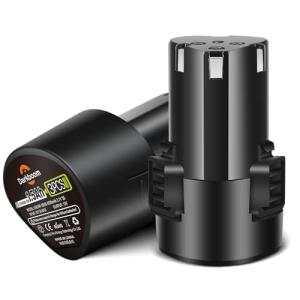
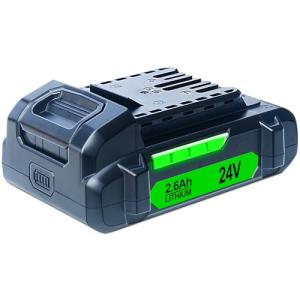
![Reoben [Upgraded] 3600mAh Replacement Battery Compatible with Ryobi 14.4V Battery 1314702 130224010 130224011 130281002 1400144 1400655 HP1441 HP1441M HP1441MK2 HP1442M Cordless Power Tools (2 Pack)](https://cdn.freshstore.cloud/offer/images/22720/2652/c/reoben-upgraded-3600mah-replacement-battery-compatible-with-ryobi-14-4v-battery-1314702-130224010-130224011-130281002-1400144-1400655-hp1441-hp1441m-hp1441mk2-hp1442m-cordless-power-tools-2-pack-2-small.jpg)
Why Replacing Your Battery Makes More Sense Than Replacing Your Tool
Power tools are built to last. A quality drill, circular saw, or impact driver can serve you reliably for a decade or more — but the battery that powers it has a natural lifespan. Most lithium-ion battery packs handle somewhere between 300 and 500 full charge cycles before performance noticeably drops. For professionals who charge daily, that might mean a replacement every couple of years. For occasional home users, a battery might simply age out before it wears out, losing capacity even with relatively light use.
Replacing the battery rather than the entire tool is almost always the smarter financial decision. You get the full performance of your trusted tool back, at a fraction of the cost of buying new. You also stick with the ergonomics, features, and platform compatibility you already know — which brings us to one of the most important concepts in the power tool world: the battery platform.
Understanding Battery Platforms and Compatibility
Before anything else, compatibility is the number one thing to get right when buying a replacement battery. Unlike phone chargers or AA batteries from the corner store, power tool batteries are not universal. Every major manufacturer — DeWalt, Milwaukee, Makita, Bosch, Ryobi, Metabo, and others — designs their batteries and tools around a proprietary system. The physical shape, connection points, and communication electronics are all brand-specific.
The good news is that most modern manufacturers have standardized their batteries within their own range. That means a DeWalt 20V MAX battery that fits your drill will also fit your circular saw, your flashlight, and your jobsite radio — as long as they're all in the same voltage family. This "one battery, many tools" ecosystem is a huge advantage when you're building or expanding a tool collection.
When shopping for a replacement, always check:
- Brand compatibility — Does it explicitly state it fits your tool brand?
- Voltage — Must match your tool exactly (18V, 20V, 40V, etc.)
- Battery series — Within brands, there are sometimes sub-platforms (e.g., Makita LXT vs. XGT vs. CXT)
- Physical fit — The battery should slide in and lock securely with no modification
One small note worth knowing: some brands label the same batteries differently depending on where they're sold. DeWalt's 18V and 20V MAX batteries, for example, are essentially the same technology — the 18V is the nominal voltage, while 20V is the peak. Both refer to the same physical battery.
Battery Chemistry: Lithium-Ion Is Now the Clear Standard
If you bought power tools more than fifteen years ago, you may have dealt with older nickel-cadmium (NiCd) or nickel-metal hydride (NiMH) batteries. They worked, but they came with serious drawbacks — notably the "memory effect," where a battery gradually loses capacity if it's regularly recharged before it's fully drained. They were also heavier, slower to charge, and lost their charge quickly when sitting on a shelf.
Lithium-ion (Li-ion) technology changed everything. Today, virtually all replacement batteries worth considering are Li-ion, and for good reason:
- No memory effect — You can top up a partial charge without any penalty to long-term capacity
- Higher energy density — More power in a lighter, more compact pack
- Slower self-discharge — A Li-ion battery left on a shelf holds its charge for months
- Consistent power delivery — Performance stays steady throughout the discharge cycle, rather than fading as the battery runs down
- Faster charging — Many modern packs can go from flat to full in under an hour
Within lithium-ion, you'll occasionally see references to specific cell chemistries like LiFePO4 (lithium iron phosphate) or NMC (nickel manganese cobalt). LiFePO4 packs tend to prioritize safety and longevity, often rated for 2,000 or more charge cycles. NMC cells offer higher energy density, making them popular in high-performance professional-grade batteries where maximum runtime in a compact size is the goal.
Voltage and Amp-Hours: The Two Numbers That Actually Matter
When comparing replacement batteries, two specifications do most of the work: voltage (V) and amp-hours (Ah).
Voltage determines raw power output. It must match your tool — no exceptions. Common voltage ratings include 12V for compact tools like small drills and multi-tools, 18V/20V for the most popular general-purpose tool category (drills, saws, impact drivers), and 36V to 60V for heavy-duty equipment like miter saws, large angle grinders, and outdoor power tools like chainsaws and leaf blowers.
Amp-hours tell you about runtime. A 2.0Ah battery and a 5.0Ah battery with the same voltage will power your drill equally well — but the 5.0Ah pack will run roughly two and a half times longer before needing a charge. Higher Ah batteries are heavier and more expensive, but the tradeoff is well worth it for extended use. As a practical guide:
- 1.5Ah – 2.0Ah: Light tasks, short sessions, compact tools where weight matters
- 3.0Ah – 4.0Ah: Everyday use, a solid all-round choice for most homeowners and DIYers
- 5.0Ah – 6.0Ah: Extended sessions, professionals, high-draw tools like circular saws and reciprocating saws
- 8.0Ah and above: Demanding professional applications, all-day runtime on site
A smart strategy for anyone who uses tools regularly is to own at least two batteries — one in the tool and one on the charger. You'll never have to wait, and your tools will always be ready when you are.
OEM vs. Aftermarket Replacement Batteries
One of the most common questions buyers ask is whether to go with the original manufacturer's (OEM) replacement battery or a quality aftermarket alternative. Both have their place.
OEM batteries — sold directly by brands like DeWalt, Milwaukee, and Makita — come with the confidence of full compatibility, warranty coverage, and advanced Battery Management System (BMS) integration. The BMS is the electronics inside the battery that communicates with your tool and charger, managing temperature, charge rate, and cell balancing. With OEM batteries, this communication is fully optimized for your specific tools, and many brands back their packs with two- to three-year warranties.
Aftermarket batteries from reputable third-party brands can offer excellent value, typically priced 20–50% below OEM equivalents. The key word is "reputable." Quality aftermarket manufacturers use premium cells, build in overcharge and over-temperature protection, and pursue independent certifications like CE, RoHS, and IEC 62133. When you see those certifications on a battery listing, it means the pack has passed standardized safety testing — not just the manufacturer's own claims.
The risks come from bargain-basement, uncertified batteries with no protection circuitry. Cheaply made battery packs can overheat, underperform, or in rare worst-case scenarios, create a fire hazard. Spending a little more for a certified aftermarket brand is always worth it. If a battery's price seems too good to be true compared to everything else in the category, treat that as a warning sign.
Signs It's Time to Replace Your Battery
Not sure if your battery actually needs replacing, or if something else is going on with your tool? Here are the clearest signs that the battery itself has reached the end of its useful life:
- Dramatically reduced runtime — A pack that used to last an hour now fades after fifteen minutes
- Slow or incomplete charging — The battery takes much longer to charge than it used to, or the charger indicates a fault
- Tool losing power under load — The battery voltage drops too quickly when the tool is under stress
- Overheating during use or charging — Warmth is normal, but excessive heat is a sign of deteriorating cells
- Physical damage — Swelling, cracking, or corrosion on the terminals
If your charger is showing a fault light and won't charge the battery at all, the BMS may have tripped a protection circuit due to deep discharge. Some batteries can be recovered with a slow "trickle" charge; others have simply reached end of life.
Getting More Life Out of Your Replacement Battery
Once you've invested in a good replacement pack, a few simple habits will help it last as long as possible:
Store at moderate temperatures. Lithium-ion cells degrade faster in extreme heat or cold. A cool, dry indoor space is ideal. Never leave batteries in a car on a hot day.
Don't fully drain them if you can help it. Unlike older NiCd batteries, Li-ion cells prefer not to be run all the way down. Recharging when there's still 20–30% left extends cycle life.
Use the right charger. Always charge with a charger designed for your battery's voltage and chemistry. Fast chargers are convenient but generate more heat; regular chargers are gentler on long-term capacity.
Keep terminals clean. A small wipe with a dry cloth occasionally keeps the metal contacts free of dust and corrosion, which can affect both charging and tool performance.
Rotate your batteries. If you have two packs, use them alternately rather than always running one flat while the other sits. Even wear across both batteries means both last longer.
Recycling Your Old Battery
Power tool batteries should never go in the regular bin. Lithium-ion packs contain materials that need proper handling — and in most places, disposal in household waste is illegal. The good news is that battery recycling is easy. Many hardware stores, home improvement retailers, and electronics shops accept old power tool batteries for free. Look for drop-off programs through recycling organizations in your area, and always check whether your battery manufacturer has a take-back scheme.
Choosing the Right Replacement Battery: A Quick Summary
Finding the right replacement battery comes down to a few non-negotiables: it must match your tool's brand platform and voltage, and it should carry an Ah rating that suits how you work. Beyond that, you're choosing between OEM reliability and certified aftermarket value — both are legitimate choices when you buy from trusted sources.
The cordless tools in your garage or on your jobsite are only as capable as the battery powering them. A fresh, quality replacement pack doesn't just restore your tool — it can actually improve your experience, especially if you're upgrading from a smaller capacity to a higher Ah battery that gives you longer runtime and more consistent power throughout the day.