Browse our full selection of arbor presses below, including single-lever, ratchet-lever, compound-lever, and pneumatic models across a range of capacities and throat depths.
Arbor Presses
Product List
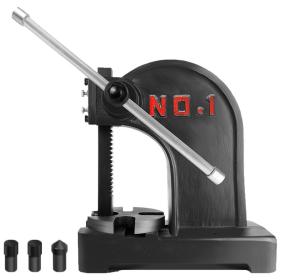
What Is an Arbor Press?
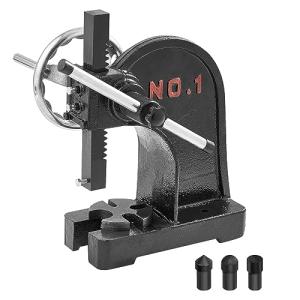
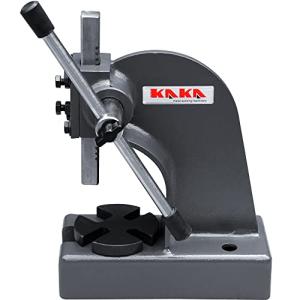
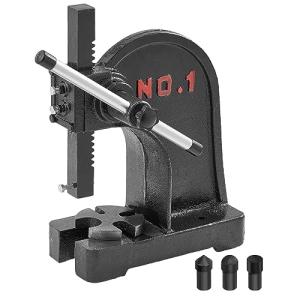
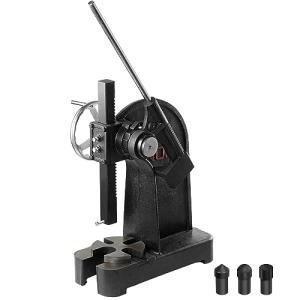
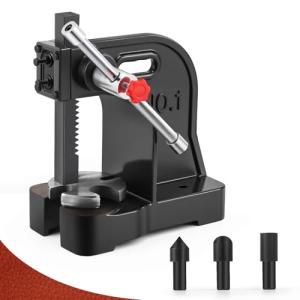
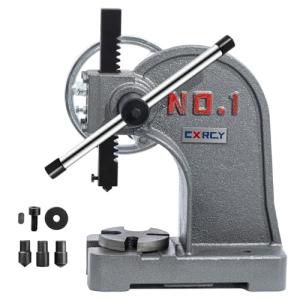
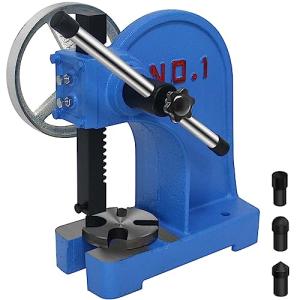
An arbor press is a compact, hand-operated mechanical press that uses a rack-and-pinion gear system to generate controlled downward force. By applying pressure to a lever arm or hand wheel, the operator drives a ram downward onto a workpiece with accuracy and consistency that's genuinely hard to replicate by hand.
The name "arbor press" traces back to the tool's woodworking origins, where the arbor — the central rotating shaft — was a key component. Over time, the design spread into metalworking, manufacturing, and dozens of other trades, but the name stuck. Today, arbor presses are found everywhere from precision electronics assembly to automotive repair shops.
What makes them special is the combination of simplicity and control. Unlike hydraulic or pneumatic presses that run on fluid or air systems, most arbor presses are purely mechanical — pull the lever, drive the ram, do the work. That simplicity means lower maintenance, greater reliability, and a more tactile "feel" when pressing delicate or precision-fit parts.
How Does an Arbor Press Work?
The mechanics are straightforward. The ram — which can be square or round depending on the model — sits inside a vertical column and is connected to a rack gear. When the operator moves the lever arm, it rotates a pinion gear that meshes with the rack, pushing the ram downward in a straight, controlled line.
The leverage ratio is what generates force from a relatively small input. A typical single-lever arbor press achieves around a 32:1 mechanical advantage — meaning a modest force applied to the end of the handle translates to considerably more pressure at the ram tip. The longer the handle and the finer the pinion pitch, the greater the leverage.
Most arbor presses are bench-mounted, sitting on a solid cast iron base that keeps the machine stable under load. The work table — which may be slotted or solid depending on the model — sits below the ram and holds the workpiece in position during pressing.
Types of Arbor Presses
Not all arbor presses are the same, and the right choice depends heavily on what you're planning to do with it. There are four main types, each suited to different levels of work and precision.
Single-Lever Arbor Presses
The single-lever press is the most popular and widely used type. It typically has just three or four moving parts, which keeps things simple, durable, and easy to maintain. Capacity ranges from 1 to 3 tons, making it ideal for light-to-medium tasks like pressing small bushings, installing bearings, punching holes in leather, assembling jewelry, and other bench-level operations.
If you're new to arbor presses or need a reliable everyday tool for general shop use, a single-lever model is usually the best place to start. They're affordable, compact, and capable enough to handle a surprisingly wide range of jobs. Some models are small enough for detailed crafts work like watchmaking and jewelry repair.
Ratchet-Lever Arbor Presses
The ratchet-lever press takes things up a notch. Instead of a single pull driving the ram all the way down, the ratchet mechanism lets you apply continuous, incremental pressure with each stroke of the handle. A hand wheel allows for rapid ram travel when you need to position quickly, then the ratchet takes over for the actual pressing force.
This design is particularly well-suited for broaching operations, where you need sustained, steady pressure over a longer stroke. Some ratchet-lever models offer deeper throats for larger diameter workpieces and extra daylight for longer broaches. They're available in 3 to 5-ton capacities, and the side-mount versions are especially useful in tight shop spaces since they can be bolted to a wall, post, or the side of another machine.
Compound-Lever Arbor Presses
For heavier professional applications, compound-lever presses are the workhorses of the arbor press world. These machines are built from serious cast iron and deliver tonnages ranging from 6 to 15 tons — yet despite the massive output, they don't require dramatically more physical effort to operate. The compound leverage mechanism multiplies the operator's input force through a secondary pivot system, so the harder work is done by the mechanics, not your arms.
A sliding pin allows the press to convert instantly from compound mode to single-lever mode, giving you flexibility depending on the task. Most compound-lever models also include a hand-operated brake for added control. These presses are a go-to for larger gear assemblies, electrical generator work, heavy bearing installation, and any application where you need controlled force with a tactile sense of what's happening — something hydraulic presses often can't offer.
Pneumatic Arbor Presses
Pneumatic arbor presses bring air power into the picture. Instead of manual lever action, pressurized air drives the ram, allowing for consistent, repeatable force across high-cycle operations. This makes them the preferred choice in production environments where an operator might be performing hundreds or thousands of press cycles per day — the physical strain of manual operation simply isn't sustainable at that volume.
Modern pneumatic models feature double-acting rams, chrome-plated piston rods, and two-hand safety controls. They typically range from 1 to 2 tons, and the air pressure, stroke length, and ram speed can all be adjusted to suit the specific application. Threaded rod ends make swapping tooling and nose pieces fast and easy, which is a real advantage on assembly lines with varied part requirements.
What Can You Use an Arbor Press For?
This is where the arbor press really earns its reputation. The list of applications is genuinely impressive for such a simple machine.
In manufacturing and engineering, arbor presses are staples for pressing bearings and bushings into housings, installing and removing dowel pins and roll pins, staking components, and punching holes in sheet metal. Any press-fit operation that demands accuracy over raw power is a natural fit.
In automotive and heavy equipment repair, they handle gear and shaft assembly, transmission component fitting, and the installation of suspension bushings. A compound-lever press is particularly valuable here when dealing with tightly toleranced parts that need to go together just right.
In woodworking and furniture making, arbor presses help drive dowels, press-fit joints, and assemble hardware with consistent force — tasks that are awkward and imprecise when done with a mallet.
In jewelry making and watchmaking, smaller single-lever models are used for setting stones, forming small sheet metal parts, and assembling delicate components where a heavy touch would cause damage.
In leatherworking, they punch clean, consistent holes and can emboss patterns and logos with repeatable results that hand tools simply can't match.
In the firearms world, reloading presses for ammunition are a well-known application. The controlled force and consistent stroke make arbor presses popular with reloaders who want precision in bullet and shell assembly.
In electronics and telecom assembly, arbor presses appear in connector pressing, terminal assembly, and component insertion — industries where they've been used extensively across aerospace, defense, and medical manufacturing.
You can even use one to crush aluminum cans for recycling, though that's admittedly underselling the machine.
Key Specifications to Understand Before You Buy
Shopping for an arbor press is easier when you know which numbers actually matter.
- Tonnage / Capacity — This is the maximum force the press can deliver. A 1-ton press handles light assembly work; a 6-15 ton compound press handles heavy industrial applications. Buying more capacity than you need isn't necessarily wasteful — it gives headroom and reduces operator effort.
- Throat Depth — This is the horizontal distance from the ram center to the nearest part of the column frame. A deeper throat lets you work on larger or wider workpieces. If you're pressing bearings into large housings or working with wide sheet metal, throat depth matters a lot.
- Ram-to-Table Distance — The vertical clearance between the ram tip (in its highest position) and the work table. This determines how tall a workpiece you can accommodate.
- Ram Type — Square rams resist rotation and are better for tools that need to maintain a specific orientation. Round rams are fine for symmetrical pressing operations.
- Base and Build Material — Cast iron is the standard for a reason. It's rigid, vibration-damping, and durable over decades of use. Heavier bases stay more stable under load.
Arbor Press vs. Hydraulic Press: Which Do You Need?
It's a fair question, and the honest answer is that they serve different purposes rather than competing directly.
A hydraulic press delivers far more force — often 10 to 100+ tons — and is better for high-force operations like blanking, deep drawing, or heavy forming work. But that raw power comes with tradeoffs: hydraulic presses are larger, more expensive, require fluid maintenance, and give the operator less tactile feedback during pressing.
An arbor press gives you control. When you're press-fitting a bearing or setting a pin, the ability to feel the resistance and stop the moment the part seats correctly is genuinely valuable — over-pressing is a real risk with powered machines. For precision assembly, repair work, and any operation where feel matters as much as force, an arbor press is often the better tool even if a hydraulic press is available.
For high-cycle production environments where consistency and speed are paramount, pneumatic arbor presses bridge the gap — offering air-driven power with the same controlled stroke geometry of a manual press.
Choosing the Right Arbor Press
Before you commit to a purchase, think through a few practical questions:
- What's the heaviest job you'll regularly do? Occasional heavy work might push you toward a compound-lever model even if most tasks are lighter.
- How much bench or floor space do you have? Side-mount ratchet presses are worth considering if space is tight.
- Will you be doing high-volume repetitive work? Pneumatic is the smart choice here.
- Do you need precise tactile control? Manual mechanical presses give you that; pneumatic and hydraulic do not.
- What tooling will you use? Check that the ram accepts the nose pieces and inserts your applications require.
Arbor presses have been doing reliable, precise work in workshops for well over a century, and they haven't gone anywhere — because they work. They're "green" in the traditional sense: no electricity, no hydraulic fluid, no compressed air required for manual models. Just mechanical advantage, good cast iron, and the operator's hands.
Whether you're outfitting a home shop, stocking a production floor, or replacing an aging machine, the arbor press category offers a range of options that scale from jeweler's bench work all the way up to serious industrial pressing. Find the type and tonnage that fits your actual use case, and you'll have a tool that outlasts nearly everything else in the shop.