What's the Difference Between a Screw Gun and a Screwdriver?
It's a question worth answering directly, because the terms get used loosely even by professionals. A screwdriver is any tool — manual or powered — designed to drive or remove screws using rotational force. A screw gun is a specific type of powered screwdriver engineered for high-volume fastening, usually featuring a depth-sensitive nosepiece that stops driving the moment the screw reaches the right depth.
Screw guns are the go-to tool in drywall installation, decking, and construction framing. Regular powered screwdrivers — including cordless drills with screwdriver bits — offer more versatility for general use. Both have their place, and a well-stocked toolkit will typically include both.
Manual Screwdrivers: Still Irreplaceable
Don't let the power tool market fool you — manual screwdrivers remain one of the most important tools in any kit. They offer control that no battery-powered device can fully replicate, especially when working with delicate materials, small fasteners, or in tight spaces where a drill would be awkward.
Flathead Screwdrivers
The flathead (or slotted) screwdriver is the oldest design in the category, and it's still genuinely useful. The flat blade engages a single slot across the screw head. It's less common in modern construction than it once was, but you'll still encounter flathead screws in electrical work, antique furniture restoration, and certain plumbing fixtures. Having a range of flathead sizes — from precision jeweller's width to heavy-duty cabinet screwdrivers — covers most situations.
Phillips Head Screwdrivers
Developed in the 1930s, the Phillips design changed fastener technology permanently. The cross-shaped tip engages deeper and more reliably than a flathead, reducing slippage and making it far more practical for production environments. Today, Phillips is the dominant screw type in consumer products, furniture assembly, and general construction. A good set of Phillips screwdrivers — covering sizes PH0 through PH3 — handles the vast majority of everyday jobs.
Pozidriv and Torx Screwdrivers
Pozidriv (marked PZ) looks similar to Phillips but has additional ribs between the cross arms, offering better contact and less cam-out under high torque. It's widely used in European manufactured furniture and construction hardware. Torx (star-shaped) fasteners are increasingly common in automotive work, electronics, and high-end furniture — their geometry virtually eliminates cam-out, which is why engineers love them. If you're working on cars or computers, Torx bits are non-negotiable.
Precision Screwdrivers
Electronics, eyewear, watches, and small appliances use micro-fasteners that standard screwdrivers would destroy on contact. Precision screwdriver sets with rotating top caps, fine-knurled handles, and sub-millimetre tips let you work confidently in miniature assemblies without stripping a single screw head.
Powered Screwdrivers: Speed Without Sacrificing Control
Cordless Electric Screwdrivers
The cordless electric screwdriver sits between a manual driver and a full drill/driver in terms of power and application. Compact and lightweight, these tools run on small rechargeable battery packs — typically 3.6V to 8V — and are designed for light fastening tasks: assembling flat-pack furniture, installing hinges, tightening cabinet hardware. They're easy for non-tradespeople to use comfortably and won't overdrive fasteners the way a higher-voltage drill might.
Look for models with adjustable torque settings, a reversible motor for removing screws, and a battery indicator. Magnetic bit holders that accept standard 25mm and 50mm bits are practically essential — you don't want a proprietary bit system locking you into one manufacturer's accessories.
Right-Angle Screwdrivers
When space is tight — inside cabinets, behind appliances, or between wall studs — a standard screwdriver can't reach the fastener. Right-angle screwdrivers use a perpendicular drive mechanism to let you work in confined areas. Both manual and powered versions exist, and the powered right-angle driver is a surprisingly valuable specialist tool for carpenters and kitchen installers.
Drill/Drivers with Screwdriving Modes
Most people doing occasional DIY work don't buy a dedicated screwdriver and a drill separately — they buy a drill/driver, which does both jobs. Modern 18V and 20V cordless drill/drivers include:
- Clutch settings that disengage the motor when a preset torque is reached, preventing overdriving
- Speed selectors (low speed for driving, high speed for drilling)
- Bit holders that accept all standard driver bits via a quick-change chuck
For most homeowners and light-duty tradespeople, a quality drill/driver with a full bit set is the most economical and practical choice. Brands like DeWalt, Makita, Milwaukee, and Bosch have all built strong reputations in this space, and their battery platforms often extend across dozens of other tools — meaning one battery ecosystem handles your whole toolkit.
Screw Guns: Built for Volume
Drywall Screw Guns
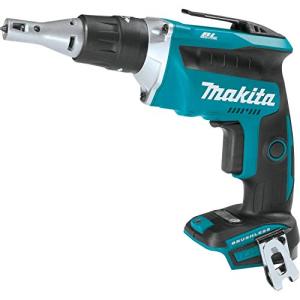
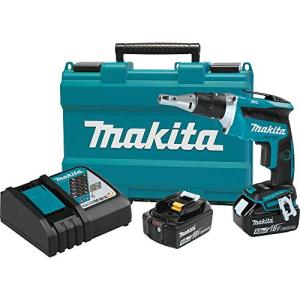
This is where the screw gun earns its name. A drywall screw gun — sometimes called a drywall driver — is a high-speed tool designed to drive self-tapping drywall screws through gypsum board and into steel or timber studs at a consistent, controlled depth. The defining feature is the depth-sensitive nosepiece: when the screw reaches the correct depth, the nosepiece makes contact with the board surface and disengages the drive mechanism automatically.
This means every screw is driven to exactly the right depth — not too shallow (which leaves a bump under the finish coat) and not too deep (which breaks the paper facing and loses holding strength). A skilled drywall installer can drive hundreds of screws per hour with a drywall gun, a pace that no drill/driver can match for this specific application.
Collated Screw Guns
Taking productivity a step further, collated screw guns use strips or coils of pre-loaded screws that feed automatically into the drive mechanism. The installer never needs to stop and place individual screws — just position the nosepiece, pull the trigger, and the tool indexes to the next fastener. Collated screw guns are widely used in decking installation, subfloor fastening, and large-scale drywall projects. They dramatically reduce repetitive strain injuries and are increasingly popular with professional contractors managing high-volume work.
Autofeed Screwdrivers
Similar in concept to collated guns but often lighter and designed for finish work, autofeed screwdrivers accept collated screw strips and offer finer torque adjustment. They're a good choice for cabinetry installation, trim carpentry, and situations where you're driving a lot of screws but need more placement accuracy than a full-size collated gun allows.
Choosing the Right Screwdriving Tool: Key Considerations
Application Type
The single most important factor is the job itself. Light assembly and furniture work? A manual Phillips and a cordless electric screwdriver cover you completely. Hanging drywall across multiple rooms? A dedicated drywall screw gun pays for itself in the first day. Mixed-use DIY around the home? A mid-range drill/driver with a full bit kit is your most versatile investment.
Torque and Speed
Higher torque means the ability to drive larger screws into harder materials. Higher no-load speed means faster fastening in easy materials. Adjustable clutch settings let you dial in the right torque for each material without worrying about overdriving. For most driving tasks, you want lower speed and higher torque — the opposite of what you'd want for drilling.
Battery Platform
If you're buying into a cordless power tool system, consider the broader ecosystem. Choosing a brand with a compatible battery platform means your drill/driver, screw gun, impact driver, and circular saw can all share the same battery packs. This reduces cost and eliminates the "dead battery" problem on site.
Ergonomics and Weight
Screwdriving is a repetitive motion task. A tool that feels comfortable at the start of the day can become genuinely painful by the afternoon if the grip diameter, handle angle, or weight isn't right for your hand and working posture. If possible, handle the tool before buying — or check return policies carefully when purchasing online. Rubber over-moulded grips, balanced weight distribution, and low-vibration designs make a real difference across a long working day.
Bit Compatibility
Stick with tools that accept industry-standard hex shank bits (typically ¼-inch hex). This gives you access to the widest range of driver bits — Phillips, Pozidriv, Torx, Robertson, Hex, spanner, and specialty formats — without being tied to one brand's accessories. A quality bit set with hardened steel tips lasts far longer than budget alternatives and maintains a tighter fit in the screw recess, reducing cam-out and protecting both the fastener and the bit.
Screw Bit Types and When to Use Them
Even the best screw gun underperforms with the wrong bit. Here's a quick reference:
Phillips (PH0–PH3) — General purpose, the most widely used. PH2 is the standard for most construction and furniture work.
Pozidriv (PZ1–PZ3) — Better torque transfer, common in European hardware and furniture fittings. Don't substitute Phillips for Pozidriv — the geometry is different enough to cause cam-out.
Torx (T5–T40+) — Electronics, automotive, and high-end cabinetry. Near-zero cam-out makes these the professional's first choice wherever the fastener type appears.
Robertson/Square (R1–R3) — Extremely popular in Canada and growing in use elsewhere. Excellent cam-out resistance and self-centering properties.
Hex/Allen — Used in flat-pack furniture, machine screws, and bolts. Available in metric and imperial sizes.
Tri-Wing, Pentalobe, Spanner — Security fasteners used to deter tampering in consumer electronics, public infrastructure, and some proprietary assemblies. If you're doing repair work on phones or appliances, a full security bit set is worth having.
Maintenance and Care
Screwdrivers and screw guns are generally low-maintenance tools, but a few habits extend their life significantly. Keep bit tips clean and dry — oil and debris on the tip reduces grip in the screw recess. Inspect bits regularly and retire worn ones before they start stripping heads. For powered tools, keep vents clear of dust build-up and store batteries at room temperature. Lithium-ion batteries stored partially charged last longer than those stored fully discharged.
Manual screwdrivers benefit from occasional handle inspection — cracked or worn handles reduce grip control and can cause slipping injuries. Replace damaged handles rather than working through discomfort.
A good set of screwdrivers and the right powered driving tool are foundational to any toolkit — whether you're a weekend DIY enthusiast or a full-time contractor. Buy quality in the sizes and types you'll use most often, understand the difference between tools built for volume and tools built for versatility, and match the bit to the fastener every single time. Do those three things and you'll drive cleaner, faster, and with far less frustration than the average person who grabs whatever's closest.