What Is a Wrench — and Why Does It Matter Which One You Use?
At its most basic, a wrench is a hand tool that applies torque to turn a fastener — a nut, bolt, pipe fitting, or similar component. It gives you the mechanical advantage your bare hands simply don't have. But that's where the simplicity ends.
Use the wrong wrench and you'll round off a bolt head, damage a soft fitting, or find yourself unable to reach into the space you're working in. The difference between a job done right and a frustrating hour of stripped fasteners often comes down to tool selection. That's why understanding what's in this category actually matters — not just for professionals, but for anyone who takes their toolkit seriously.
Types of Wrenches: A Practical Breakdown
Adjustable Wrenches
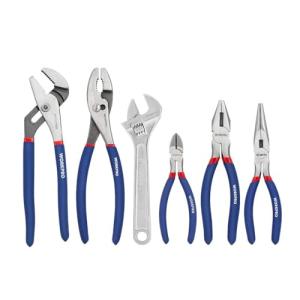
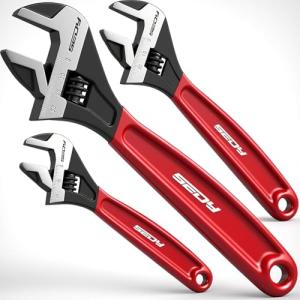
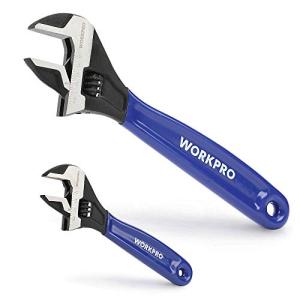
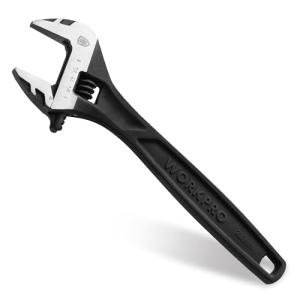
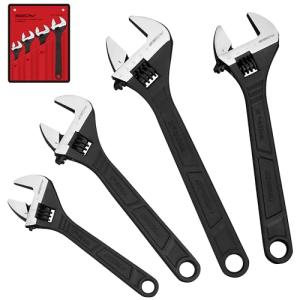
Often called a crescent wrench, the adjustable wrench is the Swiss Army knife of the category. A movable lower jaw — controlled by a rotating worm gear — lets you dial in the jaw width to fit a wide range of nut and bolt sizes. This makes it incredibly handy for home repairs, general plumbing, and situations where you don't know what size fastener you'll encounter.
The trade-off? Because the jaw adjusts, it doesn't grip as securely as a fixed wrench under high torque. For stubborn, over-tightened fasteners, you're better off reaching for a dedicated size. Common sizes run from 6 inches to 12 inches, with 8-inch and 10-inch models being the most popular all-rounders. One important tip: always pull the wrench toward the adjustable jaw side — not away from it — to keep the grip firm and prevent slippage.
Combination Wrenches
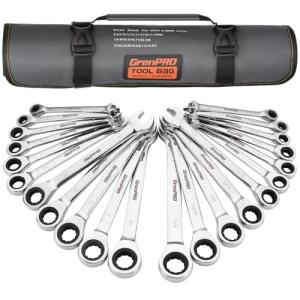
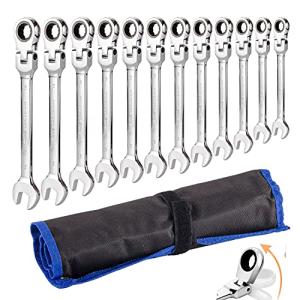
Combination wrenches are what most people picture when they think of a standard wrench — a flat bar with different ends. One end is open (a U-shaped jaw), and the other is a closed ring, also called a box end. Both ends typically fit the same size fastener, but each has a different tactical advantage.
The box end surrounds the fastener completely, gripping all six faces (or twelve, on 12-point versions) for better torque and less chance of slipping. Use it to break a stubborn fastener loose. Then flip to the open end, which is faster to reposition, to run the nut or bolt the rest of the way off.
Combination wrenches come in metric and SAE (imperial) sizes, and a decent set covering both standards belongs in every toolkit. Mechanics, construction workers, and DIYers all rely on them daily.
Box-End Wrenches
A box-end wrench is all closed ring — no open end. That design gives it maximum grip on a fastener, making it the go-to for high-torque work where you absolutely cannot afford the head to slip and round off. The 15-degree angled head helps you maneuver in tight spaces with obstructions nearby.
Box wrenches are available in 6-point and 12-point configurations. Six-point grips are stronger and less likely to slip on a hex fastener. Twelve-point models allow you to engage the wrench at more positions — useful in confined spaces where full rotation isn't possible.
Ratchet Wrenches and Socket Wrenches
Ratchet wrenches changed the speed at which mechanical work gets done. Instead of lifting and repositioning the wrench after every partial turn, a ratcheting mechanism lets you swing the handle back without disengaging from the fastener. Keep going — forward tightens, back swings free — until the job is done.
Socket wrenches pair a ratchet handle with interchangeable sockets in different sizes. The drive size (usually 1/4", 3/8", or 1/2") connects the ratchet to the socket. Larger drives handle larger fasteners and more torque. Sockets come in standard and deep versions; deep sockets are essential when a bolt extends up through a nut, or when the fastener is recessed below the surface.
For automotive work, machinery maintenance, and any job with a lot of bolts to move, a good ratchet and socket set dramatically cuts down your working time.
Torque Wrenches
Not all tightening is equal. Engine cylinder heads, wheel lug nuts, suspension components, bicycle cassettes — these require fasteners tightened to an exact torque specification. Too loose and things fail; too tight and you can crack components, stretch bolts beyond their limits, or cause dangerous structural failures.
Torque wrenches solve this by letting you set a specific torque value before you begin. The most common type — the click-type torque wrench — makes an audible click and a tactile release when the target torque is reached. Other styles include dial-type wrenches with a visible gauge, and digital torque wrenches with electronic readouts for precise, repeatable results.
One habit worth building: always reset a click-type torque wrench to its lowest setting after use. Leaving it loaded under tension shortens the life of the internal spring mechanism.
Allen Wrenches (Hex Keys)
Allen wrenches — also called hex keys — are L-shaped (or T-shaped) tools with a hexagonal cross-section. They're male-drive tools that fit into hex socket screws and bolts. You'll find them everywhere: flat-pack furniture, bicycles, motorcycles, machinery, cabinetry hardware, and electronic equipment.
They come in individual pieces or as folding sets. Folding Allen wrench sets are particularly practical — all the sizes live in one compact handle, and you flip out the one you need like a pocketknife. Ball-end hex keys have a rounded tip that lets you drive at up to a 25-degree angle, which is helpful in tight spots where a straight-on approach isn't possible.
Pipe Wrenches
Pipe wrenches are the heavyweights of the plumbing world. With serrated, angled jaws and a large adjustable head, they're designed to grip and turn threaded pipes, pipe fittings, and other cylindrical components that a standard wrench simply can't hold. The serrations dig in as you apply torque — the harder you push, the tighter the grip.
They're not subtle tools. Pipe wrenches are designed for grip force, not delicacy, so they'll leave marks on whatever they touch. They're the right call for iron and galvanized steel pipe work. For softer materials like copper or chrome, a strap wrench is a better choice.
Strap and Chain Wrenches
Strap wrenches use a rubber or nylon strap looped around an object to grip and turn it. Because the strap is non-marring, these wrenches are ideal for oil filter changes, PVC fittings, chrome pipes, jar lids, and any round or irregularly shaped object that needs turning without surface damage. Chain wrenches work on the same principle but use a heavy-duty metal chain instead of a strap — better for bigger pipes and heavier-duty applications.
Flare Nut Wrenches
Flare nut wrenches (also called line wrenches or brake wrenches) look like a box-end wrench with a small gap cut out of one side. This gap allows the wrench to slip over a tube or line before engaging the fitting — essential for plumbing fittings, fuel lines, and brake lines where the fastener is located at the end of a pipe. The nearly-enclosed design grips more of the fastener's surface than an open-end wrench, reducing the risk of rounding soft metal fittings made of brass or copper.
Impact Wrenches
Impact wrenches take power tools into wrench territory. Using a hammering rotary mechanism, they deliver high-torque bursts to drive fasteners fast — far faster than any hand wrench. They're available in pneumatic (air-powered), corded electric, and cordless battery-powered versions.
Pneumatic models deliver consistent, high torque and are a staple in professional shops. Cordless impact wrenches have closed the gap significantly in recent years, with modern brushless motors offering serious performance for automotive, construction, and heavy maintenance work. A cordless model in the 300–400 ft-lbs range handles tire changes and most automotive work comfortably. For heavy industrial use, pneumatic or high-voltage corded models can exceed 2,000 ft-lbs of torque.
SAE vs. Metric: Which Do You Need?
This is one of the most common questions in the wrenches category. SAE (Society of Automotive Engineers) wrenches are sized in fractions of an inch — 3/8", 1/2", 9/16", and so on. Metric wrenches are sized in millimetres — 10mm, 13mm, 17mm, and so on.
Most modern vehicles and equipment use metric fasteners. Older American vehicles, farm equipment, and some industrial machinery still use SAE. In practice, a complete toolkit should include both. Many combination wrench sets now include both SAE and metric sizes in a single roll or case.
What to Look for When Buying Wrenches
Material: Chrome-vanadium (Cr-V) steel is the industry standard for quality wrenches. It offers excellent hardness, toughness, and corrosion resistance. Avoid tools made from basic carbon steel if you plan to use them under real load. A chrome-plated or satin-finish surface helps resist corrosion and makes cleanup easier.
Finish: A polished mirror finish looks great but can be slippery. Satin or matte finishes are generally easier to grip in oily conditions. Some wrenches feature black oxide coatings for low-glare work in dim conditions — popular with automotive technicians.
Drive and Point Design: As mentioned, 6-point box ends are stronger under torque; 12-point box ends offer more ratcheting positions. For combination and box wrenches, 6-point designs are preferred when working with stuck or damaged fasteners.
Handle Comfort and Length: Longer handles give more leverage but can be unwieldy in confined spaces. Some wrenches feature ergonomic rubber-grip handles for comfort during extended use. Flare-nut and flex-head wrenches offer useful geometry for tricky access angles.
Sets vs. Individual Wrenches: For most people, a combination wrench set (metric and SAE) plus a ratchet and socket set covers the vast majority of situations. Add a torque wrench if you work on vehicles or anything with specific torque requirements. Individual wrenches make sense when you need a specific type — like a pipe wrench or basin wrench — for a particular application.
Warranty: Quality wrench manufacturers stand behind their tools with lifetime warranties. It's a reliable indicator of build quality and confidence in materials.
How to Take Care of Your Wrenches
Good wrenches last decades when treated well. After use, wipe them down with a clean rag to remove grease, dirt, and moisture. Apply a light film of machine oil to adjustable mechanisms to keep them moving smoothly and prevent rust. Store wrenches in a dry environment — a toolbox, wall-mounted organizer, or roll-up tool bag keeps them organized and protects them from humidity. Inspect your wrenches periodically for cracks, worn jaw faces, or deformed heads, and retire any tool that shows structural damage.
A rounded jaw on an adjustable wrench or a cracked handle on a combination wrench isn't just inefficient — it's a safety hazard. Always use a wrench that's in sound condition and correctly sized for the job at hand.
Wrenches are the backbone of any serious toolkit. Whether you're building, fixing, maintaining, or fabricating, there is a wrench designed exactly for what you need. The depth of this category — from a simple adjustable wrench for the kitchen drawer to a professional-grade torque wrench for engine assembly — means you can always find the right tool for the right job.
Browse our full range of wrenches to find individual pieces, complete sets, and everything in between. Metric or SAE, hand-operated or powered, general-purpose or specialty — we carry the tools that get the job done right the first time.