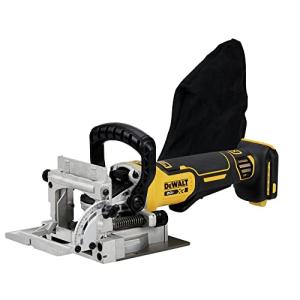
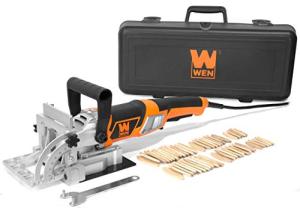
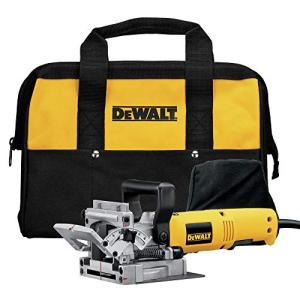
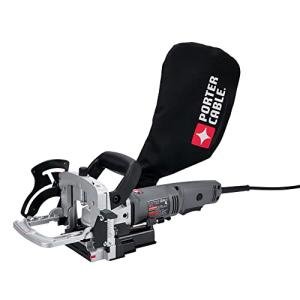
What Is a Biscuit Joiner?
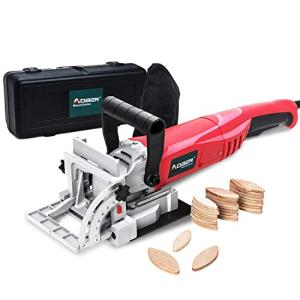
A biscuit joiner — also called a plate joiner — is a power tool that cuts small, crescent-shaped slots into two pieces of wood. A thin, oval-shaped piece of compressed beech wood, called a biscuit, is then glued into both slots. When the glue makes contact with moisture, the biscuit swells slightly, locking the joint together with surprising strength.
The concept is elegantly simple, but the results speak for themselves. Biscuit joints have been a staple of professional cabinet making and furniture production for decades. They offer a practical middle ground between basic butt joints and complex hand-cut joinery — far stronger than plain glue, and far quicker than cutting traditional joinery by hand.
How Biscuit Joiners Work
At their core, biscuit joiners use a small circular saw blade that plunges into the workpiece at a precise, pre-set depth. The blade creates a slot just wide enough and deep enough to receive a standard biscuit. Both mating pieces get identical slots, cut to match in position, and once biscuits and glue are in place, the joint is brought together and clamped.
The key advantage over other alignment methods is registration. Because biscuits sit in slots, the two workpieces can only shift in one direction — along the slot — and even that movement is constrained by the biscuit's fit. This makes face-to-face alignment during glue-ups dramatically easier, especially when working with large boards or multiple pieces simultaneously.
Modern biscuit joiners include adjustable fences that can be set to different angles and heights, allowing cuts to be made at 90 degrees for edge joints, at 45 degrees for mitre joints, and flat for face-to-face connections. Better models include fine-tuned depth stops so you can switch between biscuit sizes — typically #0, #10, and #20 — without guesswork.
Types of Biscuit & Plate Joiners
Corded Biscuit Joiners
Corded models remain the workhorse choice for professional woodworkers and serious hobbyists. They deliver consistent power throughout long working sessions without any drop in performance. If you're cutting dozens — or hundreds — of slots for a cabinet run or a production environment, a corded biscuit joiner won't let you down. Look for motors in the 600W to 900W range for smooth cuts through hardwood without bogging down.
Cordless Biscuit Joiners
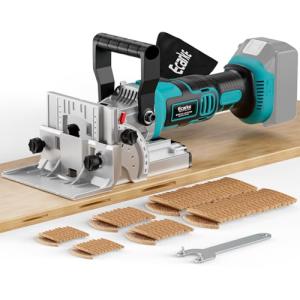
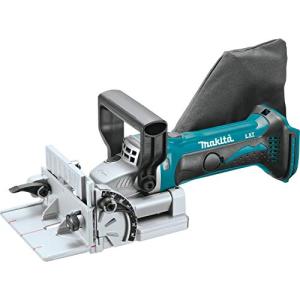
Battery-powered biscuit joiners have matured significantly over the past few years. Paired with modern lithium-ion batteries in the 18V to 36V range, they offer genuine freedom of movement around a workshop or on a job site without sacrificing too much cutting power. They're particularly useful for on-site furniture installation, where trailing cables create hazards or simply aren't practical. If you're already invested in a major battery platform — Makita, DeWalt, Festool, or Bosch — check whether a compatible biscuit joiner is available before buying a new system.
Combination Joiner Tools
Some manufacturers offer tools that combine biscuit joinery with other slot-cutting functions. These might cut standard biscuit slots as well as slots for Domino-style loose tenons, or they may include accessories for cutting grooves for splines. These combination tools offer versatility but can come at a premium price.
Biscuit Sizes Explained
Biscuits come in three standard sizes, and most joiners can be adjusted to cut slots for all three:
#0 Biscuits — The smallest standard size, measuring approximately 47mm long. Best suited for connecting narrow stock, thin panels, and smaller pieces where a larger biscuit would break through the surface.
#10 Biscuits — The mid-range option at around 53mm long. A versatile choice for many edge joints, face frames, and light to medium duty furniture assembly.
#20 Biscuits — The largest standard biscuit at roughly 56mm long. These provide the greatest surface area for glue and the strongest joints. Ideal for wide panel glue-ups, large furniture carcasses, and anywhere maximum joint strength is needed.
Beyond standard sizes, some manufacturers offer specialty biscuits for specific applications — including face frame biscuits designed for cabinet construction and HD biscuits for heavy-duty structural applications.
What to Look for When Buying a Biscuit Joiner
Motor Power and Blade Speed
More powerful motors handle hardwoods like oak, maple, and walnut without strain. A motor producing at least 650W is a reasonable baseline for occasional hardwood use. Blade speed — typically expressed in RPM — affects how cleanly the blade enters the workpiece. Higher speeds generally mean cleaner, smoother slots.
Adjustable Fence
A well-engineered fence is arguably the most important feature on a biscuit joiner. It needs to sit flat and firm against the workpiece face, lock securely at the angle you've set, and be easy to adjust between tasks. Look for metal fences over plastic, positive stops at 0° and 45°, and clearly marked angle scales.
Depth Adjustment
The ability to quickly switch between biscuit sizes — by changing the cutting depth — is something you'll appreciate during a real project. The best joiners offer positive-click depth settings that correspond directly to #0, #10, and #20 biscuits, with no measuring required.
Dust Extraction Port
Biscuit joiners produce a surprising amount of fine sawdust. A well-positioned dust extraction port that connects to a shop vacuum or dust extractor keeps your workspace cleaner and your visibility better during cutting. Some models include small dust bags, though these fill quickly during intensive use.
Build Quality and Ergonomics
Biscuit joiners are handheld tools that need to be comfortable to grip and easy to control. Models with rubberised housings, well-balanced weight distribution, and logically placed controls are simply more pleasant — and safer — to use over a long session. Don't underestimate this.
Common Applications for Biscuit Joiners
Panel Glue-Ups
Perhaps the most common use case. When gluing multiple boards edge-to-edge to create a wide panel — for a tabletop, a shelf, or a cabinet side — biscuits prevent the boards from sliding out of alignment during clamping. This alone saves hours of frustration.
Cabinet Carcass Assembly
Biscuit joinery is a natural fit for box-style construction. Face frames, shelves, dividers, and case sides can all be connected quickly and accurately using biscuits, with no need for complex routing setups or dedicated jigs.
Furniture Making
From dining tables to bedroom dressers to bookcases, biscuit joints appear throughout furniture construction. They work well in both solid wood and sheet goods like MDF and plywood, making them useful across a wide range of projects and materials.
Mitre Reinforcement
Mitre joints look beautiful but have very little long-grain gluing surface. Adding biscuits to mitre joints — whether on picture frames, door frames, or decorative trim — dramatically increases their strength and longevity.
Stair Treads and Flooring
In construction and renovation work, biscuit joiners are used to align and register wide stair treads and flooring components. The precise alignment they offer is particularly valuable in applications where surface flatness is critical.
Biscuit Joiners vs. Domino Joiners
No conversation about biscuit joiners is complete without mentioning the Festool Domino — a tool that has become enormously popular in professional woodworking shops since its introduction.
Where biscuit joiners cut a curved slot to receive a thin compressed-wood biscuit, the Domino cuts a rectangular mortise to receive a loose floating tenon. Domino joints are considerably stronger than biscuit joints, and the tool offers exceptional precision.
The trade-off is cost. A Festool Domino joiner represents a significant investment compared to most biscuit joiners. For many woodworkers — particularly hobbyists, small workshops, and professionals who don't require maximum joint strength — a quality biscuit joiner offers excellent value and performance. The two tools are complementary rather than competing: biscuit joiners excel at alignment and panel glue-ups, while the Domino shines in demanding structural applications.
Tips for Getting the Best Results from Your Biscuit Joiner
Mark your centre lines clearly. The most common error with biscuit joinery is misaligned slots. Mark a clear centre line across the joint on both pieces before cutting. Most joiners have an alignment mark on the tool body — line it up with your mark every time.
Use enough biscuits. A single biscuit in a long edge joint is barely better than none. Space biscuits every 150mm to 200mm along the joint for consistent alignment and adequate glue area.
Don't over-compress the wood fibres. Let the tool do the cutting — don't force it into the workpiece. A smooth, controlled plunge produces a cleaner slot with less tearout at the edges.
Dry fit everything first. Before applying any glue, test your assembly dry. Make sure all the biscuits drop cleanly into their slots and that the joint closes flush. Discovering a problem after the glue is on is a much more stressful experience.
Use quality biscuits. Not all biscuits are equal. Cheap, poorly compressed biscuits may not swell reliably or may not fit slots consistently. Stick to biscuits from established manufacturers for predictable results.
Work cleanly and quickly when gluing. PVA glue begins to skin over within minutes. Apply glue to both slots, insert the biscuit, bring the joint together, and get your clamps on promptly.
Top Brands in Biscuit & Plate Joiners
The market for biscuit joiners is well established, with a range of brands offering tools across different price points and feature sets.
Festool produces some of the most refined biscuit joiners available, combining precision engineering with excellent dust extraction integration — a natural fit for their ecosystem of tools and accessories.
Bosch offers well-regarded mid-range and professional-grade biscuit joiners known for their reliability and solid fence systems. A strong choice for workshops that need a dependable tool without moving into premium territory.
DeWalt biscuit joiners are popular on job sites and in trade settings, combining durability with practical features at competitive prices.
Makita produces compact, well-balanced plate joiners that have earned a loyal following among both tradespeople and hobbyists, with options available in both corded and cordless configurations.
Lamello — the Swiss company that essentially invented the plate joiner — continues to produce high-end models favoured by specialist woodworkers and cabinet makers who prioritise precision above all else.
Who Should Buy a Biscuit Joiner?
If you build furniture, make cabinets, work regularly with panel glue-ups, or simply want a faster and more reliable way to assemble wood projects, a biscuit joiner is a worthwhile addition to your workshop. It's not the most glamorous tool in the world, but few tools will save you as much time and frustration on a regular basis.
For hobbyists who build occasional projects, a mid-range corded model covers almost every use case. For professionals running high-volume production, a premium model with fast depth adjustment, a robust fence, and good dust extraction integration will repay its cost quickly in time saved.
However you use it, a biscuit joiner earns its place in the workshop through consistent, quiet reliability — doing one specific job, extremely well.