What Is a Nut Driver, and Why Do You Need a Set?
A nut driver looks like a screwdriver but functions more like a socket wrench. Instead of a flat or Phillips tip, it has a hollow hexagonal shaft designed to fit over hex nuts, hex-head bolts, and hex screws. You turn it the same way you'd turn a screwdriver — with a handle — but it grips the fastener from six sides rather than a single slot or cross.
So why buy a set instead of individual pieces? Because fasteners don't come in one size. Sheet metal screws, HVAC equipment, electrical panels, appliance components, automotive trim, and cabinetry hardware all use different hex sizes. A set gives you coverage across common imperial and metric dimensions so you're not caught off guard mid-project. A quality set can span anywhere from 3mm to 13mm in metric, or 3/16" to 1/2" in imperial — sometimes both in the same kit.
Types of Nut Driver Sets You'll Find on the Market
Standard Hollow-Shaft Nut Driver Sets
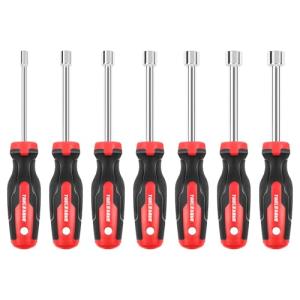
These are the most widely used type. The hollow shaft allows the driver to slide over a bolt shank, meaning you can engage a nut even when there's a long bolt extending beyond it. For electricians working in panels or HVAC technicians tightening sheet metal screws, this feature isn't a bonus — it's a necessity. The hollow design also reduces the overall weight of the tool without sacrificing strength.
Solid-Shaft Nut Driver Sets
Solid-shaft drivers have a fully filled barrel. They're typically stronger under heavy torque, making them a good pick when you're dealing with stubborn fasteners or applying consistent force over long periods. The tradeoff is that they can't clear a protruding bolt shank. For general household use or light mechanical work, solid shafts perform just fine.
Magnetic Nut Driver Sets
Magnetized tips are a quality-of-life upgrade that feels minor until you try to work in a tight corner. When the tip is magnetic, the nut sticks to the driver until you intentionally remove it. Drop rates plummet. Productivity climbs. For anyone doing repetitive fastener work — assembling electronics, installing outlets, building furniture — magnetic sets pay for themselves in saved time and nerves.
Stubby Nut Driver Sets
Stubby sets have shortened handles and shorter overall lengths. They sacrifice leverage in exchange for access, fitting into spaces that a full-length driver simply can't reach. Think: cramped electrical boxes, narrow equipment enclosures, under-sink cabinet hardware. A good toolkit often includes at least one or two stubby sizes alongside standard-length pieces.
Interchangeable Bit Sets with Nut Driver Attachments
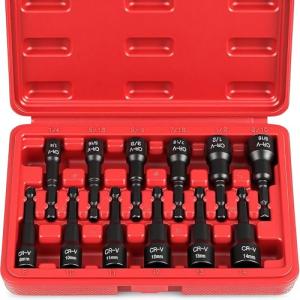
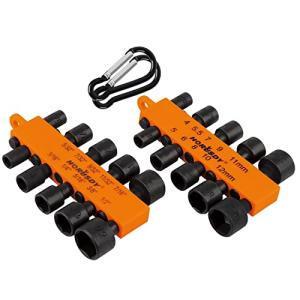
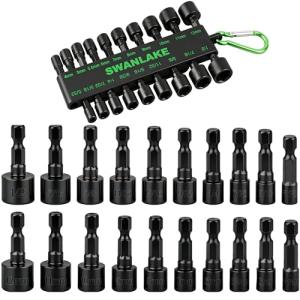
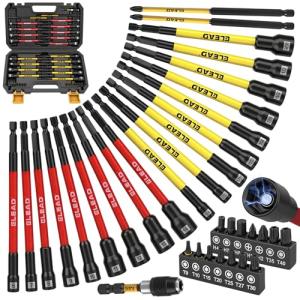
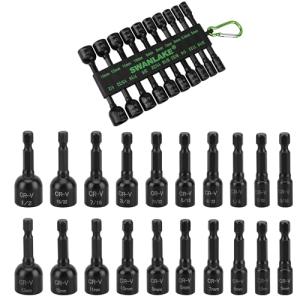
Some sets don't come as fixed tools but instead as hex bit attachments compatible with a driver handle, ratchet, or power tool. These are space-efficient and versatile. A single handle with a dozen bit sizes takes up less drawer space than twelve individual tools. The tradeoff is that swapping bits takes a second or two, which adds up during high-volume repetitive work.
Key Features to Evaluate Before You Buy
Handle Design and Grip
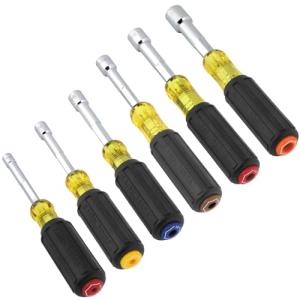
The handle is where effort becomes motion. A good nut driver handle should offer a comfortable grip, adequate diameter for torque generation, and resistance to slipping when your hands are oily or sweaty. Tri-lobe or contoured handles tend to outperform simple round ones because they let you apply rotational force without your hand slipping around the grip. Soft overmold materials — rubber or thermoplastic elastomer — are gentler on the palm during extended use.
Look at handle length too. Longer handles increase leverage, which helps with stuck fasteners. Shorter handles are easier to spin quickly. Many experienced tradespeople prefer a medium-length handle that balances both needs.
Shaft Material and Construction
Most nut driver shafts are made from chrome vanadium steel (Cr-V) or S2 steel. Chrome vanadium is the workhorse alloy — it's tough, resists corrosion, and holds up to everyday use. S2 steel is harder and better suited to impact applications, though it's less common in manual nut drivers. Whatever the alloy, look for heat-treated shafts. Heat treatment hardens the metal and improves its resistance to wear and rounding over time.
The shaft-to-handle connection also matters. Cheaper sets may rely on a press-fit or adhesive bond. Better sets use a through-bolt or mechanical crimp that keeps the shaft anchored even when you apply maximum torque.
Size Range and Standardization
Before buying, inventory the fasteners you typically encounter. Electricians and HVAC technicians in North America primarily work with imperial sizes — especially 5/16" and 1/4", which dominate electrical and sheet metal work. Mechanics and appliance repair technicians tend to work across metric sizes more often. If you work across industries, look for a combination set that covers both systems.
Sets with 7 to 10 pieces cover the vast majority of common fastener sizes. Going beyond that into specialty sizes is worth it only if your work specifically demands it.
Color Coding and Labeling
This sounds trivial until you're digging through a drawer of identical-looking tools trying to find the 5/16" driver at 7 AM. Quality sets use color-coded handles — often a different color per size — or stamped size markings on the handle or shaft. Some manufacturers engrave the size near the tip of the shaft so it's visible even when the tool is stored handle-down. Good labeling reduces errors and saves time.
Storage and Organization
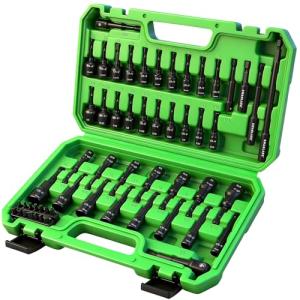
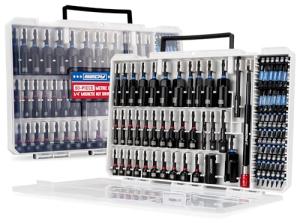
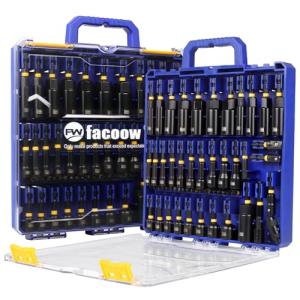
Most sets come in a rack, roll pouch, or blow-molded case. Rack-style storage keeps drivers upright and accessible on a bench. Roll pouches are compact and portable — ideal for field technicians who carry tools in a bag. Molded cases protect tools during transport and provide satisfying visual organization, though they take up more space.
If organization matters to you (and it should), factor in how the set stores after you've used it. A set that's annoying to put back tends to end up scattered.
Nut Driver Sets by Trade and Application
For Electricians
Electricians are probably the heaviest users of nut drivers. Electrical panels are filled with hex-head screws and nuts — breaker lugs, neutral bar connections, panel cover screws. The most important sizes for electrical work are 1/4", 5/16", and 3/8" in imperial. Hollow-shaft construction is essential here because bolt shanks extend through terminals. Insulated nut driver sets — tested and rated for live electrical environments — are critical for anyone working on energized equipment. Look for sets rated to at least 1,000V if electrical safety is a concern.
For HVAC Technicians
HVAC work involves a lot of sheet metal screws with hex heads and equipment with hex-head fasteners at various access panels. HVAC technicians typically favor sets with a wide range of sizes and hollow shafts. Magnetic tips are especially popular in this trade because working overhead while installing ductwork makes dropped hardware a constant hazard.
For Appliance Repair
Dishwashers, washing machines, dryers, refrigerators — they all use hex-head fasteners internally. Appliance repair often happens in cramped spaces behind or underneath large equipment, making stubby drivers and angled handles particularly useful. Both metric and imperial sizes show up depending on appliance brand and country of origin.
For Automotive Work
Automotive use of nut drivers is specialized. Interior trim, battery terminals, and certain electronic components use hex nuts, but the torque requirements for suspension, engine, and drivetrain work exceed what most hand nut drivers are designed for. For automotive applications, nut drivers work best on low-torque interior and electrical components. Power-compatible hex bit sets may be more practical for heavier mechanical work.
For General DIY and Home Repair
At home, nut driver sets are workhorses for furniture assembly, appliance installation, light fixture mounting, and outdoor equipment maintenance. A 7-piece set covering the most common inch sizes or a combination metric/imperial set handles nearly everything a homeowner encounters. You don't need a professional-grade set for occasional home use — but spending a little more for decent build quality will mean the tools still work properly in ten years.
How to Care for Your Nut Driver Set
Nut drivers don't require much maintenance, but a few habits extend their useful life considerably.
Keep them clean and dry. Metal shafts that stay wet rust. After use in outdoor or humid environments, wipe shafts down with a dry cloth. A very light coat of machine oil on the shaft prevents surface oxidation without attracting debris.
Don't use them as pry bars. This sounds obvious but happens constantly. Nut drivers are designed for rotational force, not lateral leverage. Applying bending force to the shaft can stress the handle connection or bow the shaft, leading to slippage and inaccurate driving.
Store them properly. Tossing drivers loose into a general toolbox drawer exposes tips to damage from contact with other tools. Tip wear leads to slippage and rounded fasteners. Use the rack, pouch, or case the set came with.
Inspect regularly. Before use, check that the hex socket opening is clean and undamaged. A packed-in debris or slightly deformed socket will skip on the fastener rather than grip cleanly.
What Separates a Good Set from a Great One
The difference between a budget set and a professional-grade set usually comes down to three things: shaft steel quality, handle comfort, and manufacturing tolerance.
Tighter manufacturing tolerances mean the hex socket fits fasteners precisely, reducing the rounding that happens when a slightly oversized driver slips on a nut under load. Handle comfort matters on long jobs — a driver that bites into your palm after ten minutes is a productivity killer. And shaft steel quality determines how the tool holds up over years of real use.
You don't have to spend a fortune. Mid-range sets from reputable tool brands typically hit the sweet spot between cost and quality. Look for brands that offer a lifetime warranty — it signals confidence in their own manufacturing and protects your investment.
A nut driver set is one of those purchases you make once and use for years. The right set depends on your trade, your typical fastener sizes, and how often you use it. Professionals who depend on their tools daily should lean toward higher-quality steel, ergonomic handles, and magnetic tips. DIYers and occasional users can do well with a reliable mid-range kit covering standard sizes.
Whatever you choose, having the right sizes on hand before a project starts is always better than improvising. A complete nut driver set keeps your work moving and your fasteners tight — and that's exactly what a good tool should do.