What Is an Impact Wrench and How Does It Work?
An impact wrench is a power tool designed to deliver high rotational torque — far more than you could ever apply by hand. Unlike a standard drill or ratchet, it works through a hammering mechanism inside the tool: a rotating hammer strikes an anvil connected to the output shaft in rapid succession, generating powerful rotational blows that multiply the effective torque dramatically.
That combination of rotation plus impact is what makes these tools so effective at breaking loose corroded or overtightened fasteners. A bolt that's been sitting rusted for ten years doesn't stand much of a chance against a quality impact wrench. The tool was invented back in 1925, and it has been a cornerstone of automotive and industrial work ever since.
The standard output drive is a ½-inch square drive, which accepts impact-rated sockets. You'll also find ⅜-inch models for lighter work and ¾-inch or 1-inch drives on heavy industrial tools used for truck repairs and large machinery.
Types of Impact Wrenches
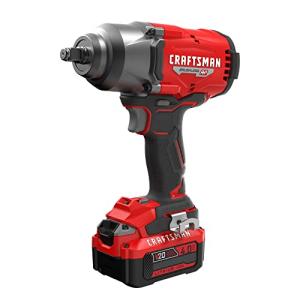
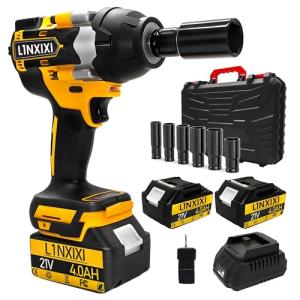
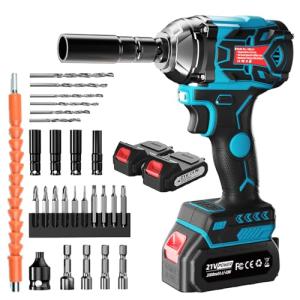
Cordless (Battery-Powered) Impact Wrenches
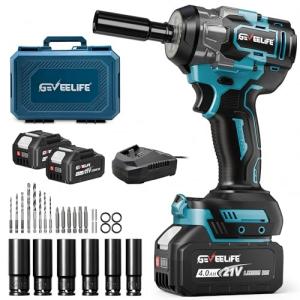
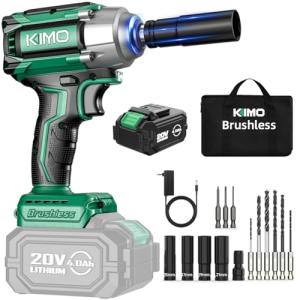
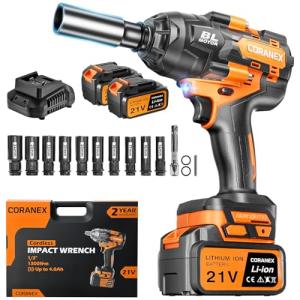
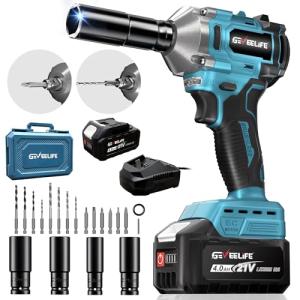
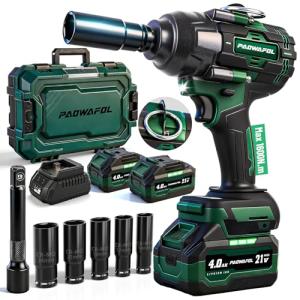
Cordless models have taken over the market in recent years, and for good reason. Modern lithium-ion batteries paired with brushless motors have completely changed what a battery-powered tool can do. Today's cordless impact wrenches can match or exceed the output of pneumatic tools from just a decade ago, while giving you the freedom to work anywhere — no compressor, no hose, no extension cord.
For most mechanics, tradespeople, and serious hobbyists, a cordless impact wrench is now the default choice. Whether you're changing tires in a driveway or working on a construction site, being untethered is a genuine advantage.
Voltage matters here. An 18V or 20V MAX platform is the sweet spot for most applications — strong enough for demanding automotive work, yet manageable in size and weight. High-torque models running on the same platforms now reach over 1,200 ft-lbs of breakaway torque, which is enough for virtually any passenger vehicle or light truck task.
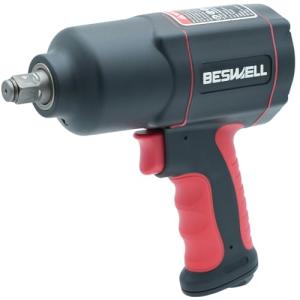
Pneumatic (Air-Powered) Impact Wrenches
Pneumatic impact wrenches remain the preferred choice in high-volume professional environments — tire shops, dealership service bays, and industrial maintenance facilities where an air compressor is already part of the setup. They deliver raw, consistent power without battery concerns, run cooler than battery tools under sustained heavy use, and tend to be lighter than their cordless equivalents.
The trade-off is obvious: you need a compressor capable of meeting the tool's CFM (cubic feet per minute) requirements, and you're always working within reach of an air hose. For a fixed shop with the right infrastructure, these drawbacks are minor. For someone working out of a van or at remote job sites, they're deal-breakers.
Top pneumatic models produce torque figures well above 1,000 ft-lbs, making them unmatched for breaking free seriously seized industrial fasteners.
Corded Electric Impact Wrenches
Corded electric models occupy a niche — they're less popular than the other two types but have their place. A corded tool gives you unlimited runtime and consistent power as long as you're near an outlet. They're a practical option for workshops that don't have compressed air and don't want to deal with battery management. The main limitation is the cord itself, which restricts mobility and can be a nuisance in tight spaces.
Key Specs to Understand Before You Buy
Torque
Torque is the number every manufacturer leads with, and it genuinely matters — but it can also be misleading if you don't know how to read it. There are typically two figures to look at:
Fastening torque is the maximum force the tool can apply when tightening a bolt. Breakaway torque (sometimes called nut-busting torque) is the force it can apply to break a fastener loose — this is almost always higher, and it's usually the more relevant figure for mechanical work.
For most passenger cars and light trucks, you want at least 300–500 ft-lbs of breakaway torque. Heavy-duty truck work calls for 700 ft-lbs and up. Serious industrial applications can demand tools pushing 1,500 ft-lbs or more. The good news is that most mid-range cordless impact wrenches today easily hit 600–1,200 ft-lbs of breakaway torque, which covers the vast majority of automotive and construction tasks.
RPM and IPM
RPM (revolutions per minute) tells you how fast the output shaft spins. IPM (impacts per minute) tells you how fast the hammer mechanism fires. Higher IPM generally means faster fastener removal, because the tool is delivering more blows per second. Premium tools often run at 2,200–3,500 IPM, which makes a noticeable difference when you're working through a set of 20 lug nuts.
Drive Size
- ⅜-inch drive — lighter-duty work, smaller fasteners, tight spaces
- ½-inch drive — the standard for automotive and general construction work; the right choice for most buyers
- ¾-inch and 1-inch drive — heavy equipment, commercial truck maintenance, industrial bolting
Brushed vs. Brushless Motors
If you're buying a cordless impact wrench, strongly favor a brushless motor. Brushless motors are more efficient, generate less heat, run longer on a single charge, and last significantly longer overall because there are no carbon brushes to wear down. The price difference has narrowed considerably, and the performance gap is real enough that brushed motors are becoming harder to justify even in budget tools.
Matching the Tool to the Job
Home garage and DIY use — You don't need to spend top dollar. A mid-range cordless ½-inch brushless model with 400–600 ft-lbs of torque handles tire rotations, brake jobs, and general maintenance without breaking a sweat. Budget-friendly options from brands like Ryobi deliver solid results for this level of use.
Professional automotive work — Look for 700–1,200 ft-lbs of breakaway torque. Milwaukee, DeWalt, and Makita dominate this space, with their flagship models offering excellent durability for daily professional use. Battery platform compatibility with other tools you already own is worth factoring into your decision.
Construction and heavy trades — Consider a high-torque ½-inch or ¾-inch model. Lag bolt applications, structural connections, and heavy fastening work demand sustained power and a durable build. Look for models with a robust anvil, variable torque settings, and a comfortable grip — because on long days, ergonomics make a real difference.
Industrial and fleet maintenance — Pneumatic tools or heavy-duty cordless models with the highest torque ratings are the right call. If you're working on semi-trucks, heavy equipment, or industrial machinery, a tool rated below 1,000 ft-lbs is going to feel underpowered.
Features Worth Looking For
Variable torque settings — Being able to dial down the torque is critical for precision work. Tightening wheel nuts to spec, installing bodywork fasteners, or working with softer materials all benefit from torque control. Most quality tools offer 3–4 speed/torque modes.
LED work light — This sounds like a minor detail until you're working under a car in a dim garage. A built-in LED illuminating the work area is genuinely useful.
Compact head length — Tight engine bays and cramped suspension assemblies reward a shorter tool. Some models are specifically designed as "stubby" compact versions that access spaces a standard tool can't reach.
Battery compatibility — If you already own other cordless tools on an 18V or 20V platform, buy an impact wrench that shares the same battery system. Having a consistent battery platform across your tools saves money and simplifies charging logistics significantly.
Ergonomics and weight — A powerful tool that's too heavy to hold comfortably for 30 minutes is a liability on longer jobs. Pay attention to balance and grip design. A well-balanced tool feels lighter than its spec sheet suggests.
Important Safety Notes
Always use impact-rated sockets. Standard chrome sockets are designed for hand torque and are too brittle to handle the repeated hammer blows of an impact wrench. They can crack, shatter, and send sharp metal fragments flying. Impact-rated sockets are made from a softer, tougher chrome-molybdenum steel that absorbs the energy safely. This isn't a suggestion — it's a non-negotiable safety requirement.
Wear eye protection. Use hearing protection during extended use, as impact wrenches are loud tools that can exceed safe noise levels quickly. Don't use an impact wrench to final-torque critical fasteners — like wheel lug nuts — without verifying the torque with a torque wrench afterward. Impact tools are excellent for removal and fast tightening, but precision final torque values require a dedicated torque wrench.
Top Brands to Know
Milwaukee leads the market for professional-grade cordless tools. Their M18 FUEL lineup is widely considered the benchmark for high-torque cordless performance.
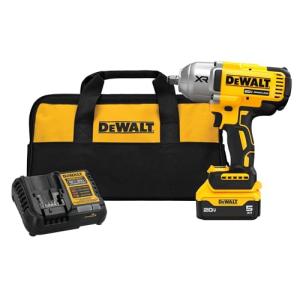
DeWalt is a reliable choice with a massive ecosystem. Their 20V MAX XR models are well-proven in both automotive and construction environments.
Makita stands out for ergonomics and build quality, with their 40V XGT platform pushing the performance ceiling for cordless tools.
Ingersoll Rand and Snap-on are the go-to names in pneumatic impact wrenches for serious professional shops.
Ryobi and budget challenger brands offer surprisingly capable tools at accessible price points for home and light professional use — especially for buyers who don't need daily heavy-duty performance.
The right impact wrench is one of the most satisfying tools you can add to a workshop. It turns exhausting, time-consuming work into something almost effortless. Whether you're swapping tires at home twice a year or running a busy service bay day in and day out, there's a model built precisely for your workload and budget.
Focus on the torque specs that match your actual jobs, choose brushless if you're going cordless, match the battery platform to your existing tools, and don't skip the impact sockets. Do those things, and whichever impact wrench you choose will earn its place in your toolbox for years to come.