Hammers are a must-have for anyone tackling projects at home or on the job site. Whether you're hanging pictures, building a deck, or working on repairs, having the right hammer makes all the difference.
Hammers
Find the perfect hammer to tackle any project with confidence
Product List
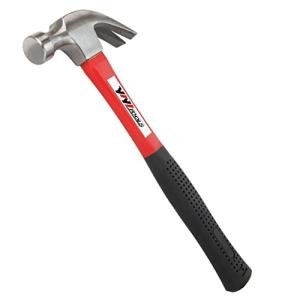
YIYITOOLS 16oz Fiberglass Claw Hammer
Product Review Score
4.73 out of 5 stars
84 reviews$15.99 $8.68
What Is a Hammer?
A hammer is a striking tool consisting of a weighted head attached to a handle. Simple as that sounds, the variety within that definition is staggering. The weight, shape, material, and balance of both the head and the handle determine what a hammer is best suited for — and using the wrong one can mean bruised thumbs, damaged materials, or just a whole lot of unnecessary effort.
At its core, every hammer is designed to transfer kinetic energy from your swing into a focused point of contact. A good hammer amplifies your effort. A poor fit for the task fights you at every stroke.
Types of Hammers — Choosing the Right One for the Job
Claw Hammers
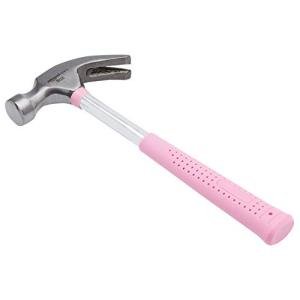
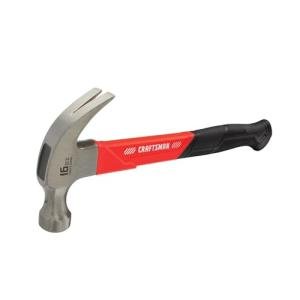
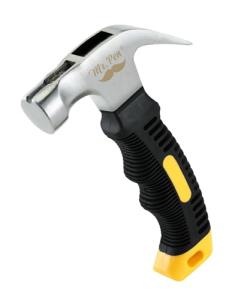
The claw hammer is what most people picture when they hear the word "hammer." It has a flat striking face on one side and a forked claw on the other — the claw being used to lever out nails, prise apart boards, or work into tight gaps.
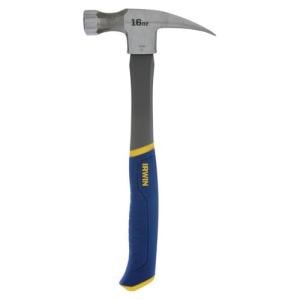
Claw hammers typically weigh between 16 oz and 20 oz (roughly 450–570 g), making them well-balanced for general carpentry, framing, and household tasks. Heavier heads drive nails faster but tire you out quicker; lighter heads give more control. A 16 oz claw hammer is often the sweet spot for occasional home use, while 20 oz or 22 oz heads suit professionals doing repetitive nailing all day.
Best for: Carpentry, general DIY, joinery, framing, nail removal.
Club Hammers (Lump Hammers)
Also called a lump hammer, the club hammer is a compact two-headed striking tool typically weighing between 1 kg and 2 kg. Unlike the claw hammer, it has no specialised opposite face — both ends are flat, though most work is done with the primary face.
Club hammers are used alongside cold chisels for masonry work, breaking up tiles, driving stakes, and light demolition. They're a staple on renovation sites because they're heavy enough to do real work but small enough to swing in tight spaces.
Best for: Masonry, chiselling, demolition, tile removal, stake driving.
Sledgehammers
When a club hammer isn't enough, you reach for a sledgehammer. These are long-handled, heavy-headed tools designed to deliver maximum force — typically ranging from 3 kg to 10 kg or more. They're the tool of choice for breaking concrete, driving fence posts, knocking down walls, and splitting firewood with a wedge.
The long handle gives you mechanical advantage, letting the head build up speed through the arc of the swing. Good technique matters a lot with a sledgehammer — proper stance, grip, and swing mechanics prevent back strain and make every blow count.
Best for: Demolition, concrete breaking, post driving, heavy-duty construction.
Ball Pein Hammers
A ball pein hammer (sometimes spelled "ball peen") has a flat striking face on one side and a rounded dome — the "ball" — on the other. This rounded end is used to shape and peen metal, set rivets, and round off bolt ends.
Ball pein hammers are a core tool for metalworkers, engineers, and blacksmiths. They come in a wide range of weights, from 100 g for fine work up to 1 kg or more for heavier metalworking tasks.
Best for: Metalworking, riveting, shaping sheet metal, engineering work.
Rubber Mallets
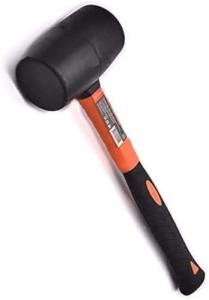
Not every job needs metal-on-metal force. A rubber mallet delivers a firm blow without marring the surface being struck — essential when assembling furniture, fitting tiles, adjusting wooden joints, or tapping components into place without leaving marks.
Rubber mallets come in different hardnesses. A softer head is more forgiving on delicate surfaces; a harder one transmits more force while still protecting the workpiece. Many have a wooden or fibreglass handle.
Best for: Furniture assembly, tile laying, flooring installation, woodworking joints.
Dead Blow Hammers
A dead blow hammer looks similar to a mallet but works very differently. Inside the head, there's loose shot or sand that shifts on impact, absorbing the rebound energy. This means no bounce-back after a strike, which gives you more control and reduces the chance of the hammer glancing off and damaging something.
Dead blow hammers are popular in automotive work, assembly lines, and any situation where a controlled, non-rebounding strike is needed.
Best for: Automotive work, assembly, engine components, situations requiring controlled strikes.
Framing Hammers
A step up from a standard claw hammer, framing hammers are heavier (22–32 oz), longer-handled, and built for the sustained demands of structural carpentry. Many feature a waffled or milled face that grips nail heads and reduces glancing blows, plus a rip claw for prying apart framing timber.
If you're building a deck, framing walls, or doing structural timber work, a framing hammer will serve you far better than a lightweight DIY model.
Best for: Timber framing, deck construction, structural carpentry.
Tack Hammers and Upholstery Hammers
These are small, lightweight hammers used for precise, delicate work — driving tacks, staples, and small nails into fabric, leather, or upholstery foam without damaging the material. Many have a magnetic face tip to hold tacks in place before driving.
Best for: Upholstery, leatherwork, crafts, small tack work.
Demolition Hammers (Breaker Hammers)
These are the electric or pneumatic power tools used for heavy-duty breaking work — think jackhammers. While technically a power tool rather than a hand tool, they belong in any serious conversation about hammers. They use a rapid reciprocating action to deliver thousands of blows per minute, making short work of concrete, asphalt, and masonry.
Best for: Concrete breaking, roadworks, heavy demolition.
Hammer Head Materials — What the Head Is Made Of Matters
Steel is the standard for most hammers. Forged steel heads are durable, hard-wearing, and hold their shape under repeated impact. Drop-forged steel is particularly strong because the forging process aligns the grain structure of the metal for maximum toughness.
Titanium heads are lighter than steel for the same strength, which means less fatigue over a long day of swinging. They're significantly more expensive but popular with professional carpenters who use their hammer for hours at a time.
Rubber and polyurethane heads are used for mallets where surface protection matters more than raw force.
Cast iron is found on some older or lower-cost hammers, but it's generally considered inferior to forged steel because it's more brittle and prone to cracking under shock.
Handle Materials — The Unsung Part of a Good Hammer
The handle affects everything about how a hammer feels to use — the vibration, the balance, the grip, and how it holds up over years of use.
Wood (typically hickory or ash) is the traditional choice. It absorbs vibration well, feels natural in the hand, and can be replaced if it breaks. A well-fitted wooden handle has a warmth to it that steel and fibreglass can't quite replicate. On the downside, wood can split, swell in wet conditions, or loosen from the head over time.
Fibreglass handles are strong, light, and don't absorb moisture. They're less prone to breaking than wood and hold the head firmly. Vibration transmission can be higher than wood, so look for models with vibration-dampening grips.
Steel handles, often tubular or solid, are extremely durable but transmit a lot of vibration into your hand and wrist. They work well for heavier tools like sledgehammers where the full-arm swing absorbs much of the shock naturally.
Rubber-overmoulded grips are now common on all handle types — they improve grip in wet conditions, reduce vibration, and make extended use more comfortable.
How to Choose the Right Hammer
Ask yourself three questions before buying:
What material am I striking? Wood calls for a claw or framing hammer. Metal needs a ball pein. Masonry wants a club hammer or sledgehammer. Sensitive surfaces need a mallet or dead blow.
How much force do I need? Lighter heads give control; heavier heads deliver power. Match the weight to the task and to how long you'll be using it.
How often will I use it? Occasional DIY users can get by with a mid-range claw hammer. Professionals who swing a hammer for hours daily should invest in quality — good balance, vibration reduction, and ergonomic grips pay for themselves in reduced fatigue and injury prevention.
Hammer Safety — Easy to Overlook, Important to Know
Even the most familiar tool can cause injury when used carelessly. A few points worth keeping in mind:
Always inspect the head before use. A loose head can fly off mid-swing with serious consequences. If the head wobbles, replace the handle or re-seat it before using.
Wear safety glasses when striking metal, chisels, or masonry. Fragments can break loose and travel at speed.
Use the striking face, not the side of the head. The cheek of a hammer head is not hardened for impact and can crack.
Match the hammer to the nail or spike. Driving a large masonry nail with a lightweight finishing hammer is a quick way to bend the nail and bruise your hand.
Caring for Your Hammer
A well-made hammer can last decades. Keep the head clean and lightly oiled if storing for a long period to prevent rust. For wooden-handled hammers, treat the handle occasionally with linseed oil to keep the wood supple and prevent drying and cracking. Store hammers in a dry environment — moisture is the enemy of both wood handles and steel heads.
Check the head periodically for chips, cracks, or mushrooming on the face. A damaged striking face can cause glancing blows or send fragments flying.
Whether you need a straightforward claw hammer for weekend projects, a professional-grade framing hammer for structural work, or a specialist ball pein for metalworking, our range covers it all. We stock trusted brands alongside solid value options — so you can find what suits your work and your budget.
A good hammer is one of those tools you reach for without thinking. Get the right one and it'll be with you for years.