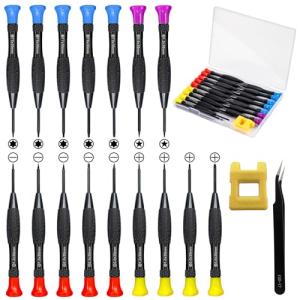
![AXTH 25-in-1 Small Precision Screwdriver Set, Professional Magnetic Mini Repair Tool Kit for Phone, Computer, Watch, Laptop, Macbook, Ring Doorbell, Eyeglass, Electronic, [Bearing Steel] Screw Driver](https://cdn.freshstore.cloud/offer/images/22720/2768/c/axth-25-in-1-small-precision-screwdriver-set-professional-magnetic-mini-repair-tool-kit-for-phone-computer-watch-laptop-macbook-ring-doorbell-eyeglass-electronic-bearing-steel-screw-driver-small.jpg)
What Is a Screwdriver Kit?
A screwdriver kit is a bundled collection of screwdrivers and/or interchangeable bits designed to handle a wide range of fastening tasks. Rather than buying individual drivers one by one, a kit gives you a coordinated set of tools that share a common quality standard, handle design, and often a storage solution like a roll pouch, blow-moulded case, or magnetic stand.
Kits range from compact 6-piece hobby sets to professional 200-piece bit assortments used by electricians, mechanics, and IT technicians. The best screwdriver kit for you depends on the types of screws you encounter most often, the environments you work in, and how much versatility you need.
Types of Screwdriver Kits
Understanding the different types available helps you narrow your search and avoid buying more — or less — than you actually need.
Manual Screwdriver Sets
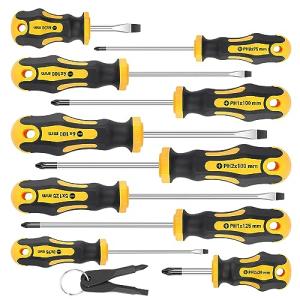
These are the classic, non-powered sets where you do all the turning by hand. They typically include a selection of flathead (slotted) and Phillips drivers in various sizes, and sometimes Pozidriv, Torx, hex (Allen), or Robertson bits too. Manual sets are ideal for precision work, low-torque jobs, or any situation where powered tools could overtighten or strip a fastener. They're also completely silent, require no batteries, and give you a real feel for what's happening at the screw.
Bit Driver Kits
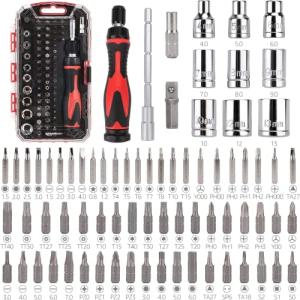
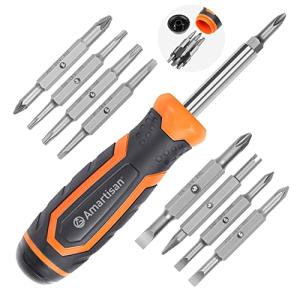
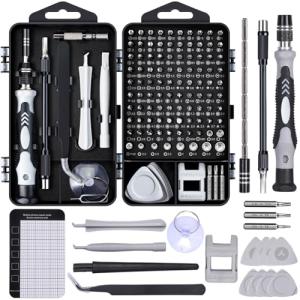
Bit driver kits centre around one or more handle drivers paired with a large assortment of interchangeable bits. A single magnetic handle accepts dozens of different tips — flathead, Phillips, Torx, hex, square, tri-wing, and more — making these kits extraordinarily versatile without the bulk of carrying ten separate screwdrivers. Many professional technicians and DIYers prefer bit driver systems because they adapt to almost any fastener type you'll ever encounter.
Precision Screwdriver Kits
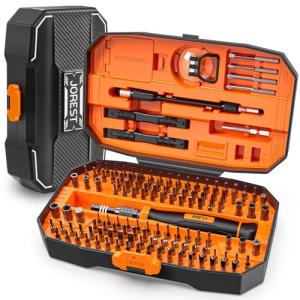
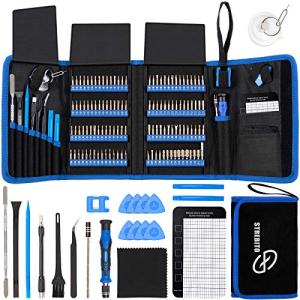
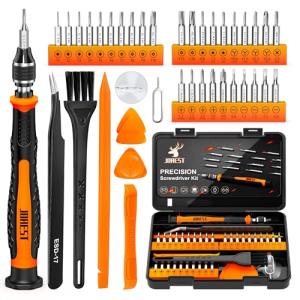
Built for fine, delicate work — think smartphones, laptops, glasses, watches, and model kits — precision screwdriver sets use slim, lightweight handles and small-diameter bits designed for tiny screws that standard drivers would damage. These kits often include speciality heads like pentalobe, Y-type tri-point, and JIS (Japanese Industrial Standard) bits that you won't find in general-purpose sets. If you regularly open electronics or work on small mechanisms, a dedicated precision kit is non-negotiable.
Insulated Screwdriver Sets
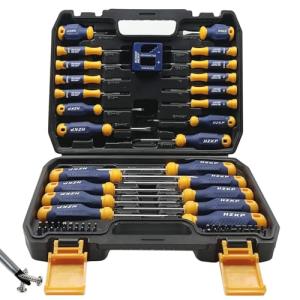
Rated for electrical work, insulated screwdriver kits feature handles and shanks that are tested to withstand high voltages — typically 1,000V AC. They're essential for electricians and anyone who works near live circuits. The insulation is colour-coded and visually distinct, and reputable sets carry VDE (Verband der Elektrotechnik) or IEC 60900 certification. Never attempt electrical work with standard screwdrivers; the risk simply isn't worth it.
Power Bit Sets
Often paired with cordless drills or electric screwdrivers, power bit sets are collections of driver bits designed to withstand the torque of motorised tools. They're manufactured from tougher steel grades and often feature torsion zones — engineered flex points that absorb the shock of high-speed driving and dramatically extend bit life. If you own a power drill or impact driver, a quality power bit set transforms it into a versatile multi-driver.
Key Components and Features to Understand
Handle Ergonomics
The handle is where your effort translates into torque, so ergonomics matter enormously. Look for handles with a comfortable tri-lobe or multi-zone grip design, soft rubberised overmoulding for cushioning, and a wider diameter near the top where you apply rotational force. Some premium handles also feature a free-spinning cap at the top so you can rest your palm on the end without slowing the turn. For extended use, these details shift from nice-to-have to genuinely important.
Blade and Bit Material
Most quality screwdrivers use Chrome Vanadium (CrV) steel for blades and bits. This alloy balances hardness — so tips don't round off — with enough toughness to resist snapping under load. Premium sets may use S2 tool steel or Chrome Molybdenum (CrMo) steel, which are even harder and particularly suited to impact-rated bits. Avoid sets that list vague descriptions like "high carbon steel" without naming the specific alloy; this is often a sign of lower-grade materials.
Tip Precision and Fit
A screwdriver's tip must fit the fastener head perfectly. Too small and it slips; too large and it won't seat. Cheap kits often have slightly off-dimension tips that tear out screw heads. Look for tips described as "precision-machined" or those that carry a manufacturer's cam-out resistance rating. Brands that manufacture to DIN (Deutsches Institut für Normung) or ISO standards are generally reliable.
Magnetic Tips
Magnetic tips on bits and blade tips make one-handed screw starting possible, preventing drops and fumbles in awkward positions. This is especially handy when working inside panels, overhead, or in tight recesses. Most modern kits include magnetic tips, but it's worth verifying, particularly for precision electronics kits where very strong magnetism can occasionally interfere with sensitive components.
Storage and Organisation
A kit is only as useful as its storage system. Options include:
- Blow-moulded cases — rigid, protective, and organised with labelled slots. Excellent for transport and workshop storage.
- Roll pouches — flexible canvas or nylon rolls that pack flat and are favoured by tradespeople who work from a van.
- Racking stands — desktop holders that keep drivers upright and visible. Convenient in a fixed workshop.
- Bit holders and organisers — small indexed cases or magnetic blocks for loose bits, ideal for bit driver systems.
Poor storage means tools get lost, tips get damaged, and the set quickly becomes a jumbled mess. Prioritise kits where every piece has its own dedicated spot.
How to Choose the Right Screwdriver Kit
Consider the Work You Actually Do
Be honest about your use case. A homeowner who assembles furniture and does occasional repairs doesn't need a 150-piece professional kit. A 10–20 piece general household set with a good range of flathead and Phillips drivers plus a few Torx and hex bits covers 90% of domestic tasks. Conversely, a PC builder or phone repair technician needs the speciality bits — pentalobe, tri-point, Torx Security — that only come in dedicated precision kits.
Match the Kit to Your Environment
Working outdoors, on construction sites, or in industrial settings? You need robust handles, durable storage, and potentially insulated versions. Working in a clean, dry workshop? A wider range of lighter-duty options become viable. Working in electrostatics-sensitive environments with electronics? Look for ESD-safe (Electrostatic Discharge) kits designed to prevent static damage to components.
Think About Bit Compatibility
If you already own a power drill or electric screwdriver, check whether the kit's bits are compatible with your tool's chuck. Most modern power bits use a 1/4-inch hex shank — the near-universal standard — but older or speciality tools may differ. Also consider whether you want bits that work in both manual handles and power tools, which gives you maximum flexibility.
Evaluate the Brand and Warranty
Established tool brands invest heavily in quality control, material sourcing, and tip geometry. While budget sets have their place, a mid-range kit from a reputable manufacturer will outlast several cheap alternatives and reduce the frustration of stripped screws and broken tips. Many quality brands offer lifetime guarantees on hand tools — a signal that they stand behind their manufacturing.
Screwdriver Tip Types: A Quick Reference
One of the most common frustrations when buying a kit is discovering it lacks a crucial tip type. Here's a snapshot of the heads you're most likely to encounter:
Phillips (PH) — The most common cross-head design worldwide. Available in sizes PH0 through PH3, with PH2 being standard for most domestic and construction fasteners.
Flathead / Slotted — The oldest driver type, used across furniture, electrical fittings, and legacy hardware. Still widely found in older buildings and some specialist applications.
Torx (TX / Star) — Six-pointed star drive. Standard in automotive, electronics, and modern appliances. Sizes range from TX6 up to TX60 and beyond.
Pozidriv (PZ) — Similar in appearance to Phillips but with additional cross-ticks. Dominant in European furniture and construction fasteners. Never assume PZ and PH are interchangeable — they're not.
Hex / Allen (HX) — Six-sided socket drive, common in furniture assembly (IKEA-style) and bicycle components.
Robertson / Square — Four-sided square drive, dominant in Canadian construction and increasingly used elsewhere for its excellent cam-out resistance.
Pentalobe — Five-lobed Apple-developed fastener found in iPhones, MacBooks, and AirPods. Requires a dedicated precision kit.
Tri-Wing / Y-Type — Found in Nintendo consoles, some Apple devices, and security fasteners. Rarely included in general kits; look for specialist electronics kits.
Maintaining Your Screwdriver Kit
Even the best kit loses effectiveness through neglect. Keep tips clean and dry — residual rust or grime accelerates wear and reduces grip in fastener heads. Store bits in their designated slots rather than loose in a drawer, which prevents tip damage from contact with other metal tools. Inspect handles periodically for cracks in the overmoulding, particularly insulated sets where handle integrity is a safety matter. Replace individual bits as soon as they show rounding or deformation; a damaged bit will chew out screw heads and cost you far more time than a replacement bit.
Why Investing in a Quality Screwdriver Kit Pays Off
It's tempting to grab the cheapest set off the shelf, but consider the hidden costs of poor-quality drivers: stripped screw heads that require extraction tools, rounded bits that need frequent replacement, handles that blister your palm on long jobs, and ultimately the frustration of reaching for a tool that fails you mid-task. A properly specified, well-made screwdriver kit is one of the most cost-effective investments in any toolbox. The best ones last decades, handle thousands of fasteners without degrading, and make every job — from hanging a picture frame to stripping down a laptop — noticeably smoother and faster.
Explore our full range of screwdriver kits below, filtered by use case, piece count, tip type, and price. Whether you're equipping a first toolbox, upgrading a worn-out set, or sourcing professional kits for a trade team, you'll find the right match here.