What Exactly Is a Tool Chest?
A tool chest is a freestanding or stackable storage unit specifically designed to house hand tools, power tool accessories, measuring instruments, and workshop essentials in a secure, organised, and accessible way. Unlike generic storage boxes or open shelving, tool chests are built to the exacting demands of professional environments — with reinforced steel construction, precision-fitted drawers, bearing-mounted slides, and locking mechanisms that keep your gear safe.
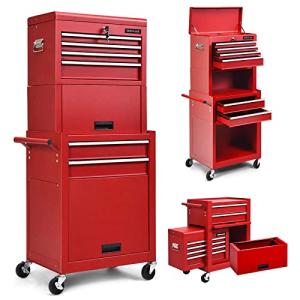
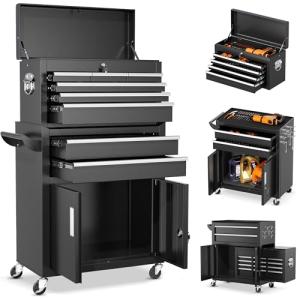
Most tool chest setups consist of two main components that work together: the top chest, which sits at worktop height and offers easy-access drawers for the tools you reach for constantly, and the bottom cabinet (or rollaway), which rests on castors and provides bulk storage for heavier items like sockets, wrenches, and power tool accessories. Together, they form a full-height workstation that can hold hundreds of individual tools in a completely logical, repeatable system.
Some users go further and add side cabinets, locker units, or middle chests to create bespoke storage walls tailored to exactly what they carry.
Why a Tool Chest Is Worth Every Penny
Let's be direct about this: a quality tool chest is not a luxury. For anyone who relies on tools to earn a living or to maintain their home and vehicles properly, it's one of the most practical investments you can make.
Here's why.
Tools last longer. When tools are stored correctly — not jumbled in a bucket or tossed into a van floor — they don't get damaged by other tools, they don't rust from moisture exposure, and they don't get lost. The drawer liners in a quality tool chest protect cutting edges, calibration tools, and delicate instruments from the kind of casual abuse that shortens their working life.
You work faster. Professional mechanics and tradespeople will tell you that a significant portion of any job is just finding and fetching tools. A well-organised chest with every drawer clearly assigned means you reach without thinking. Over a full working day, that adds up to meaningful time savings.
You stay accountable. When every tool has a home, you always know what's missing. That matters on a job site, in a shared workshop, or simply at the end of a long day when you're trying to pack up quickly.
It looks professional. Whether customers visit your workshop or colleagues work alongside you, a tidy, well-maintained tool setup sends a clear signal. It says you take your work seriously.
Types of Tool Chests: Finding the Right Fit
The category covers a wide range of styles, sizes, and configurations. Understanding what's available helps you make a smarter choice from the start.
Top Chests
Top chests are designed to sit at counter height, typically on top of a matching roller cabinet. They're accessed standing up, which makes them ideal for the tools you use most often — combination spanners, screwdrivers, pliers, and measuring tools. Most top chests have between three and eight drawers of varying depths, along with a hinged lid that opens to reveal a tray for oversized or frequently used items.
Look for top chests with full-extension drawers so you can see and access everything at the back without digging. Ball-bearing drawer slides are a reliable indicator of quality — they operate smoothly under load and hold up over years of heavy use.
Roller Cabinets and Bottom Chests
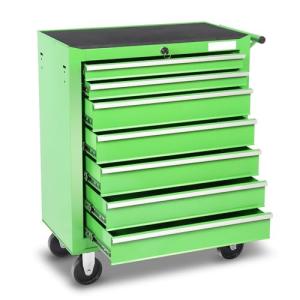
Roller cabinets are the workhorses of any serious tool setup. They sit on the floor, roll on heavy-duty castors (usually with a lockable wheel or two), and hold the bulk of a professional's collection. Expect multiple large drawers capable of handling socket sets, torque wrenches, breaker bars, and specialist tooling.
Good castors make a real difference here. Cheap wheels crack under load or seize up over time. Quality roller cabinets use polyurethane or steel-core castors rated to carry the full loaded weight of the chest — which, for a full professional setup, can easily exceed 200 kg.
Combination Units
Many manufacturers sell top chest and roller cabinet combinations as a matched pair. This is usually the best approach if you're starting from scratch, because the aesthetics and dimensions are designed to align perfectly.
You get a cohesive, full-height workstation without the guesswork of mixing brands or sizes.
Portable and Compact Tool Chests
Not every application calls for a floor-standing cabinet. Compact tool chests — sometimes called technician's chests or benchtop units — are designed for situations where space is tight or portability matters. Electricians, IT engineers, and mobile technicians often prefer a smaller chest that travels with them rather than a fixed workshop installation.
These units typically have shallower drawers, lighter overall construction, and sometimes include carry handles or wheels. They're an excellent second storage solution even if you already own a full roller cabinet setup.
Industrial and Heavy-Duty Chests
At the top end of the market sit heavy-gauge industrial tool chests built for the most demanding commercial environments. Automotive specialists, aerospace engineers, and industrial maintenance teams often rely on these units, which feature thicker steel, higher load ratings per drawer, and advanced security features including full-length locking bars and pick-resistant cylinders.
If your livelihood depends on your tools — and their security — this tier of tool chest is worth serious consideration.
What to Look for When Buying a Tool Chest
The market is crowded, and not all tool chests are created equal. Here are the factors that genuinely matter when you're comparing options.
Steel Gauge and Build Quality
The single biggest differentiator between a tool chest that lasts twenty years and one that's warping and sagging after three is the steel gauge. Look for units constructed from at least 1.0 mm cold-rolled steel — higher-quality chests use 1.2 mm or 1.5 mm throughout.
Heavier gauge steel resists denting, holds its shape under load, and provides the rigidity needed for smooth drawer operation over years of use. Pay attention to corner construction too. Welded corners are stronger than folded-and-riveted ones, especially on larger cabinets where racking forces are more pronounced.
Drawer Slides and Load Rating
A drawer that runs smoothly when empty but struggles under 20 kg of socket sets is no good to anyone. Quality tool chests specify per-drawer weight ratings — look for at least 25–40 kg per drawer for professional use, and check that the rating applies to ball-bearing slides rather than simple friction runners.
Full-extension slides are essential. Being able to pull a drawer all the way out and see every tool inside is a basic functional requirement that cheaper chests sometimes skip.
Security
For most workshop settings, a central locking bar that secures all drawers simultaneously with a single key is both convenient and effective. This design means you can lock up the entire chest quickly when leaving the workshop, without individually securing each drawer. If your tool chest will be in a shared or public-access environment, consider units with higher-security lock cylinders.
Some professional-grade chests offer keyed-alike options so multiple chests on the same site can all be opened with one key — a genuinely useful feature in fleet maintenance or facilities management.
Drawer Liner and Internal Organisation
Bare metal drawer bases might look clean initially, but they allow tools to slide around and — more critically — allow moisture to contact tool surfaces. Foam or rubber drawer liners protect both the tools and the chest itself. Many professional users invest in custom foam cut-outs or modular drawer organisers that give every tool a precisely shaped home and make it instantly obvious when something is missing.
Castors
For roller cabinets, never underestimate the importance of the castors. Cheap plastic wheels crack, swivel mechanisms seize up, and brakes stop working. Quality castors are rated by load capacity and are easy to replace if needed. Swivel locks on at least two wheels allow you to park the chest securely while you work without it rolling unexpectedly.
Tool Chest Sizes: Getting the Dimensions Right
Buying a chest that's too small is one of the most common mistakes — and an expensive one to fix later. Before you buy, take stock of your current collection and think honestly about where it's likely to grow. A general guide: if you're a home DIYer with a moderate collection, a 26-inch top chest and matching roller cabinet provides a solid starting point.
Tradespeople with a full complement of hand tools and specialist equipment typically need at least a 41-inch or 56-inch wide setup, often with additional cabinets added over time. Width is only part of the equation. Consider drawer depth too — deeper drawers handle bulky items like power tool accessories and large adjustable wrenches, while shallower drawers keep smaller precision tools visible and organised.
Brands and What They Stand For
The tool chest market spans everything from budget-oriented imports to premium professional ranges. At one end, you'll find serviceable entry-level chests that suit occasional home use without breaking the bank.
At the other end, established professional brands build chests with lifetime warranties and service networks to match. It's worth spending time reading real-world reviews from people who use their chests in conditions similar to yours. A chest that holds up well in a home garage may prove inadequate in a busy commercial workshop where drawers are opened and closed hundreds of times a day.
Maintaining Your Tool Chest
A well-made tool chest is low maintenance, but a little attention goes a long way. Keep drawer slides clean and occasionally lubricate them with a dry PTFE spray — this keeps them running smoothly and prevents the gritty build-up that causes premature wear. Wipe down the exterior surfaces regularly, particularly in workshops where cutting fluids or chemicals are present, as these can degrade paint finishes over time.
Check that castors turn freely and that the swivel locks engage cleanly. If your chest is in an unheated workshop, consider placing silica gel packets in lower drawers to reduce humidity and protect tools from surface rust.
Building Your Ideal Tool Storage System
The best tool chest setup is one that grows with you. Most professional-grade ranges are designed with modularity in mind — you can add a side locker for PPE and overalls, a middle chest for extra drawer capacity, or wall-mounted panels that extend your organised storage vertically. Start with what you need now, choose a brand and range that can be extended, and build your system piece by piece as your collection and your budget allow.
A tool chest isn't a one-time purchase — for most serious users, it becomes the central fixture of a workspace that evolves over years.