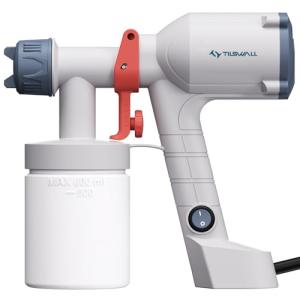
What Is a Paint Sprayer and Why Should You Use One?
A paint sprayer is a power tool that atomizes paint — breaking it into tiny droplets — and delivers it onto a surface in a controlled, even mist. Unlike a brush or roller, which physically pushes paint into a surface, a sprayer floats the paint on, which means fewer brush marks, no roller texture, and a finish that's as close to factory-perfect as you can get at home.
The speed advantage alone is a big deal. A paint sprayer can cover large surfaces several times faster than traditional methods. Projects like painting a deck, staining a wood fence, or coating a set of kitchen cabinets go from all-day marathons to a few hours of work. For any project where finish quality and time both matter, a sprayer is hard to beat.
That said, paint sprayers do come with a learning curve. Technique matters — keeping a consistent distance from the surface, maintaining steady movement, and setting the right pressure all affect how the final coat looks. They also require more prep work since overspray can land on nearby surfaces, so masking and covering areas you don't want painted is essential.
The Main Types of Paint Sprayers
Not all paint sprayers are built the same. The three main categories each work differently and are suited to different kinds of projects.
Airless Paint Sprayers
Airless sprayers use a high-pressure pump to force paint through a small tip at the end of a hose, breaking it into fine droplets without using compressed air. The result is a fast, heavy coat that covers large areas quickly and handles thick, undiluted paints with ease.
This type is the go-to choice for big jobs: painting the exterior of a house, covering large interior walls, applying thick primers or deck coatings, or staining a large wooden fence. Airless sprayers are powerful, efficient, and can work directly from a 1-gallon or 5-gallon paint bucket, which means fewer interruptions to refill.
The trade-off is that airless sprayers produce more overspray than other types, and they can be harder for beginners to control precisely. The high-pressure tip is also something to respect — skin contact with an operating airless sprayer tip can cause serious injury, so following safety guidelines is non-negotiable.
For most homeowners who tackle medium to large painting projects a few times a year, a mid-range airless sprayer like the Graco Magnum X5 is often the sweet spot between power, ease of use, and price.
HVLP Paint Sprayers (High Volume, Low Pressure)
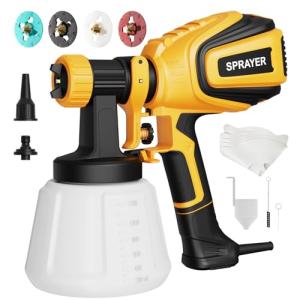
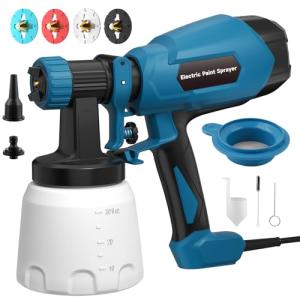
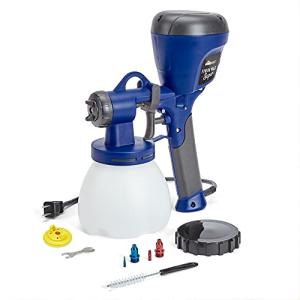
HVLP sprayers take a different approach. They use a large volume of air at low pressure to carry the paint, which slows the droplets down so more of them actually stick to the surface rather than bouncing off or floating away as overspray. The result is less waste, better transfer efficiency, and a much finer, smoother finish.
This makes HVLP sprayers ideal for detail work and smaller projects: painting furniture, refinishing cabinets, applying stain to trim or molding, or any job where precision and surface quality matter more than raw speed. Because the paint travels slower and sticks better, HVLP sprayers are also gentler on intricate surfaces and give you better control over the final look.
The downside is that HVLP sprayers generally struggle with thick, heavy coatings. They work best with materials that have been thinned slightly, and they're not really suited for covering large surfaces at high speed. Many HVLP models are self-contained with a built-in turbine, which makes them highly portable — no air compressor needed.
If your projects tend to be smaller and you want a professional-quality finish on furniture, doors, or cabinets, an HVLP model is probably the right choice.
Pneumatic (Air) Paint Sprayers
Pneumatic sprayers, also called air spray guns, connect to an external air compressor and use compressed air to atomize the paint. They're the classic choice in automotive workshops and professional finishing environments because they produce an exceptionally smooth, high-quality surface coat.
For automotive painting and body work, pneumatic sprayers are still the professional standard. However, they tend to produce more overspray than HVLP guns, which means higher paint consumption and more masking effort. They also require you to already own (or purchase) a compatible air compressor, which adds to the overall cost if you don't have one.
For most DIY homeowners, pneumatic sprayers are probably overkill unless you're doing auto body work or already have a compressor sitting in the garage.
Cordless Paint Sprayers: The Newer Option
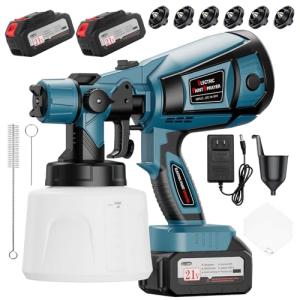
In recent years, battery-powered cordless paint sprayers have entered the market and earned a loyal following. These models combine the flexibility of a handheld unit with freedom from power cords, making them especially useful for working up on a ladder, in a tight space, or anywhere that a cord would be inconvenient.
Cordless sprayers are best for small to medium jobs where portability matters. The battery limits run time, and most models are HVLP-style, so they're not built for heavy industrial coatings or marathon painting sessions. But for quick touch-ups, painting furniture outdoors, or staining a garden shed, they're a genuinely convenient option.
Key Features to Look For When Buying a Paint Sprayer
Once you've identified the type of sprayer that fits your needs, here are the specific features worth comparing:
Adjustable Spray Pattern — Most quality sprayers let you switch between a horizontal fan, vertical fan, and circular spray pattern. This flexibility lets you adapt to different surfaces and project types without changing tools.
Variable Pressure Control — Being able to dial up or down the pressure is essential for matching the sprayer to different paint viscosities and surface types. More control equals better results and less wasted paint.
Container Capacity — Smaller cup-feed sprayers (common in HVLP models) hold around a quart of paint and need frequent refilling on larger jobs. Airless models feed directly from a bucket, which is a big advantage when covering large areas.
Tip Size — Different tip sizes produce different spray widths and flow rates. Finer tips work better for stains and thin coatings, while wider tips are suited for thick paints and primers. Many sprayers come with one or two tips and allow additional purchases.
Ease of Cleaning — This is something many buyers overlook until it's too late. A sprayer that's difficult to disassemble and clean will get clogged, perform poorly, and eventually become unusable. Look for models with simple disassembly and, ideally, parts that are compatible with a garden hose flush or easy soak cleaning.
Build Quality and Durability — Entry-level sprayers often use plastic components that degrade faster with repeated use. If you plan to use a sprayer regularly, investing in a model with metal pump components and higher-quality seals will pay off over time.
What Can You Use a Paint Sprayer For?
The versatility of paint sprayers is one of their biggest selling points. Here's a quick rundown of the most common applications:
- Interior walls and ceilings — Cover rooms quickly with a smooth, even finish
- Kitchen cabinets — Achieve a factory-smooth result without brush marks
- Exterior house painting — Tackle siding, trim, and shutters efficiently
- Decks and fences — Apply stain or sealant evenly across large wooden surfaces
- Furniture refinishing — Strip and repaint chairs, tables, and shelving
- Doors and trim — Get into tight corners and produce clean, crisp lines
- Garden structures — Coat sheds, pergolas, and raised beds quickly
- Automotive touch-ups — Apply primer, base coat, and clear coat on vehicles
A versatile mid-range airless sprayer can handle most of these jobs. For purely detail-oriented work like furniture or cabinets, an HVLP model will deliver better control and a higher-quality finish.
Safety Tips Every Paint Sprayer User Should Know
Paint sprayers are powerful tools, and using them safely is as important as using them correctly.
Always wear a respirator rated for paint fumes and fine particulates — not just a dust mask. Eye protection is essential, especially with airless models where high-pressure mist can irritate or injure eyes. Wear protective clothing or a coverall to avoid skin contact with paint, and make sure you're working in a well-ventilated area whenever possible.
With airless sprayers specifically, never point the tip at skin. The high-pressure stream can inject paint beneath the skin and cause serious injury that may require medical attention. Always engage the safety lock when you're not actively spraying.
Before you start, cover everything you don't want painted. Even with low-overspray HVLP models, drift happens — especially in breezy outdoor conditions. Plastic sheeting, painter's tape, and drop cloths are your best preparation tools.
How to Choose the Right Paint Sprayer for Your Project
Still not sure where to start? Think about it this way:
Large surfaces, fast coverage, thick paint → Go with an airless sprayer. It's the fastest and most powerful option for walls, fences, and exterior painting.
Fine detail work, smooth finish, furniture or cabinets → Go with an HVLP sprayer. You'll get better control, less overspray, and a more refined result.
Automotive work or already have a compressor → A pneumatic spray gun makes sense and will deliver high-quality results.
Occasional use, portability, small jobs → A cordless HVLP model or a budget electric sprayer will do the job without overspending.
Budget is part of the equation too. Entry-level sprayers start around $40–$80 and are fine for one-off jobs or beginners testing the waters. Mid-range models in the $150–$350 range offer a solid balance of power and durability for regular DIY use. Professional-grade units run $400 and up, and are built for frequent, demanding use.