What Is a Lathe and How Does It Work?
At its core, a lathe is a machine that rotates a workpiece around a central axis while a cutting tool removes material to create the desired shape. The workpiece spins — the tool stays relatively stationary — and through controlled passes, you end up with precise cylindrical, symmetrical components.
It sounds simple, and in concept it is. But that simplicity is exactly what makes lathes so powerful. Because the workpiece rotates uniformly, a lathe can produce perfectly round parts with a consistency that's nearly impossible to replicate by hand. That makes them indispensable across industries that depend on accuracy: automotive, aerospace, oil and gas, medical device manufacturing, and general machine shop work.
The key operations a lathe can perform include:
- Turning — reducing the outer diameter of a cylindrical workpiece to a target dimension
- Facing — cutting a flat surface across the end of a part
- Threading — cutting precise screw threads, both internal and external
- Boring — enlarging or finishing an internal hole
- Drilling — making holes along the central axis
- Knurling and grooving — adding texture or narrow channels to a surface
Every lathe — whether a 100-year-old manual engine lathe or a modern CNC turning center — performs these same fundamental operations. What changes is the level of automation, precision, and production speed.
The Main Types of Lathes
Understanding the different lathe categories is the first step toward choosing the right one. Each type was designed for a specific kind of work, and picking the wrong category can mean spending more than you need to — or ending up with a machine that can't do what you actually need.
Engine Lathes (Center Lathes)
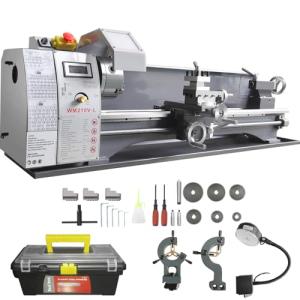
The engine lathe, sometimes called a center lathe, is the most common type of lathe in the world. It's the workhorse of machine shops everywhere. Robust, versatile, and capable of handling a wide range of workpiece sizes and materials, the engine lathe is where most machinists learn their trade.
These machines are suitable for everything from prototype work to low-to-medium volume production. They're manually controlled, which means the operator uses hand wheels and levers to direct cuts — requiring real skill and experience to get the most out of them. If you're training new machinists or running a repair shop that needs flexibility above all else, an engine lathe is hard to beat.
Bench Lathes
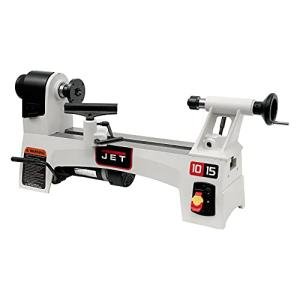
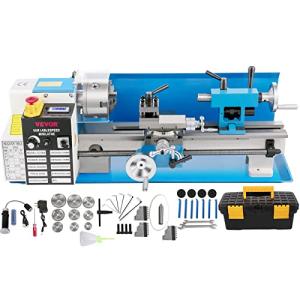
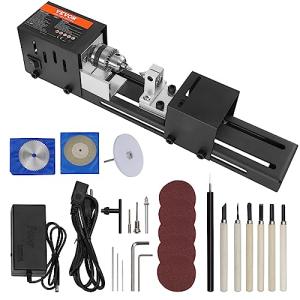
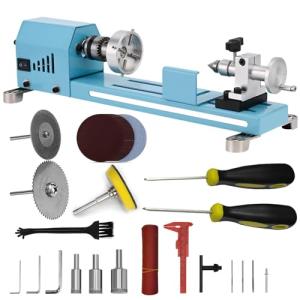
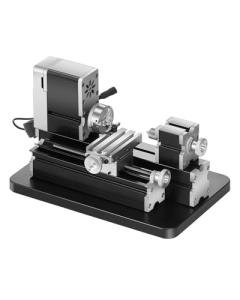
Bench lathes are compact machines designed for smaller workpieces and tighter spaces. They sit on a workbench rather than the floor, making them ideal for hobbyists, watchmakers, jewelers, and small workshops where floor space is a premium. Don't let their size fool you — a well-built bench lathe can deliver excellent precision for light turning, drilling, and threading operations.
Toolroom Lathes
Toolroom lathes are essentially high-precision engine lathes. They're built with tighter tolerances and finer surface finishes in mind, making them the right choice when accuracy is more important than speed. Toolmakers, die makers, and shops that produce custom jigs and fixtures rely on toolroom lathes for their consistency and refinement.
Turret Lathes
Turret lathes take repetitive production up a level. Instead of manually swapping tools between operations, a turret lathe holds multiple cutting tools on a rotating turret head. The operator (or an automated system) indexes the turret to bring the next tool into position quickly. This dramatically speeds up cycle times for parts that require several sequential operations. Turret lathes are a smart step up from engine lathes for shops doing medium-to-high volume production of standardized parts.
CNC Lathes
CNC lathes are the modern standard for precision and efficiency in professional machining. A CNC (Computer Numerical Control) lathe follows a digital program — typically written in G-code — that controls every movement of the cutting tool with extreme accuracy. The result is repeatability that manual machining simply can't match: tolerances down to ±0.005 mm or better are achievable on quality machines.
CNC lathes range from basic two-axis machines to multi-axis turning centers with live tooling, sub-spindles, and Y-axis movement. They're ideal for any production environment where consistent part quality across a high volume of identical components is required.
CNC Turning Centers
A turning center is essentially an advanced CNC lathe with additional capabilities — automatic tool changers, live tooling (which allows milling and drilling operations on the same machine), and sometimes dual spindles for complete part machining in a single setup. Turning centers are the backbone of serious production environments in automotive, aerospace, and medical manufacturing.
Swiss-Type CNC Lathes
Swiss-type lathes (also called sliding headstock lathes) are engineered for one very specific purpose: making very small, very precise parts. Unlike conventional lathes, the bar stock in a Swiss lathe feeds axially through a guide bushing positioned right at the cutting zone. This dramatically reduces deflection and vibration, allowing the machine to hold incredibly tight tolerances on slender, complex components. Swiss lathes are the machine of choice for medical screws, dental implants, watch parts, and miniature electronic components.
Vertical Lathes
Vertical lathes orient the spindle vertically rather than horizontally. This makes them ideal for large-diameter, heavy workpieces that would be awkward or dangerous to hold horizontally — think turbine housings, large flange parts, and heavy industrial components. The vertical orientation uses gravity to help support the workpiece, reducing setup complexity for oversized jobs.
Key Specifications to Consider When Buying a Lathe
Once you've narrowed down the type of lathe that fits your work, there are several critical specifications to evaluate. These are the numbers that actually determine whether a machine can handle your projects.
Swing Over Bed
This is the maximum diameter of a workpiece that can rotate without hitting the lathe bed. If you need to turn a 10-inch diameter part, your lathe needs a swing that exceeds that. Always leave yourself a margin — you don't want to buy a machine that's right at the limit of your current needs, only to find it can't handle a slightly larger job next month.
Distance Between Centers
This measurement tells you how long a workpiece the lathe can accommodate. For shops that work with shafts, spindles, or any elongated cylindrical parts, this is just as important as swing diameter.
Spindle Speed Range
Different materials require different cutting speeds. Soft materials like aluminum and brass tolerate (and benefit from) higher spindle RPMs, while hard materials like steel and titanium require slower, more powerful cuts. A lathe with a wide variable speed range gives you flexibility across materials without having to swap machines.
Spindle Bore and Chuck Size
The spindle bore is the hole through the center of the spindle. If you're working with bar stock, it needs to pass through this bore. Chuck size determines how large a workpiece the three-jaw or four-jaw chuck can grip securely. For turning centers, chucks typically range from 5 inches to over 60 inches in diameter.
Number of Axes (CNC Lathes)
Basic CNC lathes operate on two axes (X and Z). Adding a Y-axis and live tooling opens up milling and off-center drilling operations, turning the lathe into something closer to a full machining center. More axes mean more complexity — and more cost — but also greater capability to complete parts in a single setup.
Build Quality and Rigidity
A lathe's bed and frame need to be rigid enough to resist deflection under cutting forces. Cast iron construction, hardened and ground ways, and heavy overall mass all contribute to better surface finishes and longer tool life. Cheap, lightweight machines may look appealing on paper but often produce inferior results and wear out faster under regular use.
Lathes by Industry and Application
Metalworking and Machine Shops rely on engine lathes and CNC turning centers for everything from custom one-off parts to high-volume component runs. Shafts, bushings, couplings, flanges — these are bread-and-butter lathe work.
Automotive Manufacturing uses CNC lathes and turning centers to produce gears, crankshafts, brake components, and wheel hubs with the consistency required for safe, reliable vehicles.
Aerospace and Defense demands the tightest tolerances and the highest material performance. Swiss-type lathes and multi-axis turning centers handle the precision titanium and alloy components that go into aircraft and spacecraft.
Medical Device Manufacturing depends on Swiss lathes for bone screws, surgical instruments, and implant components where accuracy is a matter of patient safety.
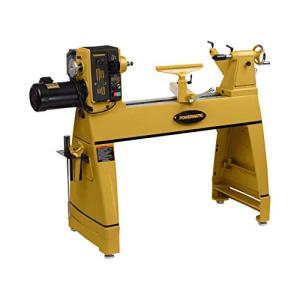
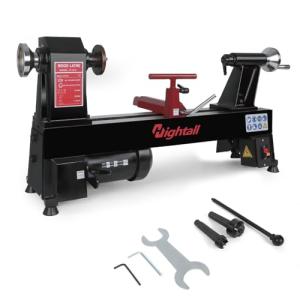
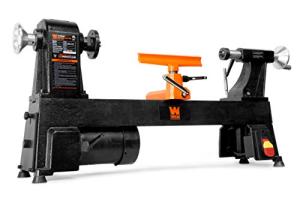
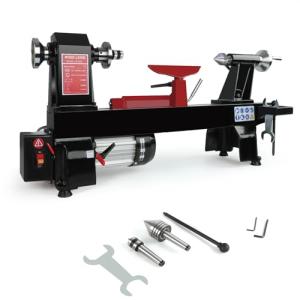
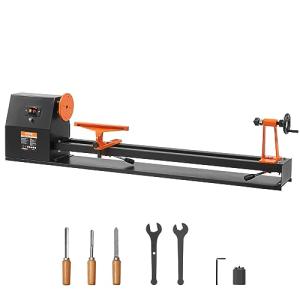
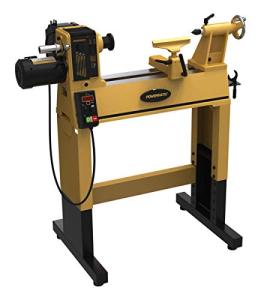
Woodturning and Craft calls for dedicated wood lathes, which operate at higher speeds than metalworking lathes and use handheld tools rather than rigidly mounted cutters. Wood lathes are the tool of choice for furniture makers, bowl turners, and furniture restorers.
Oil, Gas, and Energy uses large-diameter vertical lathes and pipe-threading lathes to handle the oversized fittings, housings, and pipe connections that power infrastructure depends on.
Manual vs. CNC: Which Is Right for You?
This is the question most buyers end up wrestling with. Manual lathes are less expensive, simpler to maintain, and require no programming knowledge. They're ideal for one-off jobs, custom repair work, training environments, and shops where every job is different.
CNC lathes have a higher initial cost and require programming expertise, but they pay for themselves quickly in any production environment. Once a program is dialed in, a CNC lathe can produce identical parts all day with minimal operator involvement. The accuracy is higher, the cycle times are shorter, and the human error rate drops significantly.
For many shops, the right answer is both — a manual lathe for quick setups and custom work, and a CNC machine for production runs.
Budget Expectations
Lathe prices in 2025 span a wide range depending on type and capability. Entry-level bench and manual lathes start around $1,000–$3,000 for hobbyist-grade machines. Mid-range industrial manual lathes and basic CNC lathes typically fall between $10,000 and $30,000. Full-featured CNC turning centers with live tooling and multi-axis capability can run anywhere from $40,000 to well over $100,000 for large, complex machines. Swiss-type lathes and vertical turning centers for heavy-duty or ultra-precision work sit at the top of the range.
Beyond the machine price, budget for tooling (insert holders, cutting inserts, boring bars, live centers), workholding accessories (chucks, collets, steady rests), coolant systems, and ongoing maintenance. These add-on costs are real and should be factored in from the start.
A lathe is one of the highest-impact investments a workshop can make. The right machine, properly matched to your workpiece sizes, materials, production volumes, and accuracy requirements, can serve reliably for decades. The wrong one leads to compromises, workarounds, and eventually replacement costs.
Take the time to work through your actual needs: the largest part you'll ever need to machine, the tightest tolerance your work demands, the volume of parts you produce per month, and the materials you'll cut most often. Those answers will point you clearly toward the right type, size, and specification of lathe — and toward a machine that earns its place in your shop every single day.