Browse our full range of nailers and staplers below to find the tool that fits your next project perfectly.
Nailers & Staplers
Product List
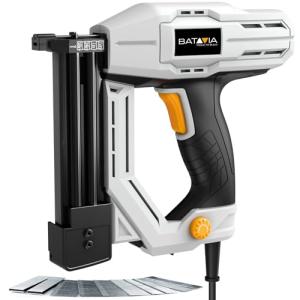
Electric Nail Gun, Batavia 2-in-1 Staple Gun...
Product Review Score
4.36 out of 5 stars
198 reviews$69.99 $59.48
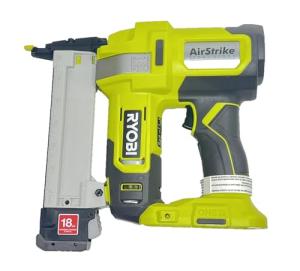
RYOBI ONE+ 18-Gauge Cordless AirStrike Narrow...
Product Review Score
4.34 out of 5 stars
75 reviews$128.99
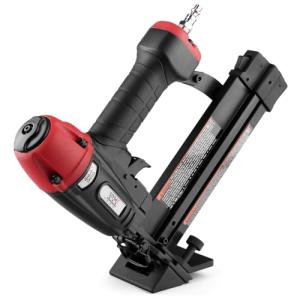
3PLUS HFS509040SP 4-in-1 Pneumatic 18 Gauge F...
Product Review Score
4.45 out of 5 stars
158 reviews$76.88 $69.24
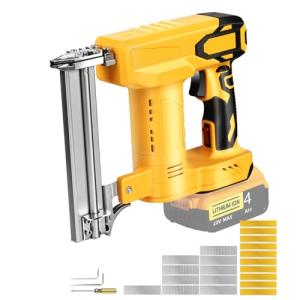
18 Gauge Brad Nailer/Narrow Crown Stapler Com...
Product Review Score
4.1 out of 5 stars
231 reviews$98.77
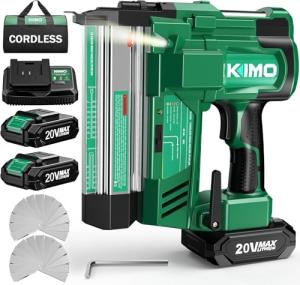
KIMO 2" Brad Nailer Cordless 18 Gauge w/ 20V...
Product Review Score
4.72 out of 5 stars
184 reviews$149.99
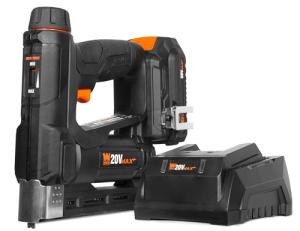
WEN 20V Max Cordless 2-in-1 18-Gauge Brad Nai...
Product Review Score
4.57 out of 5 stars
156 reviews$69.94
What Are Nailers and Staplers?
At their core, nailers and staplers are power-driven fastening tools that drive nails or staples into wood, drywall, fabric, or other materials with a single trigger pull. They replace the time-consuming process of hammering by hand, letting you work faster, reduce fatigue, and achieve far more consistent results across large projects.
Nailers fire individual nails — ranging from tiny finishing brads to thick framing nails — while staplers drive U-shaped staples that offer a wider grip across soft materials or thin panels. Both tool families come in pneumatic (air-powered), cordless (battery-powered), and electric versions, each suited to different working environments and project scales.
Types of Nailers: Finding the Right Fit
Not all nailers are built for the same job. The category breaks down by the size and type of fastener the tool drives, and matching that to your task makes a huge practical difference.
Framing Nailers
Framing nailers are the heavy hitters of the category. They drive large, thick nails — typically 2 to 3.5 inches — into structural lumber, making them the go-to tool for building walls, decks, roof sheathing, and floor framing. If you're working on any kind of structural carpentry, this is the tool that saves your shoulders and your schedule. Framing nailers come in two nail collation styles: round-head (also called full round) and clipped-head. Round-head nailers are required by some building codes because the full nail head provides greater holding strength. Clipped-head nailers hold more nails per magazine strip but are restricted in certain jurisdictions, so always check local requirements before buying.
Finish Nailers
Finish nailers sit a step down in nail size, typically driving 15-gauge or 16-gauge nails between 1 and 2.5 inches long. They're the right choice for attaching baseboards, crown moulding, door and window casings, and cabinet face frames — work where you need a strong hold but don't want an ugly nail head showing. The nail hole left behind is small enough to be filled with putty and painted over invisibly, which is exactly what finish work demands.
Brad Nailers
Brad nailers use 18-gauge nails, which are noticeably thinner than finish nails. That slimmer profile means less wood splitting — a real advantage when you're attaching delicate trim pieces, thin panels, or lightweight mouldings where a thicker nail might crack the wood. The trade-off is holding power: brads aren't suitable for structural joints or anything that needs to bear significant weight, but for light assembly and detail work, they're ideal.
Pin Nailers
Pin nailers take thinness even further, driving 23-gauge headless pins that are barely visible once driven. These tools are beloved by cabinet makers and fine woodworkers who need to hold a piece in place while glue cures, without leaving any mark that requires filling. Pin nailers aren't meant to carry load — they're precision positioning tools.
Roofing Nailers
Roofing nailers are built for one specific job: driving coil nails through asphalt shingles and into roof decking, quickly and repeatedly. They hold large coils of nails (typically 120 or more) to keep you on the roof longer between reloads, and they're designed to adjust nail depth precisely so you don't over-drive fasteners through the shingle tab. If you're re-roofing a house, a dedicated roofing nailer will cut your installation time dramatically.
Palm Nailers
Palm nailers are compact, single-nail tools that fit in the palm of your hand. They're not for production work, but they're extraordinarily useful in tight spaces — joist hangers, hurricane ties, and metal connectors in spots where a full-size nailer simply won't fit. Every carpenter's van should have one.
Types of Staplers: More Versatile Than You Think
Staplers are often underestimated, but the range of work they cover is impressive. The right stapler can outperform a nailer in several specific applications.
Construction Staplers
Heavy-duty construction staplers are workhorses used in flooring installation (particularly engineered wood and hardwood over subfloor), house wrap and building paper attachment, and OSB or plywood sheathing. They drive wide-crown or narrow-crown staples that grip across a broader surface area than a nail, resisting pull-through in sheet materials.
Upholstery Staplers
Upholstery staplers are lighter, more precise tools designed for fabric work — attaching material to furniture frames, headboards, and cabinetry. They typically use fine-wire staples and are often smaller and easier to manoeuvre in tight spots around corners and curves. Whether you're reupholstering a sofa or building custom furniture, an upholstery stapler is the proper tool for the job.
Narrow-Crown Staplers
Narrow-crown staplers drive staples with a small crown width, making them useful for trim attachment, cabinetry, and applications where you need two-point holding power but minimal visual impact. They sit between a brad nailer and a construction stapler in terms of versatility.
Wire Staplers and Carton Staplers
For packaging, corrugated cardboard, and wire fencing, dedicated wire or carton staplers provide fast, heavy-duty stapling that hand tools simply can't match for speed.
Pneumatic vs. Cordless vs. Electric: Which Power Source Is Right for You?
This is often the first real decision point, and it comes down to where you work and how much portability you need.
Pneumatic Nailers and Staplers
Pneumatic tools are powered by a separate air compressor connected via hose. They are lighter than battery-powered equivalents, generate consistent driving power, and tend to be less expensive upfront. The compressor is the significant additional cost and bulk. For contractors who already own a compressor and work in fixed locations — job sites with power, workshops — pneumatic remains a top choice. The unlimited runtime is a genuine advantage on large production jobs.
Cordless (Battery-Powered) Nailers and Staplers
Cordless nailers have matured enormously over the past decade. Modern brushless motor models deliver pneumatic-level performance without the hose, making them the preferred choice for most professional carpenters today. The freedom to move around a roof, up a ladder, or into a tight corner without dragging an air hose behind you is a real productivity gain. Battery life has improved to the point that most users can complete full working days on a pair of batteries. They're heavier than pneumatic tools, but the trade-off in convenience is usually worth it.
Electric Corded Staplers
Electric corded staplers occupy a solid niche for workshop use — upholstery, crafts, and cabinet assembly — where you're near a power outlet, don't need the power of a pneumatic setup, and want consistent performance without managing batteries. They tend to be the most affordable option for light-to-medium duty work.
Key Features to Look for When Buying
Once you've identified the type and power source you need, these are the features that separate good tools from great ones.
Depth Adjustment — The ability to dial in exactly how deep your nail or staple sits is essential for clean finish work. Look for tools with tool-free depth adjustment so you can fine-tune on the fly.
Magazine Capacity — More fasteners in the magazine means fewer reloads. For production work, this matters. Framing nailers and roofing nailers in particular benefit from high-capacity magazines.
Dry-Fire Lockout — This mechanism stops the tool from firing when the magazine is empty, preventing damage to the workpiece and the tool itself. It's a standard feature on quality tools and one worth confirming.
Sequential vs. Bump Firing — Sequential (single-fire) mode requires you to press the contact tip and pull the trigger separately for each nail. Bump (contact) firing lets you hold the trigger and bump the tip along the surface to drive multiple nails rapidly. Bump firing is faster for production work; sequential is safer for precise placement.
Jam Clearing — Jams happen. Tools with tool-free jam clearing — usually a simple side-opening magazine latch — save time and frustration. Don't overlook this.
Weight and Balance — Especially for overhead work or long days on the job, a well-balanced tool that doesn't fatigue your wrist and arm is worth a premium. Cordless tools in particular vary significantly in weight, so compare before buying.
Safety Tips Every User Should Know
Nailers and staplers are powerful, fast-driving tools that require respect and proper handling.
Always keep the contact tip pointed away from people and yourself when the tool is connected to power or compressed air. Never carry a nailer with your finger on the trigger. Keep safety glasses on at all times — nail deflections are uncommon but real. When working on ladders or roofs, ensure your footing is solid before firing, as the recoil can affect your balance.
Disconnect pneumatic tools from the air supply before clearing jams or performing any maintenance. For cordless tools, remove the battery before clearing a jam or performing any inspection of the nose area.
Store nailers and staplers in protective cases away from moisture, and follow the manufacturer's oiling schedule for pneumatic tools — a few drops of pneumatic tool oil into the air inlet before each use extends the life of your tool significantly.
Which Projects Call for Which Tools?
To put it all together practically: framing a deck or wall calls for a framing nailer. Hanging baseboard trim calls for a finish nailer. Attaching thin cabinet mouldings calls for a brad nailer. Holding a cabinet joint for glue? Pin nailer. Re-shingling a roof? Roofing nailer. Laying hardwood flooring? Flooring stapler. Reupholstering a chair? Upholstery stapler.
The right tool for the job isn't just about speed — it's about quality of result. Driving 16-gauge nails into delicate trim will split it. Using brads for structural connections will fail. Knowing the tool's purpose protects both your work and your materials.
Investing in the right nailer or stapler pays for itself quickly in time saved, fewer mistakes, and better finished results. Whether you're a professional tradesperson stocking a work van or a dedicated DIYer building out a home workshop, this is a category where quality matters and tool selection is genuinely task-specific.
Start with the task in mind, match the fastener type to the application, choose the power source that fits your working environment, and look for the build quality and features that will hold up over years of use. The tools in this category range from affordable entry-level options that punch well above their weight to professional-grade powerhouses built for daily use on demanding job sites — and there's a right answer at every price point.