Browse our full range of grinders below, filtered by type, power, disc size, and brand to help you find exactly the right tool for the job.
Grinders
Product List
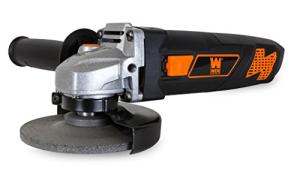
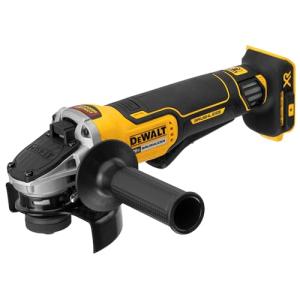
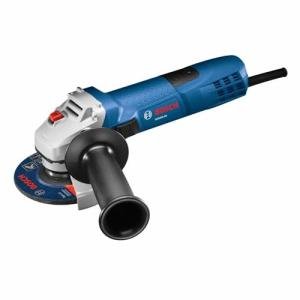
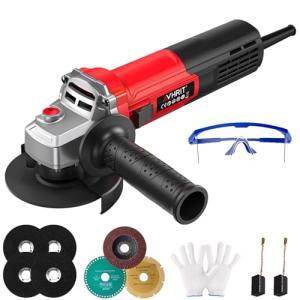
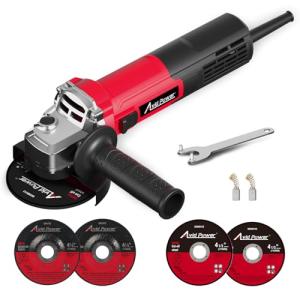
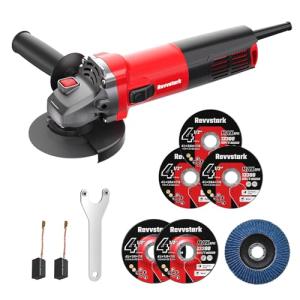
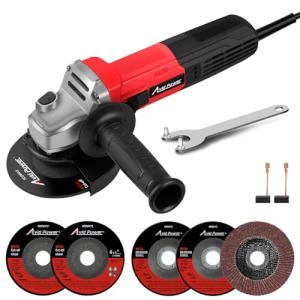
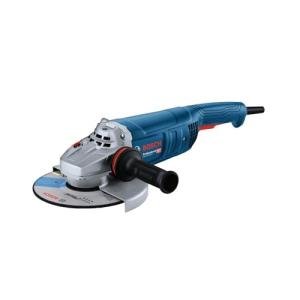
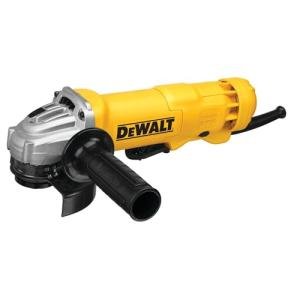
DEWALT 4.5" Paddle Angle Grinder
Product Review Score
4.92 out of 5 stars
165 reviews$130.00 $94.00
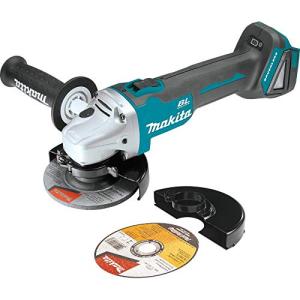
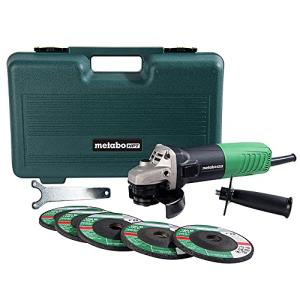
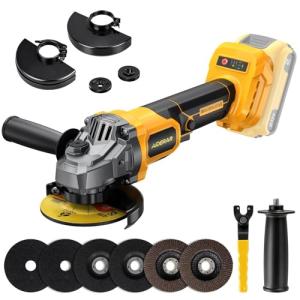
What Are Grinder Power Tools?
Grinders are handheld or bench-mounted power tools that use a rotating abrasive disc, wheel, or attachment to cut, grind, sand, sharpen, or polish a surface. They're primarily used on metal, stone, concrete, and masonry, though certain models and discs extend their usefulness to wood, tile, and composites.
At their core, all grinders share the same basic principle: an electric or battery-powered motor spins an abrasive or cutting disc at high RPM, and the friction between the disc and the workpiece removes material. The difference between models comes down to size, power, speed control, ergonomics, and the type of work they're designed for.
Grinders sit firmly in the "essential" category for metalworkers, welders, construction professionals, plumbers, tilers, and serious DIYers alike. Once you've used a good angle grinder to cut a bolt that a hacksaw would have taken 10 minutes to get through, you understand the appeal immediately.
Types of Grinders: Choosing the Right Tool for the Job
Angle Grinders
The angle grinder is the workhorse of the category — and probably the most versatile power tool you can own. The disc is set at a right angle to the motor shaft (hence the name), which lets you work flat against a surface or attack an edge from the side.
Angle grinders are available in disc sizes ranging from 4½ inches up to 9 inches, with 4½-inch and 5-inch models being the most popular for general use. Larger discs (7-inch and 9-inch) are used for heavy-duty cutting and grinding on thick steel, concrete, and masonry.
What makes angle grinders so popular is the sheer range of discs and attachments available. Swap in a cutting disc and you're slicing through steel pipe. Switch to a grinding disc and you're dressing a weld. Fit a flap disc and you're blending and finishing. Attach a wire cup brush and you're removing rust and mill scale. One tool, dozens of applications.
What to look for in an angle grinder: Corded models typically run between 700W and 2,400W. For light-to-medium work — cutting bolts, grinding welds, surface prep — a 750W to 1,200W model is plenty. For heavy cutting in thick steel or aggressive concrete grinding, go for 1,400W or above. Variable speed is a real advantage if you're working with polishing pads or on materials that can overheat, like stainless steel. A paddle switch (which requires active pressure to stay on) is safer than a slide lock for most users.
Cordless angle grinders have come a long way. Modern 18V and 36V brushless models from major brands deliver serious power and run time that makes them genuinely competitive with corded tools for a wide range of tasks. If you're already invested in a battery ecosystem, a cordless grinder is worth considering — the freedom of movement on site is a real benefit.
Bench Grinders
A bench grinder is a stationary tool mounted to a workbench, with two grinding wheels (one coarse, one fine) spinning on a horizontal shaft. It's a precision tool rather than a heavy-duty material-removal tool — its primary job is sharpening.
Drill bits, chisels, plane blades, turning tools, garden implements, and general workshop blades all benefit from regular sharpening on a bench grinder. You can also use bench grinders for light deburring of metal parts, shaping small pieces, and cleaning up welds in confined spaces.
Wheel size is the key spec: 6-inch grinders are standard for home workshops and light trade use, while 8-inch models offer more grinding surface and suit heavier professional sharpening tasks. Look for models with tool rests (adjustable is better), eye shields, and a motor that doesn't bog down under load.
Slow-speed bench grinders (running at around 1,400 RPM rather than the standard 2,950 RPM) are worth the extra investment if you're sharpening high-carbon steel tools. Running a cold chisel across a fast grinder for too long draws the temper out of the steel — meaning it won't hold an edge. A slow-speed grinder keeps heat buildup manageable.
Die Grinders
A die grinder is a small, cylindrical, high-speed rotary tool designed for precision work in confined spaces. It looks more like a thick marker pen than a traditional grinder, and it runs at anywhere from 18,000 to 30,000 RPM.
Die grinders accept rotary burrs, mounted points, small cutting discs, and grinding stones via a ¼-inch or 6mm collet. They're the tool of choice for porting and polishing engine components, removing casting flash, deburring holes, enlarging or shaping openings, and doing detail work on welds that an angle grinder can't reach.
Both straight and right-angle (or "mini angle") versions exist. Straight die grinders work well in open areas and bores; right-angle versions make it easier to reach into tight corners and alongside surfaces. Pneumatic (air-powered) die grinders are still widely used in automotive and aerospace settings because they're lighter and cooler-running than electric equivalents, but electric and cordless models are increasingly capable.
Disc Sanders and Random Orbital Sanders (Hybrid Category)
While technically distinct from abrasive grinders, disc sanders and random orbital sanders sometimes overlap with the grinder category — particularly when discussing angle grinder sanding attachments and polishing pads. For finishing work on metal (removing scratches, prepping for painting or powder coating) or working on wood and composites, these tools bridge the gap between grinding and fine finishing.
Key Features to Compare When Buying a Grinder
Power (Watts or Volts)
More power means the tool maintains its speed under load rather than bogging down. For occasional home use, mid-range power is fine. For consistent professional use — especially in cutting thick materials — buy more power than you think you need. You'll use it.
Disc Size
Bigger discs cut deeper and cover more surface area per pass. They also require more powerful motors and are heavier to handle. For general use, 115mm (4½ inch) is the sweet spot. For cutting thick plate or grinding large weld runs, move up to 125mm or 230mm.
RPM and Variable Speed
High RPM suits metal grinding and cutting. Lower RPM is better for polishing, working on softer materials, and reducing heat on stainless steel. Variable speed (with a dial or trigger control) gives you flexibility across different tasks and materials — it's genuinely useful, not just a marketing feature.
Corded vs. Cordless
Corded grinders offer unlimited run time and consistent power regardless of battery charge. They're the right choice for sustained, heavy-duty work. Cordless models win on portability and convenience for shorter tasks or work away from power sources. If you're buying cordless, brushless motors are worth the premium — they run cooler, last longer, and extract more performance from the battery.
Safety Features
Grinders operate at high speed with abrasive discs that can shatter, kick back, or catch on a workpiece. Take safety features seriously:
- Kickback brake — detects sudden disc stops and cuts power in milliseconds
- Restart protection — prevents accidental start-up if power is lost and restored
- Vibration damping — reduces fatigue and long-term hand-arm vibration exposure
- Spindle lock — makes disc changes quick and safe
- Guard adjustability — lets you position the guard correctly for every type of cut
Abrasive Discs and Accessories: Getting the Most From Your Grinder
The disc you fit to your grinder matters as much as the grinder itself. Using the wrong disc — or a disc rated for a lower speed than your grinder produces — is genuinely dangerous. Always check that your disc's maximum RPM rating equals or exceeds your grinder's no-load speed.
Grinding discs are thick (around 6mm) and designed for stock removal — flattening welds, removing excess material, shaping edges.
Cutting discs are thin (1–2mm) and designed purely for cutting. Never use a cutting disc for grinding — the side load can shatter it.
Flap discs combine abrasive flaps in a layered arrangement, providing a blend of grinding and finishing. They're forgiving to use, leave a better surface finish than grinding discs, and last longer on most metals.
Wire wheels and cup brushes remove rust, scale, paint, and surface contamination without removing base material.
Diamond cutting discs are for tile, stone, concrete, and masonry — never use them on metal.
Polishing pads (used at lower RPM) are for cleaning up stainless steel, aluminium, and painted surfaces.
Grinder Safety: What Every User Needs to Know
Grinders are involved in a disproportionate number of serious workshop injuries — not because they're unusually dangerous, but because users underestimate them. Keep these principles front of mind:
Always wear a full face shield (not just safety glasses) when grinding or cutting. Flying abrasive particles and disc fragments travel at high velocity. Gloves protect your hands, but avoid loose clothing that can catch a spinning disc. Secure your workpiece — never hold it by hand against a grinder. Inspect every disc before fitting it: cracks, chips, or damage are grounds for immediate disposal. Never remove or modify the guard.
Stand to the side of the disc plane, never directly behind the disc in the direction of potential kickback.
Who Should Buy a Grinder?
Fabricators and welders will use an angle grinder every single day. It's non-negotiable kit.
Builders and construction tradespeople need grinders for cutting rebar, trimming fixings, and grinding masonry.
Automotive mechanics and restorers use both angle grinders (for cutting, grinding welds, and rust removal) and die grinders (for porting, polishing, and precision shaping).
Plumbers and electricians reach for angle grinders when cutting through existing pipework, conduit, or fixings in tight spaces.
Serious DIYers doing renovation work — removing tiles, cutting metal fixings, prepping ironwork for painting — will find an angle grinder one of the most-used tools in the shed.
Woodturners and carvers use angle grinders with chainsaw-style carving discs and flap discs to shape blanks and rough out forms far faster than traditional tools allow.
Buying Smart in the Grinder Category
Don't buy the cheapest grinder available. A grinder is a tool you'll use hard, and cut-price models often cut corners on motor windings, bearing quality, and safety features. Equally, you don't need a top-of-the-range professional model for occasional home use — match the tool to the work honestly.
Buy from brands with strong spare parts availability and warranty support. A grinder that can't be repaired when brushes or a bearing fails is a grinder that ends up in landfill.
Think about your battery ecosystem if you're going cordless — being locked into a single platform makes sense only if the grinder models available on that platform meet your needs.
And always — always — budget for proper PPE alongside the tool itself. A quality face shield, heavy gloves, hearing protection, and a dust mask aren't optional extras. They're part of the cost of owning a grinder.