Drills are a must-have for anyone who loves tackling projects around the house or on the job. Whether you need to hang a picture, build furniture, or do some serious renovation, there's a drill out there that fits your needs. From corded to cordless, lightweight to heavy-duty, you’ll find the perfect tool to get the job done efficiently and effortlessly.
Drills
Find the perfect drill for every project, from home repairs to professional jobs
Product List
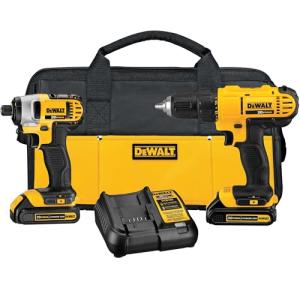
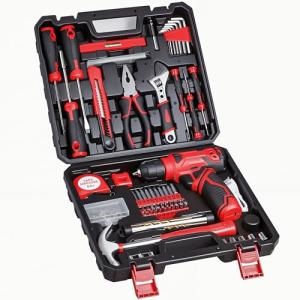
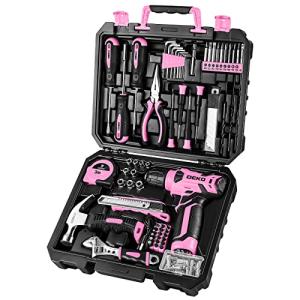
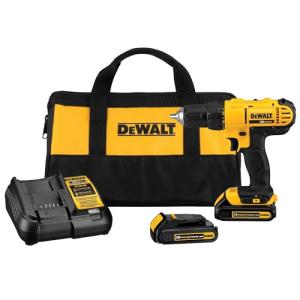
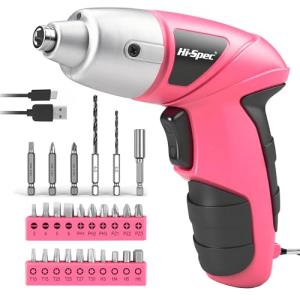
Hi-Spec Cordless Mini Screwdriver
Product Review Score
4.13 out of 5 stars
208 reviews$24.99 $19.99
What Is a Drill, and Why Does It Matter So Much?
A drill is a powered tool that rotates a bit to bore holes or drive fasteners into a material. Simple concept — but the technology packed into modern drills is anything but simple. Today's drills run on advanced lithium-ion batteries, use brushless motors for longer life and greater efficiency, and come loaded with features like variable speed triggers, multi-position clutches, LED work lights, and intelligent battery management systems.
The reason drills sit at the top of every tool kit is versatility. You can use one to assemble flat-pack furniture, install door hardware, drill through timber, mix paint, or anchor bolts into concrete. A good drill doesn't just complete one job — it grows with your skills and ambitions.
Types of Drills — Understanding What's on the Shelf
Not all drills are built the same, and that's actually a good thing. Different jobs call for different tools. Here's how the main categories break down.
Cordless Drill/Drivers
The most popular type on the market. Cordless drill/drivers run on rechargeable battery packs — almost universally lithium-ion these days — and handle the widest range of everyday tasks. Need to drive hundreds of screws building a deck? Done. Installing cabinet hinges? Easy. Drilling pilot holes through timber framing? No problem.
Most cordless drills come in 12V, 18V, or 20V configurations. Voltage is roughly tied to power, but it's not the only factor. A quality 12V brushless drill from a top brand can outperform a cheap 18V brushed model in almost every real-world test. For homeowners and light-duty users, 12V is often more than enough. Tradespeople and anyone doing sustained heavy work will want 18V or 20V as a starting point.
Hammer Drills
A hammer drill does everything a standard drill/driver does — and adds a rapid percussive action that hammers the bit forward as it rotates. That hammering motion is what makes it possible to drill into concrete, brick, tile, and masonry without burning out your bit or your patience. If you're anchoring bolts into a foundation, hanging things on a concrete wall, or regularly working around brick or block, a hammer drill isn't optional — it's essential.
Most modern cordless hammer drills let you switch between standard drill mode and hammer mode, so you're not sacrificing versatility for power.
Rotary Hammer Drills
Step up from a standard hammer drill and you get a rotary hammer. These are serious, professional-grade machines built around an electro-pneumatic hammering mechanism rather than a mechanical one. The result is dramatically more impact energy — measured in joules rather than just RPMs. Rotary hammers are the go-to choice for drilling large holes in concrete, chiselling out tiles, breaking up mortar joints, or doing any prolonged masonry work.
They're heavier and more expensive than standard hammer drills, but if you're working in construction or renovation where masonry is a daily material, a rotary hammer earns its place on the truck.
Impact Drivers
Technically not a drill in the traditional sense, but worth knowing about. Impact drivers use concussive rotational force to drive screws and fasteners with far more power than a standard drill/driver. They're compact, lightweight, and extraordinarily good at sinking long screws into dense materials without stripping heads or wearing out your wrist. Many professionals carry both a drill/driver and an impact driver — one for boring holes, one for driving fasteners fast.
Corded Drills
Cordless tools dominate the market today, but corded drills still hold their ground in specific situations. If you're doing continuous, high-intensity drilling — long sessions without breaks, large-diameter bits through tough materials — a corded drill gives you unlimited runtime and consistent power that never fades as a battery depletes. They're also often more affordable upfront since there's no battery system to invest in. The tradeoff is obvious: you're tethered to an outlet.
Key Features to Look For When Buying a Drill
Shopping for a drill can feel overwhelming when every product page throws spec numbers at you. Here's what actually matters.
Motor Type: Brushless vs. Brushed
Brushed motors have been around forever. They work fine, especially for occasional light use, and they keep costs down. But brushless motors are genuinely better in almost every measurable way — more efficient, more powerful for the same battery size, and significantly longer-lasting because there are no brushes to wear out. If your budget allows, choose brushless. The extra upfront cost pays back in performance and tool longevity.
Voltage and Battery Capacity
Voltage gives you power. Amp-hours (Ah) give you runtime. A 2.0Ah battery on an 18V drill might last through a moderate job. A 5.0Ah battery on the same drill can run for hours. Think about how you work: occasional weekend projects need less capacity than all-day professional use. Also worth noting — many brands build their tools around a shared battery platform, meaning one battery pack fits your drill, circular saw, reciprocating saw, and even outdoor tools. Buying into a platform can save you significant money over time.
Chuck Size
The chuck is the clamping mechanism that holds your drill bit. Chuck size tells you the maximum bit shank it will accept. A 3/8-inch chuck is lighter and suitable for most household tasks. A 1/2-inch chuck accepts larger bits and is the better choice for heavier-duty work. Most professionals prefer 1/2-inch for maximum flexibility. Look for a keyless chuck — no separate tool required to swap bits, which saves time and reduces the chance of losing the chuck key at the worst possible moment.
Clutch Settings
The clutch controls how much torque the drill applies before it disengages, preventing you from overdriving screws into soft materials or stripping fastener heads. More clutch positions mean finer control. A drill with 20+ clutch settings gives you the precision to drive delicate screws flush into pine without blowing through the surface, or to anchor bolts deep into hardwood without snapping the head off. For driving screws in particular, clutch quality matters enormously.
Speed Settings
Most drills offer two speed ranges: a lower range for controlled torque-heavy work like driving screws, and a higher range for fast drilling. Combined with a variable-speed trigger, this gives you the flexibility to dial in exactly the right speed for each material. Soft wood or plastic? Crank it up. Drilling into metal or tile? Slow down and let the bit do the work.
Weight and Ergonomics
This one gets underestimated until you've spent a full day on a job site. A drill that feels fine in a hardware store for thirty seconds can become genuinely uncomfortable after a few hours of overhead or awkward-angle work. Weight, grip shape, balance, and handle diameter all affect fatigue. Look for a model that feels comfortable in your hand — and if you can, hold it before you buy.
Choosing the Right Drill for Your Situation
Not sure where to start? Think about how you'll actually use it.
For occasional home use — assembling furniture, hanging pictures, basic repairs, DIY projects — a compact 12V or 18V cordless drill/driver is everything you need. Look for a kit that includes a battery, charger, and a basic bit set. You don't need the most powerful machine on the shelf.
For serious DIY work and home renovation — drilling through joists, installing shelving systems, tiling, outdoor builds — step up to an 18V or 20V model with a brushless motor. Invest in a higher-capacity battery so you're not stopping to charge mid-project.
For professional tradespeople — framing, electrical, plumbing, flooring — you want the most reliable, highest-torque cordless drill in a platform that matches your existing tools. Brands like Milwaukee, DeWalt, and Makita dominate here for a reason: build quality, service networks, and battery ecosystem depth.
For masonry and concrete work — if your projects regularly involve brick, block, concrete, or stone, add a hammer drill or rotary hammer to your arsenal. A standard drill/driver will struggle and wear out quickly on hard masonry.
Top Drill Brands Worth Knowing
The power tool market has a handful of brands that consistently appear at the top of professional and consumer rankings.
Milwaukee has built a reputation for raw power and durability, particularly in its M18 FUEL line. Their brushless motors and battery technology are benchmark-level, and their ecosystem of compatible tools is enormous.
DeWalt is a perennial favourite on job sites worldwide. Their 20V MAX and XR lines offer dependable performance, and their tools are widely available and backed by strong warranty support.
Makita is known for excellent ergonomics, low vibration, and outstanding battery life. Their LXT platform is one of the broadest in the industry.
Bosch makes particularly well-engineered compact drills and is a strong choice when weight and balance are priorities.
Ryobi and Craftsman are solid picks for home users who want good performance at an accessible price, with wide availability of compatible batteries and accessories.
Drill Safety — A Few Things Always Worth Saying
Drills are safe tools when used correctly, but a moment of inattention can cause real harm. Always wear safety glasses — especially when drilling overhead or into materials that produce flying chips. Secure the workpiece before drilling so it can't spin or shift unexpectedly. Keep loose clothing, jewellery, and hair away from rotating parts. Use the correct bit for the material you're drilling, and let the tool do the work rather than forcing it with excessive pressure.
Drill Accessories and Bits — Don't Forget What Goes In the Chuck
A drill is only as good as the bit you put in it. Twist bits handle wood, metal, and plastics. Masonry bits feature carbide tips for concrete and brick. Spade bits bore wide, flat holes through timber quickly. Hole saws cut large-diameter openings for pipes, cable routes, and door hardware. Step drill bits handle sheet metal and thin materials in one tool. Screwdriver bits and bit sets complete the picture for driving fasteners.
Investing in quality bits matters almost as much as investing in a quality drill. Cheap bits dull fast, overheat, and can damage your material or your tool. Match the bit to the job, and replace them when they start to struggle.
Ready to Find Your Drill?
Whether you're picking up your first drill or adding a specialist tool to a professional kit, the right choice is out there. Use the filters to narrow by voltage, motor type, brand, or price range — or browse our featured selections below for curated picks across every category. From lightweight compact drivers to heavy-duty rotary hammers, we've got the full range covered.