When you need to keep your tools powered up, having the right charger makes all the difference. Our selection includes chargers for every type of tool, from drills to saws, ensuring you’ll never be caught with a dead battery. Trust us; these chargers are built to last and designed to deliver the power you need, right when you need it.
Chargers
Power up your devices quickly and efficiently with our top-notch chargers
Product List
What Is a Power Tool Charger and Why Does It Matter?
A power tool charger is a device that restores electrical energy to a rechargeable battery pack. Simple enough on the surface — but underneath, modern chargers are doing a lot more than just pushing electricity into a battery.
Today's smart chargers continuously monitor battery temperature, voltage, and charge state. They adjust the current in real time to protect the cells, extend battery lifespan, and in many cases, complete a full charge significantly faster than older models ever could. A quality charger doesn't just refill a battery — it does it safely, intelligently, and without shortening the battery's overall life.
This matters more than people often realize. A poor charger, or a mismatch between charger and battery, can cause overheating, reduced cycle life, and in worst cases, permanent damage to expensive battery packs. On the flip side, the right charger keeps your investment protected and your workflow uninterrupted.
Types of Power Tool Chargers
Not all chargers are built the same, and understanding the main types helps you make a smarter purchase decision.
Standard Chargers
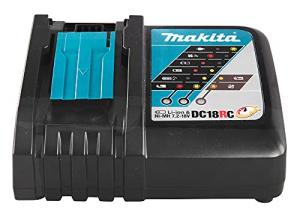
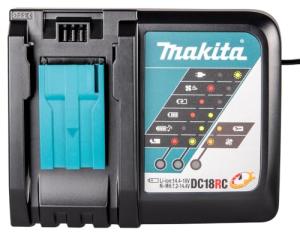
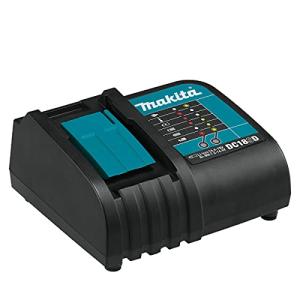
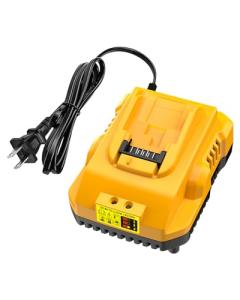
Standard chargers are the basic units that typically come bundled with tool kits. They get the job done and are perfectly reliable for light to moderate use. Charge times tend to run longer — anywhere from one to three hours depending on battery capacity — but they're affordable, widely compatible within a brand's ecosystem, and low-maintenance.
If you use your cordless tools occasionally and have a spare battery to swap in while one charges, a standard charger is often all you need.
Fast Chargers
Fast chargers use higher amperage to dramatically cut charge times. Many can bring a depleted battery back to full capacity in 30 to 60 minutes. Some high-performance models charge a battery in as little as 15 to 20 minutes.
For professionals working long shifts, contractors moving between job sites, or anyone who can't afford to wait around for a battery, fast chargers are worth the upgrade. Just note that faster charging generates more heat, so quality fast chargers include thermal management systems to prevent damage during rapid charge cycles.
Multi-Port Chargers
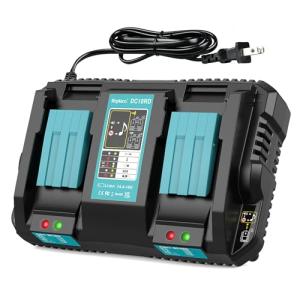
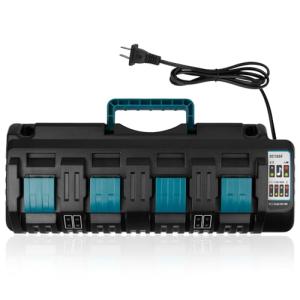
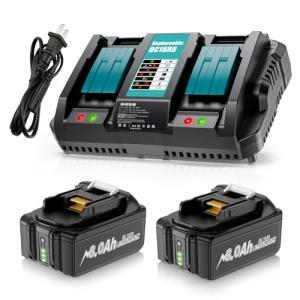
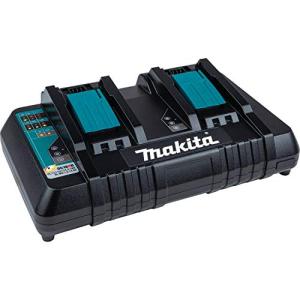
Multi-port chargers can simultaneously charge two or more battery packs at once. If you own several batteries — which most pros do — this dramatically simplifies your charging setup. Instead of juggling chargers or waiting on a single unit, you plug in multiple packs and walk away.
Some multi-port models charge all slots at equal speed; others prioritize one slot and trickle-charge the rest. Check the specs if simultaneous speed matters to you.
Combination Charger/Maintainer Units
These are designed not just to charge but to maintain a battery's optimal charge state over extended storage periods. If you set tools aside for weeks or months between uses, a maintainer-style charger can prevent the gradual self-discharge that leads to a battery arriving "dead" when you need it most. These are common in automotive tool contexts but increasingly available for power tools as well.
USB and Multi-Voltage Chargers
A growing number of charger models include USB ports for charging phones, tablets, or Bluetooth earbuds alongside your tool batteries. Some support multiple voltage ranges across a single brand's lineup — for example, charging both 20V and 40V batteries on one unit. These are particularly useful for users who own tools across different voltage tiers within the same brand ecosystem.
Key Features to Look For
When shopping for a power tool charger, these are the features that genuinely move the needle on performance and convenience.
Charge Time
Listed on the product and usually referenced in minutes or hours for a specific battery capacity (commonly expressed in amp-hours, or Ah). A 2Ah battery and a 5Ah battery charge at very different speeds, even on the same charger. Pay attention to what charge time is rated for and at what battery size.
Battery Compatibility
Chargers are almost always brand-specific and voltage-specific. A DeWalt 20V charger will not charge a Milwaukee M18 battery — the physical connectors are different, and the internal communication protocols vary between manufacturers. Before buying any charger, confirm it matches your battery brand and voltage. Within a brand, many chargers are backwards-compatible across their battery lineup, but always double-check.
Smart Charging Technology
Look for chargers that feature active cell balancing, temperature monitoring, and automatic shutoff when the charge is complete. These features protect your batteries from overcharging and heat damage, directly extending battery life. Budget chargers often skip these protections — something worth knowing before you buy cheap.
LED Indicators
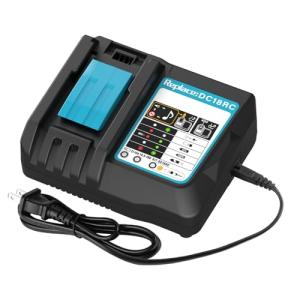
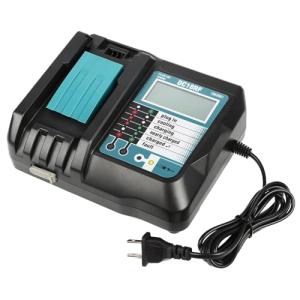
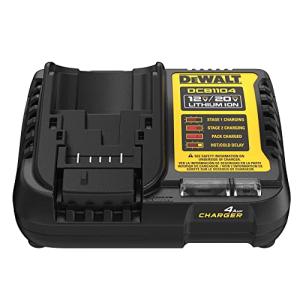
A clear, readable indicator system tells you at a glance whether a battery is charging, fully charged, or flagging a fault. Some chargers offer single-LED systems with color changes; others use multi-LED progress bars. For a busy workshop, easy-to-read status indicators reduce guesswork and help you manage multiple batteries efficiently.
Fault Diagnostics
Better chargers identify and communicate problems — like a battery that's too hot to charge safely, a cell that's gone bad, or a battery that was over-discharged. Rather than silently failing or damaging the pack, these chargers pause charging and signal what's wrong. This feature saves money on replacement batteries over time.
Wall Mount and Portability
If your charger lives permanently in a workshop, wall-mountable designs save bench space and keep things organized. If you're hauling gear to job sites, compact and lightweight chargers that fit in a bag without adding bulk are worth prioritizing. Many manufacturers now offer both form factors across the same model line.
Matching Chargers to Your Batteries and Workflow
The best charger for you depends on how you actually use your tools, not just on specs printed on a box.
If you're a hobbyist with one or two batteries, a standard charger is almost certainly sufficient. You're not racing the clock, and slower charging is gentler on battery cells over the long term. Spend the savings elsewhere.
If you're a professional or someone who works on long continuous projects, a fast charger is a genuine productivity tool. Charging time adds up over weeks and months. Getting 30 minutes back per charge, several times a day, is time that actually matters.
If you own a large battery fleet — and many tradespeople do — multi-port or multi-bay chargers simplify life considerably. Coming back from a long day and dropping four or six batteries into a single station, knowing they'll all be ready in the morning, is hard to overstate once you've experienced it.
For tool owners who store equipment seasonally — landscapers, for example, who rest tools through winter — investing in a maintainer-capable charger pays dividends by keeping batteries healthy during downtime. A battery stored partially discharged for months loses capacity faster than one maintained at an optimal charge level.
Power Tool Charger Safety: What You Should Know
Charger safety is worth taking seriously. Lithium-ion batteries, which power the vast majority of modern cordless tools, are stable and reliable when handled correctly — but they don't respond well to abuse.
Always charge batteries in a well-ventilated area, away from flammable materials. While quality chargers manage heat actively, adding good airflow around the charger as a habit is simply smart practice. Never leave batteries charging unattended for extremely long periods, particularly with older or lower-quality chargers that lack automatic shutoff.
Avoid charging batteries that are visibly damaged, swollen, or have been subjected to heavy impact. If a battery feels unusually hot during charging or shows any sign of physical deformation, stop using it and the charger until both can be inspected. Most manufacturers have clear guidance on battery disposal and replacement — use it.
Store chargers in dry conditions. Moisture and electrical components are a poor combination. If you're working outdoors or in humid environments, keep your charger sheltered.
Brand Ecosystems and Compatibility
One of the most important realities of power tool chargers is that the industry runs on proprietary ecosystems. DeWalt, Milwaukee, Makita, Bosch, Ryobi, Metabo HPT, Ridgid, Craftsman — each major brand operates its own battery platform, and chargers are designed to work exclusively within that ecosystem.
This isn't a flaw so much as a feature, from the manufacturer's perspective, and it does offer genuine benefits: battery packs across a brand are engineered to work optimally with their chargers, communication between the two is seamless, and warranty coverage typically requires using matched equipment.
The practical implication for buyers is simple: commit to a platform and build within it. Mixing brands creates headaches — and usually doesn't work at all without third-party adapters, which introduce their own risks and often void warranties.
Within a single brand, there's typically good cross-compatibility. A Milwaukee M18 charger will usually work across the full M18 battery range, whether you're charging a compact 2Ah pack or a high-capacity 12Ah pack. Confirm the specifics for your exact model, but broad cross-compatibility within a voltage system is the norm rather than the exception.
How to Get the Most Out of Your Power Tool Charger
A few practical habits make a real difference in charger and battery longevity.
Don't store batteries fully discharged. Lithium-ion cells prefer to rest at a partial charge — somewhere between 40% and 80% is generally ideal for long-term storage. Most smart chargers won't damage a battery left connected, but developing a habit of removing batteries once charged is still good practice.
Let batteries cool before charging after heavy use. Running a drill or circular saw hard generates heat inside the battery. Charging a hot battery puts additional thermal stress on the cells. Giving it 15 to 20 minutes to cool before connecting it to the charger is a small step that extends battery life meaningfully.
Keep charger contacts clean. Dust and debris accumulate over time, particularly in workshop and construction environments. Gently wiping battery and charger contacts with a dry cloth occasionally maintains a solid electrical connection and prevents charging errors.
Rotate batteries if you have multiple packs. Cycling through batteries evenly distributes wear across the fleet rather than hammering one pack while others sit unused.
Choosing the Right Charger
Power tool chargers don't make headlines the way new drills or impact drivers do, but they're the foundation every cordless tool depends on. The right charger — matched to your brand, your battery capacity, and the pace of your work — keeps your tools productive, your batteries healthy, and your projects moving.
Whether you're upgrading an old charger that's slowing you down, expanding your battery fleet, or setting up a new workshop from scratch, taking a moment to understand your options pays off in the long run. Fast chargers save time. Multi-port units simplify management. Smart charging technology protects your investment. And using the right charger for your specific battery platform means everything works together the way it was designed to.
Browse our full range of power tool chargers — organized by brand, voltage, and charging speed — to find the unit that fits your tools and your work style.